Welcome to Gaia! ::


<center>User Image</center>

Warning: There is a lot of information in this thread, more than even the Chrysthalls (copyright Samee). If you wish to own an Eternal Requiem character, it is imperitive that you read most of the info, if not all of it. There's no way you can know what's going on and how to play ER if you don't know anything about WhiteWolf's WoD RPGs. I've tried to keep the amount of reading material down as much as I could, not that you can tell. >_>

In other words, if you don't like to read, perhaps ER isn't for you!

<center>Announcements</center>

UPDATE:

Vian has returned, and therefore I'm hoping to get this place back from the firey pits of dispair.

Calling all White Wolf Game fans. I am considering staff help. This will not be a paying job, but mearly volunteer work. I need people to help me with story ideas, character concepts, and help explain rules and such from the games. I'll also need help with npcs when I get the game up and running in the guild. You must be very knowledgeable about Vampire, Werewolf, Changeling, Mummy, Mage, and other World of Darkness games that White Wolf put out. For your help, you will recieve a character at 1/2 the flatsale cost (have to pay the artist)...you choose the race and concept, but I have final say in if it's accepted. If you are interested, please PM this account with the following application filled out. Thanks.

[Update!! Two people have been hired, only one spot remains!]

*Name:
*What White Wolf Game books do you own?
*What World of Darkness game do you prefer? (Example: Vampire, Werewolf, Changeling, etc.)
*Have you played in a White wolf game before? Table top, online, other?
*Have you ran a White Wolf game before? How did you run it?
*Why should I pick you?
*What other shops are you involved in? Are the rp heavy?
*What type of character do you like to rp?


Thanks again.


Quote:
There will be a change in rules. I know many people do not have time for an rp intense "pet" or character. I know personally that this can be a problem. So, judging from the test thread we ran awhile back, I think a change might be in order. You can rp as often as you like...but you are now only required to join into one major storyline (Like the Prince giving you a mission.) once a month and locating your character's positon in the city at least once a week. (This can be by them doing their jobs, dealing with personal missions in their backgrounds, or hanging out alone or with other characters.) I think this is a fair demand...due to school, work, and other real life demands that take up too much time and are more important that a game. Thanks to all the current owners and any new owners.


Flatsale Previews:
User ImageUser Image


The next Demon that will be up for grabs.
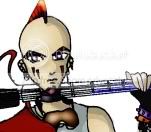
Jonah the male demon:
User Image


The ownership of the Eternal Requiem has changed hands. Daimyn is still on staff, as an assistant storyteller. Kaliskanny is now the owner. Do not pm or im her with requests for characters....you will be black listed. Things are going to be a bit shakey, so bear with us.

Kaliskanny
We're hoping to start the re-opening with a bang! Erm...an auction. Stay tuned for further news! -Kaliskanny


If you're an artist and would like to try for a guest artist auction spot...meaning you do a character, we auction it and you get monies...then please pm Kaliskanny with samples and make the topic 'ER Guest Art Request'.

Our staff listings are as follows:
Kaliskanny - owner and head storyteller
Azuredreams - tagging, assistant st, kicker of asses....please call him Wren
Daimyn - Assitant st, helps with ideas, thought up the shop (Much love!)
Vian - Head artist and helps with character design
Alixiel - artist, when she retruns.

Assitant Staff (They have authority just like staff, so be respectful to them)
Merci`
Selona

Non-Staff helpers:
Jynk - does things that help out
Sarielle - Official bumper
Check in later for more updates...same bat time, same bat channel!


<center>The World of Darkness</center>
Eternal Requiem is based on White Wolf's World of Darkness roleplaying games.

It is not our own world, though it is close enough for fearsome discomfort. Rather, the world inhabited by vampires and werewolves and faeries is ours, but through a looking glass darkly. Evil is palpable and ubiquitous in this world; the final nights are upon us, and the whole planet teeters on a razor's edge of tension. It is a world of darkness.

Superficially, the World of Darkness is like the "real" world we all inhabit. The same bands are popular, violence still plagues the inner city, graft and corruption infest the same governments, and society still looks to the same cities for its culture. The World of Darkness has a Statue of Liberty, an Eiffel Tower and a CBGB's. More present than in our world, though, is the undercurrent of horror -- our world's ills are all the more pronounced in the World of Darkness. Our fears are real. Our governments are more degenerate. Our ecosystem dies a bit more each night. And vampires, werewolves, and fae all exist.

Eternal Requiem emphasizes a horrific theme above all others. How does it feel to leave a dead, bloodless child in a dumpster? To manipulate mortals like pawns on a chessboard? To suspect that the elders wield you as an unwitting weapon against ancient foes? To eke out an life of secrecy and bloodshed? To succumb to the wiles of the beast within and tear innocent victims to shreds?


<center>Prologue:
A Gathering of Beasts</center>

Bela Lugosi's dead, and so am I. But what's left of Bela is rotting in a pine coffin somewhere, while I have the opportunity to sit here on the balcony, enjoy my drink and look at you. Correct me if I'm being presumptuous, but I suspect that I have the better end of the deal.

I can tell by looking at you that you're not comprehending. Of course you're not -- these are cynical, rational times, and you're not going to believe that I'm a dead man just because I say so. A century ago it would have been different -- well, it was quite different the last time I had this little talk with someone -- but this is the age of facts. And the facts are that corpses don't move, don't walk, don't talk. I'm terribly sorry, my dear, but I have a surprise for you: This corpse does.

So sit down. Please, I insist that you make yourself comfortable. Pour yourself something to drink, preferably from the bottle on the left -- the stuff on the right is an acquired taste. It's going to be a long evening, and you're going to need a stiff drink or two, I suspect. After all, in the next few hours I'm going to explain to you in excruciating detail why everything you think you know about life and death is wrong. In other words, you don't know a blessed thing about the way the world really works, and I'm going to open your eyes.

But I'm afraid, my dear, that you're not going to like what you see.


(The rest of the prologue is below -- if you want to continue reading, simply highlight the space below and copy/paste it into Notepad or MS Word.)
Before we go any further, allow me to tell you that you're getting an unprecedented opportunity here. My kind doesn't talk about itself to your kind -- not now and, for the most part, not ever. We've spent five centuries weaving a stage curtain that we call the Masquerade to hide the real show from you, but in the end it comes down to one simple fact: We vampires don't want you mortals knowing we're out there. It's for the same reason the wolf doesn't want the sheep knowing he's around. It makes our work so much easier. And so, for example, though we do indeed posess the sharpened canines with which dime novels and the cinema have branded us, you mortals will not see them unless we choose to reveal them. Like so.

You're looking pale, my dear. That will never do if we're going to be seen later -- allow me to take care of looking pale for both of us. Still, I must admit I'm disappointed that you seem so disturbed by the notion of my being a vampire. Take a moment and compose yourself, if you can. Truth be told, I'm afraid that's the least of the shocks waiting for you tonight. Please, don't waste time trying to come up with a rational, scientific explanation, because there isn't one. It's just what I am. What many, many of us are -- too many, but some accounts.

Damnation, are you truly that much of a fool? Sit back down. I said sit. Now watch. Hush, stop screaming. No one will come to rescue you, and no one will call the police -- not in this building. Discreet neighbors are a blessing to one in my condition. It's positively Victorian the way they ignore anything not directly in front of them.

So, at last you have your proof. Now do you believe me? Yes, it is blood in the other decanter; served cold like that, of course, the stuff loses much of its taste. You can try it if you like, but I don't recommend it, no. You're not set up to enjoy such things, at least not as presently configured.

Don't get ahead of yourself guessing my intention, my dear. If I were going to act accordingly to your beloved cliches, you would be dead right now. I am a predator, after all, and you and your entire species are my prey.

Beginnings
I suppose we should begin with the basics of the whole thing. I am in fact a vampire, brought into this state of existence in the Year of Our Lord 1796 by a woman who was introduced to me as a quote-unquote "lady of the evening." The gentleman who introduced us -- one of her servants, I later discovered -- had an odd sense of humor.

But I digress. Yes, I do drink human blood. Without the nourishment it provides, I will wither away; with it, I will live forever. Yes, forever. Unless destroyed -- and destroying one of the Damned is no mean feat, I can assure you -- we vampires are every bit as immortal as the legends say. Only the sun, and the emotions it engenders, remain forever foreign to us; we Kindred can drink in the nights of countless ages, can remain unchanging while all that we know crumbles to dust around us and is replaced by another stage-set that in turn crumbles to dust, and so on...

Ah, once again, I lose the way. Blood, yes, blood. I can get by on the blood of animals -- most of us can, except the true elders of our kind -- but such a diet is unpleasant. Unpalatable. No, we all want to feed on the best vintages, otherwise one goes around all the time with a dull ache in one's gut that just never goes away. It gets worse the hungrier one gets, I might add; a vampire who goes too long without feeding is liable to demonstrate a regrettable lack of self-control.

There are other tell-tale physiological signs of my condition. My heart does not beat; the strength of my will alone suffices to force the blood through my body. My internal organs, by all accounts, have long since atrophied into vestigial husks, but that won't matter to a coroner, as once I am truly killed I will rapidly decompose into dust. In the meantime, however, I'm not troubled by such trifles as breathing, extremes of temperature and the like. My skin is cold, unless I take the effort to warm it. Doing so takes effort, though, and the expenditure of precious blood. Regular food is an abomination unto me, and it doesn't sit for more than a few seconds in what remains of my stomach. Even with eternity stretching before me, my dear, I have better things to do with my time than to crouch over toilets, heaving ashes and gobbets into the bowl.

In layman's terms, then, I am no longer human. For all intents and purposes, I am simply a blood-drinking, ambulatorycadaver, indistinguishable from anybody in a morgue unless I am moving about. I save the niceties like warming my flesh and remembering to blink for company, such as yourself.

Say thank you, dear. Keeping myself fresh and rosy-looking for you is costing me more than you know.

Ah, we return to the drinking of blood, the defining act, as it were, of my state. Yes, I am afraid it is a necessity, though one can leave one's prey alive. All that requires is a little self-control and a touch of effort to close the wound -- and no, we don't all drink from the neck. You can cross another cliche off your list. The problem with leaving one's prey alive, however, is that unless one has certain... protections, she remembers. Such breaches of the Masquerade are not looked on kindly by the vampiric powers that be. Oftentimes, it makes more sense simply to kill.

The crux of the matter, really, is that drinking blood not only allows me to perpetuate my existence, but also provides a sensation unlike anything else this world has to offer. What is it like? My dear, words cannot describe it. Imagine drinking th finest champagne and the sensation of the most sensual lovemaking you've ever experienced. Overlay that with the rush the opium fiend feels as he takes that first breath on the pipe, and you begin to have some sense, some tiny, infinitesimal sense of what it feels like to drink the blood of a kine -- excuse me, a living human being. Your modern-day addicts will lie, steal, cheat and kill for their little tickets to Heaven. Mine is better, and it makes me immortal besides. Can you imagine the deeds I might commit to feed that hunger? Don't bother speaking possibilities; the truth is worse than you can imagine. And I am considered to be a gentleman of my kind. Now imagine, if you will, some of my relatives, the ones who aren't so nice as I.

They can -- and do -- commit acts that even I don't wish to consider.

And here you are, poor little mortal, learning how fragile your whole existence is.

Are you starting to feel afraid yet? You should be.

The First Fatal Sip
In most cases, one recieves one's first drink of blood on the night one becomes a vampire -- one of the "Kindred," we like to call ourselves. The process is called "The Embrace," and has two distinct and rather difficult phases. The first is simple: the vampire who wishes to create progeny drinks every last drop of blood he can from his intended "childe." This is no different from normal feeding, save that one doesn't need to worry about erasing the memory or disposing of the corpse afterward, and that one gets a very full meal indeed. The difference comes afterward.

Once the last bit of blood has pulsed its way out, the "parent" vampire -- the technical term is "sire," not that you care yet -- then returns some of his ill-gotten gains. He bites his lip, or wrist, or whatever, and allows some of his blood to pass his victim's lips. Assuming that the mortal does not actively and successfully resist the process -- few do, believe me -- and assuming that the sire has not delayed too long in granting this gift, then the blood trickles down the victim's thoat and revives her, albeit as a vampire.

Ah yes, the hunger of creation. That little bit of blood that one's sire uses to bestow the Embrace isn't much -- a few drops with more mystical than nutritional significance. They certainly don't provide enough sustenance to satisfy the hunger of a newborn vampire. So the newborn childe had better pray her sire has laid in a few bottles or, better yet, a few bodies for the moment, so that there's something to feed on right after the change. I've witnessed the horror of newly Embraced Kindred giving in to that uncontrollable hunger and ripping to shreds whoever was nearest in their madness. When that first thirst is upon you, you will do whatever you must to feed. You will kill your lover, your child, your parent, or your priest to sate that thirst, and you will be glad to do so -- for as long as the frenzy lasts.

There, my dear, is the rub. Because no matter how long you're in that state of frenzy, no matter what triggered it -- fear or hunger or pain or rage -- no matter how long you give in to the animal inside you, you can't control what you do and you always come down. And that's when you must deal with the consequences of what you did when that animal wearing your skin was in control. And the first frenzy is never the last. One would think it gets easier to deal with that loss of control as one gets more expierenced. One who thought that would be quite wrong.

Tsk. I'm feeling a bit hungry. Would you care to escort me out on the town? The other option is that I leave you here as a prisoner, and I'd prefer not to do that. No doubt you'd try to get inventive and escape, and I'd lose some antiques as you smashed things in the process. You, my dear, are replaceable. My posessions are not. It's that simple.

The Lies
I am quite glad you decided to come along after all. Lucky, wasn't it, that I had something appropriate for you in the guest bedroom's closet. No, not from a previous victim, if that's what you're worried about; it's just that when the same situations pop up over and over across a dozen decades, you learn to prepare for them. Surely you don't think you're the first woman I've strolled with since my Embrace? You are lovely, but don't allow it to go to your head, my dear.

It is cold tonight, isn't it? I see you're staring at my breath -- yes, it is steaming like yours. That's another use of blood, one that's quite useful for disguising myself in the presence of vampire-hunters and other unpleasant souls. You'd be amazed at how many of my kind have met their ends over the years because they forgot a tiny detail. The devil is in fact in the details, and he's just as happy to turn on his putative servants as he is on those who think themselves divinely inspired.

In the meantime, this wolf likes to blend in with the flock, yes.

Hmm. Hunters. They're nasty, nasty people, full of fire and drive for their self-appointed mission. Most of them never come within a half-mile of destroying one of my kind; of the rest, the vast majority do their causes more harm than good. They cull the weak and the stupid from this state of unlife, leaving better, smarter, stronger vampires. Many hunters are self-employed, a ragtag rabble toting shotguns and stakes as they stomp blindly through the gardens of the night. Others work for branches of your government, convinced we're part of some enemy's conspiritorial attempts to bring down The American Way. Imbeciles.

The most dangerous hunters are tied up with the Catholic Church and something called the Society of Leopold. They, and others like them, have learned just enough of the truth about the Kindred to draw all the wrong conclusions. According to your basic vampire-hunter, we are all evil pawns of Satan, sent to Earth to wreak havoc and serve our Infernal Master.

That, contrary to what one might think, is unequivocally merde. I hold as master no man, vampire or devil; I serve no will save my own. Vampires simply have... appetites and goals that diverge from what your average hunter thinks is normal.

There are a great many other half-truthes and misconceptions out there, most of which serve our purposes. Do you see the church across the way? You will notice that I am standing in media crucis -- right where the shadow of the cross falls on the street -- and it's not doing a blessed thing to me. Nor will any other crucifix, Star of David or other religious apparatus, unless the person holding it has some faith of her own. That sort of faith is really quite rare these days, I assure you. Nine times out of ten you can walk up to a priest (if so inclined), rip the cross out of his hands, and then kill him while he's still asking God what went wrong.

Not that I've done such a thing, of course.

Most of the other folderol they sell you in the movies is exactly that. Garlic? Worthless. A stake? Only if it catches you right in the heart, and even then it only immobilizes you. Running water? I do bathe, than you very much. Sunlight? Well, that does hurt, but it takes more than a single sunbeam to turn you to ash. The same for open flame -- it burns you, but takes more than a second to do so.

Am I in fact using "you" for all these example? I'm terribly sorry about that. I have no idea what came over me.

As for where we're going right now, well, we're going to a nightclub. More precisely, we're going to a watering hole where the kine -- mortals, pardon me again -- have gathered, not realizing there are predators about. You're also going to meet a few others of my kind, of different families. Don't worry, you're perfectly safe from them as long as you remain in my company. I have no intention of letting anyone hurt you tonight.

Flavors of the Blood
Here we are: Xero, the latest blip on what passes for a nightlife in this dungheap metropolis. The hot spots come and go -- dance halls fade into speakeasies turn into swing clubs and burger joints, which meld into coffeehouses, discos and eventually... this. The details don't matter; there are always places where the young can come to show how rebellious they are, at least until that night's money runs out. They want the taste of danger, you see, while we're just looking for the taste of blood. The intersection of our interests is natural, but the irony of the situation is lost to them.

No, we are not going to have to wait in line. The bouncer at the door is one of ours, you see. He is what we call a ghoul. Every so often he drinks som vampire blood and in exchange gets a few of the perks of being a vampire. Just a few, mind you -- ghouls are most assuredly still mortal. The benefits to the arrangement are limited; ghouls don't get the full range of our powers, but in exchange they are still capable of fathering children, feeling the sun on their shoulders, and accidentally drowning.

Yes, ghouling is yet another property of the Blood. There are a great many things about the Blood that I haven't told you; I'm not being paid to tutor you, after all. Still curious? Well, how's this: Drink a vampire's blood three times, and you're hopelessly enthralled with him. The resultant feeling of affection is called the blood bond, and if the vampire responsible for it reinforces it, the bond can last forever. After all, it's not like one can even die to escape it.

Can you imagine that, by the way? Being forced to love someone, forever? Knowing that the love you have for them -- which is so strong you'll kill or die for this person -- is a lie, a damnably induced lie? Hating them and loving them at the same time, and not being able to do a damned thing about it?

Yes, it does sound like I'm speaking from personal experience, doesn't it? Funny how that works. Mind your step here; management keeps forgetting that not all of the patrons can see in the dark.

A Breed Apart
Now, here's a little primer on family relations before I introduce you around. According to vampiric legend, we are all decended from Caine, son of Adam and Eve. Supposedly God punished Caine for killing Abel by turning him into a vampire; the "mark" God placed upon Caine was in fact the curse of vampirism. Caine discovered he could pass his curse on through the Embrace, and created childer to ease his loneliness. Unfortunately, the process did not stop there. Each of Caine's childer made childer, and they made childer, and so on. Caine realized his mistake, forbade the further creation of vampires, and vanished.

Of course, with the cat away the mice did play. The younger vampires listened about as well as one might expect, which is why I'm here.

That's all there is to it -- can you hear me over this din? Why do mortals insist on dancing to this, this noise at such high volume, anyway? In any case, we're not all like Caine. Heaven help the world if we were! Instead, each of Caine's grandchilder -- Antediluvians, we call these mythical beings, for they are presumed to predate Noah's little Flood -- supposedly bore unique mystical gifts and curses, and all vampires descended from that particular Kindred kept those characteristics. We became specialized, bred like hounds or racehorses, and those specialized lineages became known as clans. Thirteen great clans are known to us, each distinct in powers and purview. Those powers, by the way, we call "Disciplines." For all intents and purposes, they're magical. You've seen me use one of mine. Pray you don't see some of the others.

Anyway, please allow me to introduce you around. Do you see that woman over there in the black lace skirt and top hat? No, not her, the other one. Her name is Jillian. She's one of us, but from a different clan than I. Specifically, she is of Clan Toreador, the "Clan of the Rose," as they call it. Art, beautiful boys, imagining themselves to be characters out of Keats or Shelley -- all these things are meat and drink to the Toreador. Or that is what conventional wisdom would have one believe. I put little stock in stereotypes, particularly the noble ones.

The gentleman int he charcoal suit and collarless shirt who's trying to be inconspicuous in watching Jillian and her flock? He's Paolo, a Tremere. The Tremere are sorcerers, quite nasty and secretive. Anger one and you'll have the whole pack of them expressing their disapproval all over you. And over in the corner, th ruffian in the biker jacket looking all harsh and brooding? Devin. He's a Brujah, a rabble-rouser, and he's actually hunting. Sooner or later, his Byronic demeanor is going to draw some female attention, he'll allow himself to be cheered up and taken home, and then... well, you know what comes then.

Don't even think about trying to interfere, or I'll kill you myself. Think of yourself as watching a nature documentary. That's what going on here, really. Survival of the fittest. The herd of humanity loses one or two animals, but most get to move on, unharmed. It's balance between predator and prey.

That's what the Camarilla is all about, by the way, maintaining the balance. Making sure that we don't run amuck through the herd, and that you don't learn that there are hunters among you.

What's the Camarilla? Not much, acording to some vampires. In theory, it is the umbrella organization of all vampires dedicated to providing order and maintaining the Masquerade. In reality, it has only seven of the great clans, plus assorted hangers-on. A couple of the other clans style themselves independant, and the rest are in a beastly cult called the Sabbat. The Sabbat makes Devin over there look like a nursery-school teacher; they're a lot closer to what the hunters think they're looking for than we Camarilla types are.

Don't make the mistake that we in the Camarilla are nice, though. We're not. We just realize that at this point, it is a great deal safer to coexist and try to work through you than it is to try and fight you. Never, ever be fooled into thinking we're the "good guys."

We just have more use for you alive than dead.

No good prospects tonight, I think -- Devin is hogging to spotlight. Let's get out of here. You look like you could use some air, and this place is beginning to bore me.

No, I'm not going to kill you and drink your blood in the alley. The act of granting the Embrace should be done in comfort, in luxuy. Besides, by now my ghouls should have garnered sufficient nouishment for your first Hunger; I'm a generous sort of sire.

Please, don't act shocked. Ingenuousness doesn't suit your complexion. I've been dropping hints all night, and you've been dutifully picking them up. Besides, you couldn't have thought I was going to tell you all this and then let you just walk away? Oh, most of the world would think you were crazy if you repeated the story I've given you, but just enough people wouldn't. They'd believe, and they'd tell other people. And the whole thing would come tumbling down like a house of cards.

So, my dear, there's no way I can let you walk out of this alive.

You can walk out of it dead, though. You know what I'm offering you. You know that deep down, you want it, too. If you didn't, you would have tried to escape hours ago. But here you are.

So, lovely lady, am I going to make you live forever? Yes? I'm glad.

Take my arm, my dear. Are you afaid yet?

You should be.


Table of Contents
Post 1. Introduction, Announcements, Prologue, Table of Contents
Post 2. Rules, FAQ
Post 3. Character Pickup, Cast
Post 4. Sales
Post 5. Races
Post 6. Races Continued
Post 7. Clans, Sects, and Tribes
Post 8. Kithain
Post 9. Character Creation
Post 10. Disciplines
Post 11. Cantrips
Post 12. White, Grey, and Black list
Post 13. Affiliates and Places of Interest
Post 14. Character Illustration Information
Post 15. To Do Lists and Pet Trade Information


Eternal Requiem is an RPG based from White Wolf's World of Darkness. Most of the information in this thread is taken directly from various corebooks; most of it from Vampire: the Masqerade, some from Werewolf: the Apocalypse, some from various World of Darkness websites out there (which are listed under the Places of Interest section), and elsewhere. The prologue above is taken from Vampire: the Masqerade. World of Darkness is copyright 1998 White Wolf Publishing, Inc. All rights reserved.

...please don't sue me. >_>

<center>User Image</center>

<center>General Rules</center>

Roleplay is a MUST. That's kind of the whole point of the shop, isn't it? If you don't want to roleplay, then there's no point in getting a character. However, you are only required to join one major storyline a month and locate your character via rp every week. I think this is quite fair.

Please don't complain about the price.. We all work hard to make the characters, whether it be concept, art, or certing it.

If you start a fight, you will be warned. If you continue, you will be blacklisted. I've seen this all too often; someone comes in wanting a character, but they've got a horribly bad attitude. Sometimes they complain, other times they just come off as completely rude. Then other people (often regulars to the shop) retaliate with hostility. I've often been one of the shopgoers that gets offended by the newcomer's attitude; I know what it feels like. I try my best to be nice and polite, but for everyone, there's a breaking point; please don't try to reach it.


<center>Flatsale Rules</center>

Flatsales will be RP oriented. Meaning that I will write a prompt and you will respond to it, and I will judge the winners. There will be two phases; the first will have a somewhat easy prompt to reply to, and I will pick the top ten entrants; these will progress to phase two. Phase two will have a somewhat harder prompt to respond to. Flatsold characters are premade characters, usually fairly important to the plot.

Flatsale characters are 10k. We put a lot of work into these...we feel the price is fair, considering the majority goes to Alixiel, for unique line art.

Don't complain about the flatsale results. We can't please everyone, though we certainly try.

You have 24 hours to send the trade. If the trade is not received on time, we will alert the next person and they will get the character (provided they can send the trade on time as well. xD) We totally understand if the bank is not working; if this is the case then we'll extend the time limit.


<center>Custom Auction Rules</center>

In order to bid, you must post the character's physical description, personality, and history. You must also give an example of how you would roleplay the character you are bidding for. Once I accept your entry, you are free to bid. As long as your entry is liable, I won't reject it! I'm not judging roleplay examples here; I'm just making sure that bidders are going to roleplay if they win, and/or that the character is a "safe" (for lack of a better word) one to create.

Custom auctions will last about a week. This is to give people time to create a good character, time for me to help people with character creation if need be, and time for people to actually bid.

Starting bid will be 15k. I think this is fair, considering that custom characters can even be from the restricted list...if accepted.

<center>Roleplay Event Rules</center>

These can be anything, from a roleplay contest, to create-your-own-character contests.

As with the flatsales, please do not complain about results.

<center>User Image</center>

Wow these are cool! Can I have a ... <insert character here>?

Woah, wait. First of all, is there a flatsale going on? No? How about an auction or roleplay event? None of those, either? You'll have to wait then. Plus... some of these types of characters are restricted, so even if you win a custom, you might not be able to get exactly what you want.

Do you do customs?

Customs will either be auctioned off, or sold in "create-your-own-character" events. Otherwise, you can autobuy them for 100k, or offer a pet trade.

Do I need to direct-link?

No, if we update your cert because of weapons change, we'll post it in the pick up and pm it to you. sorry, don't need to strain the server.

Are journals involved?

Yes they are, although they're not the type of journals you'd expect. Roleplaying entries and journal entries are not expected. The only purpose journals fulfill is to keep track of your character's progress. Their full character sheet will be recorded there, and as you earn experience points for your character, those points will go towards your character's prowess in skills and abilities. This will also be where we will post pictures of your character with out the cert.

How many characters can we own?

I'll allow up to three, but if it becomes apparent that you can't keep up with three, then you'll have to pick one to give up to someone else.

What does the [restricted] by some of the character types mean?

Sometimes the word [restricted] appears next to a character trait, race, type, etc., this means that most people will not be able to use this trait for their character. The only way you will be able to get these types of characters is if you win a custom, and even then I will require a good explanation of why you think you should be able to play that character.

Who are the staff?

Daimyn thought up this wonderful idea, and got Vian onboard. they co-owned. But then, Vian left...we don't know why or where he is. Kaliskanny suggested an art contest, and even set it up. Daimyn got a little bunt out, bummed out, and busy...so he wanted to hand the shop to someone who loved it and knew what it was about. That's how Kaliskanny got it. She got her old co-plotter, Wren, in on it...so Azuredreams was brought in. (Also, he works the tagging and helps with evil... eek ...I mean...um...ideas.) Alixiel won the art contest and soon joined the family...erm...staff. Now Vian is back, and resumes the role of head artist, as Ali has vanished back to the real world.

Can I do some art for the shop?

We're not hiring another artist at the moment...but if you want to do guest art, please send examples via pm to Kaliskanny. They will be auctioned or raffled.

What is the difference between Custom auction and Auction?

Easy...a Custom Auction is where you design a custom character and if we accept it, you can bid to try and get it. A regular Auction is an auction for a character that might be 'restricted' or maybe a guest artist did it.

<not done obviously>
<center>User Image</center>

Remember to not direct connect, please. heart ((The rules changed again. sweatdrop ))

User Image

User Image

User Image

<center>User Image</center>

Clicking on the below images will lead you to that character's stat page.

User Image User Image User Image
<center>User Image</center>

Flatsales
None at the moment...stay tuned!

Custom Auctions
None at the moment, stay tuned!

Regular Auction
None at the moment, but working on one soon!

Contests
None at the moment, stay tuned!

<center>User Image</center>

Here you can buy items and weapons to equip your character with. Your character can only hold as many items as can fit in your character's inventory, shown below...

<center>User Image</center>

...so if you wish to buy another item you'll have to choose one to "drop."

<center>User Image</center>

(Note: There will be a pawn shop in the guild later...where you can roleplay out the weapons buisness.)
<center>User Image</center>

<center>Kindred</center>

Vampires have long been feared as rapacious monsters of the night -- terrible black forms sweeping out of the darkness to steal infants from their cribs and ravish the blood of innocents. Vampires are also creatures of deadly beauty, immense passion, and predatory sensuality.

Each vampire is unique, and each has her own fascinating story to tell. The most important characterist all vampires share, thought, is their damnation. More important than any lineage, clan, sect, or cause is the fact that all vampires are undead predators. Fealities and duties fall second to the inescapabe urge of hunger. Without excpetion, vampires are parasites, cursed by fate to prey upon those whom they originated.

Myths vs. Reality
In many ways, vampires resemble the familiar monsters of myth and cinema. However, not all of the old wives' tales are true.

>Vampires are immortal. True. While they can be killed, they do not age or die from natural causes.

>Vampires are living dead and must sustain themselves with the blood of the living. True. A vampire is clinically dead -- its heart does not beat, it does not breathe, its skin is cold, it does not age -- and yet it thinks, and walks, and plans, and speaks... and hunts, and kills. To sustain its artificial immortality, the vampire must periodically consume blood, preferrably human blood.

>Anyone who dies from a vampire's bite rises to become a vampire. False. If this were true, the world would be overrun with vampires. Vampires feed on human blood, true, and sometimes kill their prey -- but most humans who die from a vampire's attack simply perish.

>Vampires are monsters -- demonic spirits embodied in corpses. False... and true. Vampires are not demons per se, but a combination of tragic factors draws them inexorably toward wicked deeds. In the beginning, the newly created vampire thinks and acts much as she did while living. She does not immediately turn into an evil, sadistic monster. However, the vampire soon discovers her overpowering hunger for blood, and realizes that her existence depends on feeding on her species. In many ways, the vampire's mindset changes -- she adopts a set of attitudes less suited to a communal omnivore and more befitting a solitary predator.

At first reluctant to kill, the vampire is finally forced into murder by circumstance or need -- and killing becomes easier as the years pass. Realizing that she herself is untrustworthy, she walls herself away from the mortal world. Realizing that her existence depends on secrecy and control, she becomes a manipulative user of the first order. And things only degenerate as the years turn to decades and then centuries, and the vampire kills over and over, and sees the people she loved age and die. Human life, so short and cheap in comparison to hers, become of less and less value, until the mortal "herd" around her means no more to her than a swarm of annoying insects. Vampire elders are among the most jaded, unfeeling, paranoid -- in other words, monstrous -- beings the world has ever known. Maybe they are not demons exactly -- but at that point, who can tell the difference?

>Vampires are burned by sunlight. True. Vampires must avoid the sun or die, though a few can bear sunlight's touch for a very short period of time (i.e., a few seconds). Vampires are nocturnal creatures, and most find it extremely difficult to remain awake during the day, even within sheltered areas.

>Vampires are repulsed by garlic and running water. False. These are myths and nothing more.

>Vampires are repulsed by crosses and other holy symbols. This is generally false. However, if the wielder of the symbol has great faith in th epower it represents, a vampire may suffer ill effects from the brandishing of the symbol.

>Vampires die from a stake through the heart. False. However, a wooden stake -- or arrow, crossbow bolt, etc. -- through the heart will paralyze the monster until it is removed.

>Vampires have the strength of ten men; they can command wolves and bats; they can hypnotize the living and heal even the most grievous wounds. True and false. The power of a vampire increases with age. Young, newly created vampires are often little more powerful than humans. But as a vampire grows in age and understanding, she learns to use her blood to evoke secret magical powers, which vampires call Disciplines. Powerful elders are often the rivals of a fictional Lestat or Dracula, and the true ancients -- the Methuselahs and Antediluvians who have stalked the nights for thousands of years -- often possess literally godlike power.

Kindred Society
Th society of the Damned is as structured as any mortal institution, if not more so. Numerous offices, titles and responsibilities circulate among the upper echelons of a city's Kindred, and these positions confer great power -- albeit with an accompanying peril, as those who would shake the foundations of a Kindred power structure often come looking for obvious title-holders.

The Prince
The prince is, to put it simply, the vampire who has enough power to hold domain over a city, codify the laws for that city and keep the peace. Such a position is typically held by an elder, for who but an elder has the necessary personal charisma and power to take an hold domain in a metropolis? In some small towns, younger vampires may be able to claim domain in the same way, but their claims are rarely respected.

The title "prince" is simply that -- a title given to formalize role, whether that role is held by a man or a woman. There are no dynasties of vampires holding their cities for centuries on end, no hereditary ascensions. Sometimes a prince may be called by a title native to the land he rules, such as "baron," "sultan,"count" or a less formal title such as "boss."

A prince does not "reign" over a city -- his role is more like that of an overseer or magistrate than that of a monarch. He is the judge who settles disputes between Kindred, the ultimate authority on the Traditions as they relate to the city, and the keeper of the peace. Above all, his concern is the Masquerade and it's preservation. Whether it means he regularly scouts his city for Sabbat or keeps a stranglehold on the wilder elements is up to him.

Having followed the protocol demanded by the Traditions, most vampires ignore their prince, or give him half an ear at best to make sure they don't miss anything that may pertain to them. When all is said and done, however, the prince is nothing to brush off. A prince wields vast amounts of temporal power to achieve and maintain her position. Not only does she manage the Kindred affairs of a city, she usually has quite a bit of sway over mortal business. The police, the fire department, construction companies, hospitals, the mayor's office -- all are extremely useful for putting down one's enemies or securing one's hold on a particular sphere of influence. If the prince wishes to squash a gang of particularly troublesome anarchs, she can have a construction company bulldoze their haven in the middle of the day.

Other Kindred of Importance

The Seneschal -- This is one position that many princes would like to do without, but which occasionally is necessary. One prince described the filling of this position to be akin to choosing which knife to put at her throat. A seneschal is meant to be a chamberlain, a second-in-command and an advisor to the prince. At any time, he may be asked to step into th eprince's place if she leaves town on business, abdicates or is slain.

The Primogen -- The assembled elders of each clan in a city. Most often, each clan has a representative primogen, but in some cities a prince refuses to allow a given clan to place a member on this council of elders. In theory, primogen represent their clans among the polical body of elders, and they convene at the prince's discretion. Sometimes there are no primogen at all in a city.

The Sheriff -- Most sheriffs are appointed by the prince and approved by the primogen. While the job description may vary from city to city, the sheriff's prime job is to be the prince's "enforcer," the vampire who hauls offenders into court, keeps order on the streets, and generally stands ready to assist with the muscle aspects of ruling. Sheriffs may select deputies, who occasionally require the prince's approval.

<img src="http://img.photobucket.com/albums/v26/SparrowSavvy/Eternal%20Requiem/thetraditions.gif" align="right">The Traditions
A vampire living in a prince-ruled city must accept certain respnsibilities for the privileges of security and stability. This stability is maintained only when the Kindred within behave in a proper manner, one dictated by a near-universal set of rules. These rules are known by the gentle-sounding name of the Six Traditions, although they are hardly polite suggestions. For Camarilla Kindred, and the princes who enforce them, they are the law.

It is a popular Camarilla conceit that a sire recite the Traditions to his childe before that childe is recognized as a neonate. Some princes stage grand spectacles to honor new childer's transition from fledgling to neonate, while others need not even witness the release, trusting the sire with the proper execution.

The ancient law of "An eye for an eye, a tooth for a tooth" is as true for Kindred as it is for kine. The precept is simple: Those who break the laws are slain. A vampire who violates the Traditions and brings the wrath of the elders on his head is hunted down and destroyed. ALl who hear the call are expected to participate and assist. The most common name for this action is the blood hunt. Only the eldest in a city, or the prince (often times both), may call the blood hunt. Other elders or even ancillae may call a hunt, but they would have few takers; overstepping one's bounds into princely territory is unwise.

Elysium
Though most younger vampires consider the tradition of Elysium a stuffy, outdated custom, it is one of the more honored of the Kindred's traditions. A prince may declare portions of domain to be Elysium, places free from violence. It is here that many vampires come to pass the nights, debating politicking and conducting intrigued among themselves for long hours. This is also where the Kindred business of the city takes place, and just about every vampire will have at least one occasion to visit Elysium, if only to speak with the prince or an elder. However, it is certainly an elders' playground, and the young who enture here are expected to remember that.

Elysium is said to be under the "Pax Vampirica," meaning that no violence of any sort is permitted to take place and that Elysium is neutral ground. While tempers may flare and heated words may be exchanged, rivals are expected to keep a leash on their tempers. When apologies don't work, offenders are usually shown the door and told to correct their behavior. If things do get out of control on the premises, the prince may punish the offenders through the invocation of the First Tradition.

Elysium rules are simple:
1) No violence is permitted on the premises. (Many princes take this a step further and demand that no weapons be brought into Elysium, to prevent hot tempers from having ready means.)
2) No art is to be destroyed on pain of Final Death. ("Art" has been expanded to include the artist on occasion, making the vampires of Clan Toreador some of the greatest proponents of Elysium.)
3) Elysium is neutral ground. (With relation to Rule One; what happens off Elysium grounds is another thing, however, and the upstart neonate who insults an elder during Elysium had best have reliable transportation back to her haven when she leaves.)
4) Remember the Masquerade at all times. (This includes such matters as entering and leaving, taking a heated argument outside to cool, or hunting.)
It is also considered bad manners to show up to Elysium hungry. While refreshments are sometimes provided, often they are not, and hunting around Elysiums grounds can draw suspicion. If a Kindred brings a guest to Elysium, she is responsible for that guest's behavior.

Diablerie
There is one thing that elder Kindred dread even more than fire or the light of the sun. This is the sin known as diablerie, or the Amaranth. Among Camarilla society, diablerie is the ultimate crime; those who practice it are subject to the harest punishments imaginable. It is as loathed and feared as cannibalism is among mortal society. The vampires of the Sabbat, as well as the warriors of Clan Assamite, are said to indulge in diablerie freely, which is yet another reason why most elders hate them so.

Quite simply, diablerie is the act of feeding on a vampire in the way that a vampire feeds on a mortal. In so doing, not only does the murderer consume the victim's blood (and vampire blood is far, far sweeter than even the tastiest mortal's), but the victim's power as well. By stealing the life of a vampire closer to Caine, the vampire can permanently enrich his own blood. In this manner can even the youngest vampire gain the power of the elders, should he have the strength and daring to wrest it from them.


<center>Garou</center>
Cinema and folklore paint a fairly clear picture of what a werewolf is like. Sometimes a werewolf is a witch who turns into a wolf by donning a wolf's skin, although more commonly a werewolf is a victim of the disease lycanthropy, passed on by another werewolf's bite. On nights of the full moon, the cursed individual shifts into wolf form (or sometimes a wolf-man form) and seeks blood and prey. The only thing that can kill a werewolf is a silver bullet through the heart -- nothing else will stop its rampage.

These legends also exist in the world of Eternal Requiem. However, they fall very far short of the truth.

In ER, werewolves are a race unto themselves, born to humans or wolves, growing up in troubled environments, always suspecting they are somehow different -- until the First Change. At that time, the other werewolves, their true family, come to collect them. Then the young cubs learn something of their true nature.

Werewolves, or the Garou, as they call themselves, are the warriors of Gaia, the defenders of the Earth Mother, the great spirit of Nature and the Earth itself. They gather in hidden places and form packs to strike against the enemies of the Earth Mother. They are creatures of fury and speed and strength, children of the earth and the moon. They can be hurt and killed, but they heal their wounds with supernatural speed, unless they are injured with silver. And they are terribly, terribly strong.

Werewolves are a dying race, the last defenders of the wild places that are dying as humanity breeds out of control. They work to save the unwitting humans -- and the rest of the world -- from the spiritual evil that dwells in humanity’s heart, in the deepest recesses of the cities, in the toxic spills buried under the earth’s crust. They fight against a great evil called the Wyrm, the spirit of Corruption itself. And their war is coming to a close, for the final battles have begun. Soon the Wyrm may well devour the entire world, unless the Garou are strong enough to prevent this.

The Wilderness
If the "civilized" areas of the World of Darkness are bleak and oppressive, the wilderness is little more comforting. When one views the sullen, shadowy expanses of tangled forests, windswept moors and stagnant swamps, one can understand why the humans so frantically cover the land with cities.

The wilds have long been guarded by the savage Garou, and thus humans instinctively fear and distrust the dark places beyond the city lights. The dwellers of the rural towns tend to be sullen, insular and secretive; many strange events quietly take place in such locales. Rural folk know they are not alone in the wilds, and superstition runs rampant through the hamlets and truck stops. City newspapers write off the occasional bizarre slayings as the deeds of serial killers and the like, but the natives know better.

The Garou Nation
Outside the boundaries of human culture lies the Garou Nation. The Garou Nation is the name the werewolves have given their society, which exists in the shadows and in the deepest heart of the wilderness. A werewolf belongs to a pack and a tribe, but both pack and tribe owe allegiance to the Garou Nation.

The leaders of the Garou Nation, and of the tribes, are the elders. The veterans of many battles, the elders give advice and orders alike to the other werewolves, serving as generals in times of battle and lawgivers in times of peace. However, as with any society, trouble arises when others begin to believe that their elders have become too old and out of touch to effectively lead any more -- and the elders are usually unwilling to relinquish their power.

The Garou Nation is a paradox. On one hand, it can prove to be a remarkable display of unity, as werewolf rivals with nothing in common join together to fight a mutual enemy. On the other hand, it is often wracked with infighting as werewolves jockey for prize territory, prestige and seniority. Like their wolf kin, werewolves are all too aware of the politics of dominance and submission -- and many would rather be the alpha than the beta.

The werewolves pay particular attention to the deeds of their brethren, passing on tales of valorous battles, clever tricks and just decisions. The Garou who is fearless in war, honorable in bearing and wise in his judgement is considered of particularly high rank among his peers, whereas cowards and fools are reviled. To the werewolves, it is better to die bravely and well than to live a life of shame and dishonor -- or so it has traditionally been. However, some werewolves have turned away from the path of honor and glory, and are willing to do whatever it takes, deal with whomever they must, in order to survive. Many of these fall to the Wyrm, and become the Garou's greatest foes.

Now
As the sacred sites are drained of energy by human negligence and supernatural plots, the tribes must compete for mundane and spiritual resources alike. Werewolves of different tribes, who once looked upon one another as brethren, now glare at each other with lowered ears and slitted eyes. Even the packs vie for supremacy.

Many Garou, afraid or tired or simply disgusted, turn away from their duties, seeking freedom in anonymity. Indeed, apathy and malaise are among the Wyrm’s greatest allies. The Garou have, in large part, lost their fire. They roll around with each other in the dirt, seeking dominance over some petty pack, desperately clutch at their ever-shrinking domains or simply retreat to the stagnant security of tedious human existence. Cynicism and callousness are increasingly common, and the numbers of Ronin (Garou who turn away from their pack and tribe) swell with each new moon.

Now, in this age of smog and concrete and rust, when the Garou are at their nadir, the Wyrm strikes in earnest. Will the planet succumb to the great cancer, or can a handful of determined warriors somehow stem the gathering maelstrom?

Breeds
Garou are not "infected"-- they are born. To keep their lineage alive, werewolves must breed with humans and wolves. Their children, whether born of human or wolf, grow up suspecting that they are different -- until the First Change. Although Garou can breed with one another, this is taboo -- the product of such a union, the metis, is sterile and deformed. For the race to continue, there must be viable young homid and lupus cubs in every generation.

Although each breed produces mighty warriors and wise seers, each breed also begins play with a distinct disadvantage. After all, no form of upbringing can truly prepare one for becoming Gaia’s warrior.

Homid
Most werewolves are born homid, children of humans and Garou, or even lost cubs born of two human parents. Because the Garou gene is recessive, there are far more of these lost cubs every year. Homid werewolves are... different from the other kids. Their latent rage sets them apart, all but guaranteeing that the child will suffer a troubled youth. Until, of course, the pressures of adolescence -- or worse -- bring on the First Change. Human-born Garou are born with less of the wilderness in their hearts and have become slightly disconnected from the living spirit world.

Metis [restricted]
When two Garou defy the law and mate with one another, the wretched result is metis. Born in the war-form of Crinos, metis are not as healthy as their brethren. They are all sterile and deformed, not able to produce children of their own or blend as easily into human or wolf society. Despite the shame of their birth and the contempt heaped on them, however, metis often overcome their handicaps to stand among the bravest and fiercest champions of Gaia.

All metis are born with debilitating deformities, whether twisted limbs, unusual but useless body parts like gnarled horns or cloven hooves, or a complete lack of hair. These deformities appear in all their forms.

Lupus [restricted]
Although the lupus are a minority, and have difficulty dealing with the modern world after their First Change, they are nonetheless highly valued by their fellows for their instinctive knowledge of the wild places.

Wolf-born Garou lack the grounding in human language and technology that homids and even metis receive during their childhoods. They appear wild even in human form and speak with halting accents. As a result, they have difficulty operating any form of human technology more complicated than a club or knife.

Auspices
The pull of the moon can affect a werewolf’s temperament, even from birth. The Garou have noticed this, and have therefore recognized five auspices, or moon signs, that dictate a cub’s role in Garou society.

Ragabash — The New Moon
Every society needs a rebel, someone who questions the status quo and keeps people wondering if things are really for the best the way they are. That is the Ragabash — the trickster, the fool, the contrary. Ragabash, children of the darkest nights, often act as the scouts and spies for their packs, as well as offering their irreverent ideas and alternative plans for their packmates’ consideration. Many others find the Ragabash annoying, but would find themselves lost without his cunning.

Theurge — The Crescent Moon
The crescent moon shines like a blade. In its light, the Theurge, seer of the Garou, makes her peace with the spirit world. Like the human shamans of native cultures, Theurge werewolves stand aloof and mysterious, touched and set apart by the insight they have gained. They may channel, heal, or harm with equal grace. Without them, the tribe might wander until the Wyrm swallowed them whole.

Philodox — The Half Moon
As the half moon balances light and darkness, the Philodox straddles the line between wolf and man, passion and wisdom. The Philodox is the pack mediator, the one to whom the other Garou go for advice or a fair resolution to disputes. His honor is usually beyond question. As judge, lawgiver and Master of Challenges, the Philodox is without peer. In personal matters, they often hold their own counsel unless asked, but intervene immediately if they spot a potential threat to the pack.

Galliard — The Gibbous Moon
The Galliard raises her voice against the night, summoning inspiration and fortune with her clear, perfect howl. Galliards are the lorekeepers, the entertainers, the artists, the singers of old tales and new ways. Spontaneous and inventive, Moon Dancers are the soul of the pack. They raise the others’ spirits and remind them of what it is they fight for. Galliards are often fearsome warriors in their own right, blazing with Luna’s passion. Whether her sacred dance is performed in a newfound glade or in an enemy’s spilled intestines matters little to a Galliard.

Ahroun — The Full Moon
The Ahroun are the warriors of the Garou Nation, always first into battle and last to retreat. They are often shorttempered and quick to fight, but the wisest and greatest Ahroun are those who have mastered strategy as well as the arts of physical combat.

Shapechanging
Shapeshifting, the ability to turn into a wolf or a human at will, is the trait that truly defines a werewolf. The Garou are capable from shifting from human shape into wolf shape, or into Crinos form, the terrible "manwolf"
war form in between.

Although a werewolf’s clothing would normally be shredded by shapechanging, each tribe performs a rite for new cubs that allows werewolves to shapeshift with a certain set of clothing and one to three pieces of equipment (watches, weapons, etc.) without losing the objects.
The clothes and equipment simply become part of the werewolf’s body when he shifts out of human form. The three forms available to a werewolf are as follows:

Homid: In Homid form, a werewolf is indistinguishable from an ordinary human. The Traits on the character sheet represent the Homid form’s abilities. A human-form werewolf can do anything a human can do, and he can understand the Garou’s language, although he cannot speak it very well.

Crinos: The Crinos form is a death machine. Half again as tall as the werewolf’s Homid form (a six-foot human becomes a nine-foot werewolf) and weighing nearly half a ton, the Crinos is equal parts human and wolf, with a lupine head, massive torso, and rear legs jointed like a wolf’s. The Crinos’s arms are long and powerful, and the fingers are tipped with long claws. If necessary, a Crinos werewolf can drop to all fours and sprint with surprising speed. However, the werewolf can only manage human speech of a few words at a time (such as "Leave!" or "Die!" wink , although he can speak with other Garou as normal.

Finally, the Crinos form inspires terror in ordinary humans, who have long-buried ancestral memories of werewolves emerging from the woods to kill. Humans who look on a werewolf in Crinos form immediately faint or flee in terror. At any rate, they eventually forget that they ever saw the werewolf at all, as their mind blocks out the memory. ("Oh, it must have been some guy in a Bigfoot costume. Some sort of promotion, I guess." wink Other supernatural creatures are immune to this effect, as are werewolf Kinfolk.

Lupus: The Lupus form is the form of an ordinary wolf. The Lupus form tends to be influenced by his tribe (Get of Fenris and Wendigo are great gray wolves, Black Furies and Shadow Lords are often black as night, Red Talons and Fianna are russet-coated while Silver Fangs have coats of purest white, and so on). A werewolf in wolf form cannot speak human languages or use tools, although he may communicate with other wolves and can still speak the Garou tongue.

Silver
The werewolves' greatest weakness is silver, the moon-metal. Even so much as touching silver inflicts damage.

<center>Other Changing Breeds [Restricted!]</center>
Besides werewolves, there are several other shapeshifters of many different breeds. Their forms are similar to the Garou's; they can change from human to animal and anywhere in between, including the Crinos form. Here are the more common ones...

Bastet
(werecats)
Bastet are the feline based lycanthropes. They see themselves as more graceful, sensual and patient than their cousins, the Garou (who are uncouth, unclean, rude, and violent). Garou think that Bastet are arrogant, hedonistic sluts that do whatever they damn well please.

>Bagheera (Panther)
>Balam (Jaguar)
>Bubastis
>Khan (Tiger)
>Pumonca (Cougar)
>Simba (Lion)
>Swara (Cheetah)
>Qualmi (Lynx)

Corax
(wereravens)

Gurahl [restricted]
(werebears)

Kitsune
(werefoxes)

Nuwisha
(werecoyotes)

Ratkin
(wererats)
<center>User Image
(continued xD)

Changelings</center>
The gates to the Realms of Faerie are closed. Humankind has turned its back on the magical in favor of a new dream -- a dream of a sterile, banal world with no mysteries or wonder. A world where all the questions have been answered and all the puzzles of the universe solved. And yet, in the quest for this Utopia, much of humankind has lost a little of themselves. They have forgotten how to dream....

When the last trods to Arcadia closed and the gates slammed shut, there still remained a few of the Fair Folk living alongside humanity. These stranded fae were forced to adopt a neway of living in order to survive the sheer power of humanity's collective disbelief in all things magical: they became mortal themselves, sheltering their fragile faerie souls in mortal flesh. And yet these fae continue to dream of a day when humanity will once more return to the mystical. In the centuries past, the fae have quietly fostered the dreams of mortals, seeking to usher in a return of the days when the fae were welcome and could openly walk among mortals.

Hail, fellow traveler -- welcome to the Dreaming.

The Dreaming
The Dreaming is a realm that is separate from, yet tied to, the mundane world. Created by the dreams, creativity, fears and hopes of mortals, it has exceeded its original dimensions and become a realm of infinite possibility. Anything that can be imagined may be found somewhere in the Dreaming -- the catch is that one has to know where to look for it. The Dreaming exists alongside the mortal realm, interwoven with it, penetrating it in places and reflecting some aspects of its less magical neighbor.

Once the home of all faeries, over the last several centuries the Dreaming has become a place of strangeness to most commoners. Cut off from most of the realm since the Shattering, many are just now rediscovering it. Others, who had access to those few trods that remained open, are now exploring the Dreaming more fully.

The Dreaming and the mortal plane were once the same. Banality separated the two, creating a separate homeland for the fae. It isolated Arcadia and most of the Dreaming from the mundane world. The true fae, great faeries of old whose powers were legendary and whose bodies were made up of the very essence of the Dreaming, fled the mortal realm. Those who could not (or would not) escape remained, but were forced to undergo the Changeling Way in order to survive. Trapping their faeries souls within mortal coils was the only way they could survive the onslaught of Banality. Through trial and error, the stranded faeries discovered how to successfully implant their spirits into the bodies of young children or infants, fusing themselves with their hosts' mortality without displacing their souls. By beginning their lives in human flesh, changelings could avoid being destroyed by Banality. In order to accomplish this, however, the Kithain had to sacrifice their immediate knowledge of their true nature, forcing it into dormancy until it could safely emerge during the Chrysalis.

Those who study this magical realm have yeto even begin discovering the many and diverse places to be found within it. The nature of the Dreaming, with its shifting terrain, chaotic weather and unexplainable phenomena, makes such categorizing an impossibile task anyway. "Unlimited possibility" is often simply another term for "hopelessly confused."

The Chrysalis
Changelings are both born and made. Bom into the bodies of human infants, most changelings spend the first parts of their lives as normal children, sometimes reaching their teens or even full adulthood before the part of themselves that belongs to the Dreaming manifests. Regardless of when -- or how -- the changeling spirit emerges, this transformation begins with an explosive, often traumatic, inner awakening known as the Chrysalis.

The Chrysalis, or moment of becoming, breaks the shell of Banality that hides a changeling's true self from the mortal world. Like the Big Bang that created the universe, this event propels the newly aware changeling headlong into her first real contact with the Dreaming. Assaulted from every side by a barrage of sights, sounds, smells, tastes and tactile experiences that contradict the harsh, cold reality of her life up to this point, the new changeling may believe that she is going mad. In a way, perhaps, she is -- according to the world's definitions of sanity. But in another sense, somewhere in the depths of her psyche, she realizes that she has, at last, come home.

Many changelings grow up as misfits in their societies. Even as children, some undefinable essence clings to them, causing those who know them to label them "exceptional," "gifted" or -- too appropriately -- "fey." As children they are likely to have imaginary playmates (who might not be so imaginary after all), or insist on believing in magical worlds of dragons and superheroes long after their playmates have progressed to team sports and dating. As they grow older, these changelings-to-be continue to strike their families, friends and colleagues as eccentric, holding onto a whimsicality that prevents them from being fully at ease in the modern world. This sense of not-quite-belonging comes from the nascent changeling soul, still quiet but now faintly stirring within the changeling's mortal flesh, waiting for the proper time and circumstances to make itself known.

Just as a dormant volcano puts out warning signals of an impending eruption, the Chrysalis announces its approach by enacting subtle (or occasionally not so subtle) shifts in the reality of the changeling. These can take the form of sudden flashes of impossible -- to mortal eyes -- vistas, hallucinations of mythical creatures in unlikely places (a unicorn in the boss's office), periods of personality dissociation or the feeling that another person has taken up residence in the mind. Few changelings realize at the time what it is that they are experiencing; some, in fact, seek psychiatric or medical help.

The Dream Dance
This is the high point of the Chrysalis, when a new changeling's world takes a hard left. The volcano erupts, the earth trembles and rives apart, the tsunami strikes the shore, and cosmic fireworks announce the changeling's liberation from the tyranny of form and reason. Glamour rushes to surround the awakening changeling, engulfing her with the stuff of raw Dreaming, so that nothing she sees, feels, hears, smells or tastes bears any resemblance to the paltry senses that once connected her to the world outside her body.

The changeling plunges into direct confrontation with the Dreaming for the first time. Surrounded by Glamour, she sees her true fae self resplendent in the light of chimerical reality. The mists that have clouded her mind until now roll away, revealing the world as seen through changeling eyes -- a world formed by Glamour and infused with faerie magic.

Not all changelings can cope with the intensity of the Dream Dance. Some succumb to madness as the walls of their human facades come crumbling down around them. Others take refuge in Banality, forcibly denying the reality of their experience and refusing to accept that they are something other than "normal." A few turn against the Dreaming and everything connected to it. A changeling is at her most vulnerable during the Dream Dance. Helpless to make sense of the barrage of sensual and perceptual transformations that are exploding in and around her, she exudes Glamour like a beacon, allowing all Awakened creatures to home in on her location.

Fosterage
Once a changeling has undergone the Dream Dance and is aware that she is one of the exiled fae, she now has to find a place among those like herself. Usually, other Kithain -- those alerted to her existence by the telltale surge of Glamour from her Chrysalis -- bring the fledgling to the nearest freehold. There, she begins her education as a child of the Dreaming. She leams the reason for the overwhelming experience she has just undergone and discovers her true nature as well as her faerie kith (or race).

Athe same time, the new changeling usually acquires a mentor, who "adopts" her and acts as her guardian and tutor during the first year or so after her Chrysalis. This period of fosterage takes its name from the medieval custom whereby nobles exchanged children so that alliances between new generations could form. Because the new changeling's mortal family (if she still has one) cannot understand the profound revelations induced by the Chrysalis, the mentor and his companions become a second family to the fledgling.

Chimerical Reality
Before their Chrysalises, changelings hover in a half-reality, seeing the world as others do, but touched by flashes of otherness. They experience momentary visions of chimerical reality without understanding what they see, or hear strangely compelling sounds without recognizing their origins. Sometimes it is a smell or taste or even a tactile difference that is incongruous with what is experienced by everyone around them. Children, to young to know that these alterations are not normal occurrences, simply accept them. Teens and adults, more rooted in the "real" world, often dismiss these experiences as hallucinations, frequently denying the occurrences so they won't be labeled as "weirdos." Some respond to the stimuli that "isn't there" and end up in counseling or a psychiatric ward. But what they experience is real -- for changelings.

This illusionary fantasy world is called chimerical because unenchanted mortals cannot normally experience it. Although they occupy mortal flesh in order to stave off Banality, changelings' true selves lie within their fragile, englamoured souls. As changelings, they se the world around them from within a chimerical shell. The whole world has a chimerical reality for the fae. They do not shift viewpoints back and forth from the banal to the chimerical, seeing first a street with broken pavement and sagging storefronts, then changing with a blink to a vision of a golden avenue lined with palaces. Instead they normally see the true magic anima that exists within every object, place and person. They pick out the inherent nature of persons, places and things, weaving those perceptions into a greater whole.

Thus they do not see the tattered old book of fairy tales with the torn cover, but the warmth and pleasure countless children have derived from reading it. Each child has left some imprint on the book, some tiny spark of imagination or inspiration that the book evoked for her. Changelings see and revel in that residue, which may cause the book to appear new and crisp, with freshly painted colors. Likewise, they may smell luscious strawberries on an "empty" plate, feel the weight of velvet on what looks like a school uniform, and dance to a symphony played on crickets' legs.

Changeling Perspective
When imbued with Glamour, changelings experience the world as a magical, mystical place filled with amazing and exciting things. They see things from a fae perspective that colors everything around them. Trees are not merely a collection of wood and leaves, but glowing green-topped pillars shot through with golden, life-sustaining sap. Moreover, should a changeling use her faerie sight to look deeply within the essence of the tree in search of its faerie nature, she might find the tree to be a resting dream-being, arms thrust skyward, feet planted within the warm earth. Butter knives might be silver daggers, and an old stuffed animal a prancing faerie steed, while an old raincoat becomes ornate armor. As most people cannot perceive such things, they dismiss changelings' reactions to their chimerical environment as playacting, miming or just plain craziness.

There are those who argue that chimerical reality is really a greater or more expanded reality. Neither compartmentalized nor tightly tucked into a common consensus of what is "real," this altered state of sensibility welcomes stories, tall tales, legends, myths, childhood playthings, imaginary companions, hopes and dreams. It also incorporates fears, monstrous horrors and the darkest imaginings of humankind. All exist within chimerical reality, and all are as real as any objects found within the boundaries of the mundane world. This "reality" is all that remains of the age of legends -- the fragment of Arcadia still on Earth. As a faerie king once said, "Anything is possible within the Dreaming."

Changelings may live in a chimerical world of their own, but this is noto say that they don't realize that they also exist within a more constrained reality. If this were so, they wouldn't even be able to drive a car without running off the road. Changelings respond to stimuli that more mundane people cannot see, but this does not mean that they are unaware of real-world objects, people or dangers. They don't ride their faerie steeds along airport runways oblivious to the aircraft taking off and landing all around them, or ignore a mugger with a gun.

It is almost as if changelings' bodies remember the worldly details while their minds see beyond the ordinary to the essence within. A car is still a vehicle to be driven along streets, even if it appears to changelings that the car is glowing orange and fitted with spreading antlers on the hood.

Chimera
Sometimes creative thoughts and dreams take on solid form or are deliberately shaped into objects, places or creatures. The unreal given reality, these fanciful creations are called chimera.

Some are formed deliberately, while others spring into being at a thought. Others seem to come to life almost against their dreamers' wills. Chimera are seldom what their creators expect; some may be beautiful and friendly, while others are dark, twisted and inimical. Chimera may even be dangerous to changelings, especially those given form through unresolved fears or vivid nightmares.

Inanimate Chimera
Most often, inanimate chimera are found as objects that are used by changelings. These might be weapons or armor, clothing or jewelry, fine furnishings, golden tableware, even games and toys.

Some of these have a mundane reality as well, such as when a changeling creates a shining chimerical blade from an old stick or a wooden practice sword. She might also create a chimerical gown for a fancy dress ball using her skirt and blouse as a pattern over which to lay her dreamcloth. Certain changelings have an affinity for creating chimerical objects, utilizing their skills to forge chimerical blades or craft fanciful armor.

Personal Adornment
Chimerical clothing is probably the most common type of inanimate chimera. Whenever a changeling undergoes her Chrysalis, and discovers her fae mien, she usually finds that she is already clad in chimerical garb suitable to her new persona. It is as if part of her remembrance of who she truly is becomes more real through dressing the part. Somehow she remembers and recreates the garb in which her faerie self is most comfortable. Such clothing is known as voile.

Jewelry is often included with chimerical garb as part of the accessories, especially if it is used as a neckpiece, waistband, belt or hair adornment. Some voile sparkles with hundreds of chimerical gems or pearls strewn throughout the cloth. More often, however, jewelry is an afterthought, added when the changeling needs "a little something" to set off her finery.

Some changelings find that they emerge into their faerie selves clad not in finery, but in chimerical armor. While unusual, this often denotes a changeling whose martial abilities (and the need to use them) are extraordinary. Armor and weapons are the second most common chimerical items, and almost always need to be crafted rather than just appearing as part of a Kithain's garb.

Voile is not evident to mortals, nor is chimerical armor. Naked people walking to a ball create a stir; naked people jumping about and swinging imaginary swords while yelling battle cries upset the mundanes, and usually get changelings locked up in the nearest psychiatric ward. This can be easily avoided by wearing mundane clothes in addition to the voile.

Icons, Odjecrs and Places
Household items, such as luxurious pillows and draperies, fancy utensils and tablecloths, intricately patterned carpets and comfortable chairs may all be chimerically created. While these may be given chimerical aspects to hide the more mundane objects underneath, many are no more than the stuff of dreams given shape.

Likewise, entire buildings may be enhanced by fae Glamour. Most chimerical structures are laid over already-existing buildings, many of which are old, abandoned properties that attract little attention. What looks like a run-down bookstore with a "Closed" sign might be a snug fae pub. To changelings, the building looks freshly painted, with shining, newly washed windows. What looks like a ghost town to mortals might be a thriving changeling community.

Chimerical Weapons and Damage
Chimerical weapons such as swords, battle axes and the like are in a class by themselves. They have reality only to changelings and those mortals whom changelings have enchanted. Most are created wholly of dreams, having no reality outside their chimerical existences. They cannot be seen or felt by mortals. Some chimerical weapons are the result of weaving Glamour into real-world items in much the same way chimerical clothing is created. These items can be seen by mortals, who may wonder why someone is waving a wooden stick over her head and "pretending" to fence with it.

When a real-world object serves as the basis for constructing a chimerical weapon, it is often not a dangerous object in and of itself. Thus a stick, string and feather might be chimerically crafted into a bow and arrows, or an unsharpened pencil might be recreated as a scimitar. Likewise, a carpenter's hammer could be a war hammer in its chimerical aspect, or a penknife could be a deadly sharp dirk.

The damage that chimerical weapons inflict is chimerical damage. While it feels very real to the changeling struck by such a weapon, and may even convince her that her arm or leg has been severed, her spine broken or her head crushed, the damage is not real in the same sense as deadly damage inflicted by real-world weapons. Rather than bruising, cutting or penetrating, chimerical weapons slice away a changeling's Glamour, tearing pieces of her faerie mien asunder and rendering her unconscious from the shock. The pain is just as devastating as any caused by mundane weapons, but what the changeling feels is actually the temporary murder of the fae spirit within her mortal flesh. Many describe the sensation as a deadening of their senses, a tearing pain and a cold numbness seeping into their very bones -- all feelings engendered by inrushing Banality.

Upon awakening, changelings "killed" with chimerical weapons recall only their mortal lives. They have no remembrance of their lives as Kithain or the existence of such things as changelings. Stripped of their Glamour, they have forcibly reentered the mundane world. They cannot see or interact with chimera -- even their own chimerical clothing and weaponry -- until they have become infused with Glamour once again and remember their fae heritage. A changeling who is so suddenly stripped of his Glamour may awaken to wonder why he is lying on a lawn in an unfamiliar area of town and clutching a butter knife.

Crafting Chimera
Nockers are master crafters when it comes to making chimerical objects and items, though boggans are also noted for their skill. Both kith take great delight in creating chimerical objects, but they are not the only changelings who can do so. Any changeling who possesses the skills can create chimera from the raw materials of the Dreaming. Creating exactly what she has in mind is sometimes harder than it sounds, though, and many misshapen or partially formed chimera arise from practice sessions. Many inanimate chimera are extremely short-lived or called up only at need. Exceptions to this are chimerical buildings or items that are in frequent use, such as clothing.

Animate Chimera
The other side of the coin is animate chimera. From imaginary friends and invisible playmates to animated teddy bears, childlings are especially fond of animate chimera that they consider safe and controllable. Of course, they are also fearful of chimerical monsters, which definitely are not cozy or friendly (except in the rarest of circumstances). Chimera do not take human form, though humanoid shapes such as gossamer-winged folk are popular -- again, particularly among childlings, who thus "acquire" a brother or sister willing to play with them.

Friends and Helpers
Animate chimera are almost never created deliberately. Rather they spring from a changeling's unconscious mind. Many changelings create counselors for themselves, speaking to human-, animal-, or fantastically-shaped creatures, and revealing their problems and aspirations to them. Some of these chimera have the power of speech, which they may use simply to be reassuring or, in the case of sentient chimera, give good advice. These companion chimera may travel with those who dreamed them, into being or may act as servants, entertainers, guards or decorative residents in a changeling's home.

A very popular form of companion (especially among the sidhe) is the fairy steed. These beasts are usually depicted as beautiful horses with flowing manes and tails. Decked out with chimerical finery, such as bejeweled bridles and saddles and covered with embroidered velvet saddle cloths, chimerical beasts provide proud mounts for the nobility when they ride to the hunt or the joust. Some few may be unicorns, gryphons or other fantastic creatures rather than horses, but these are far less common and usually do not last long as Banality erodes their delicate fae natures. Some among these chimerical beasts achieve sentience. These may assume the roles of counselors or leave their Kithain creators to travel into the Dreaming.

Adversaries and Foes
Some animate chimera become foes or adversaries to the changelings who birthed them. Whether given human, Kithain, animal or fantastic forms, they basically serve as cannon fodder for fae who want to practice their swordplay, jousting or hunting skills. Tracking a "wild and dangerous" chimera through the woods is a favorite pastime of some nobles.

Chimerical Monsters
Chimerical monsters not only exist, but can seriously harm Kithain. Chimera can interact with the real world, opening doors and using objects from the mundane environment so long as mortals are not present. This means that changelings cannot escape inimical chimera simply by slipping through the nearest door and shutting it behind them -- unless the room they enter is full of mortal humans. Of course, fleeing into a room of highly creative mortals (such as might be found at an FX studio or in an artists' colony) may not prove to be as effective. Chimera thrive on Glamour just as changelings do, and can sometimes project themselves into the mundane world in the presence of creative mortals.

Like chimerical weapons, a chimerical monster's claws and teeth can rip away a changeling's memory of her true self while rending her faerie mien. Though this may seem a small penalty compared to a hero's "death" within the jaws of a dragon, the changeling still feels the pain as if it were real and loses her faerie identity. She might recover it given time and an infusion of Glamour, but it is also possible that she may never remember who she really is. Creatures of fantasy monsters may be, but they pose serious threats to changelings.

Banality and Things of the Dreaming
Banality is disbelief, pure and simple -- disbelief in what people cannot se and hear, disbelief in magic, monsters and faeries. Disbelief in the extraordinary. It deliberately cuts off the mind from anything that might challenge preconceived notions. It is the stamping-out of individuality and childish whim, which kills creativity and denies that anything exists beyond what is evident and explainable. Intended to insulate mortals from the terrors of the World of Darkness, Banality erases beauty and vibrancy and dulls fears.

Banality can erode a changeling's sense of her fae soul, and harm those objects and creatures made from Glamour, sometimes destroying them altogether. Inanimate chimera possessed by a changeling (such as her clothing or weaponry) may be a little better protected. Those not actually among a changeling's accouterments, however, may be disrupted when exposed to too much Banality.

Glamour
In bright contrast to Banality, Glamour energizes the world around it, shedding light on everything it touches, transforming the most ordinary object into a thing of unimaginable beauty or indescribable terror. If matter forms the building blocks of the mortal world, then Glamour comprises the basic stuff of fae reality. Glamour powers the Dreaming, gives life to chimerical creations, and invests physical substance with magical energy. Also known as "faerie magic," Glamour gives changelings the ability to create castles out of tenement buildings, weave grand illusions that are "real" to those who touch the Dreaming, and enchant mortals to do their bidding or to see the world as changelings see it. Changelings depend on Glamour for the ability to sustain their fae mien and to cast their cantrips (or spells). Without a steady supply of this precious element, changelings soon forget their connection to the Dreaming and fade away into their mortal seemings and mundane lives.

In the World of Darkness, Glamour is a rare commodity. Banality has greatly diminished the supply of Glamour, and changelings spend much of their time searching for new sources and preserving what still exists. Most changelings believe that if they can increase the amount of Glamour in the world, they can reduce the effects of Banality and eventually return the world to its original, magical state.

How Changelings Age -- Seemings
The seeming a changeling begins at is the mortal age at which he undergoes the Chrysalis and awakens to his fae nature. Thus, a childling is usually 12 years old or less, a wilder in his teens or early 20s, and a grump is older than that. There are some exceptions to these age groups among changelings, but most Kithain have seemings that fit close to their mortal age. A changeling advances in seemings as he advances in mortal years, from childling to wilder to grump. Eventually grumps fall into the infirmity of old age and die, although a great many changelings are Undone by Banality long before their mortal seemings die natural deaths. Very few changelings pass peacefully into the Summerlands of old age. More often in this day and age they are Undone by the increasing Banality that tends to come with age, or die in violence against their enemies.

Most changelings fear the Forgetting or being Undone far more than mortal death, because they know that upon death they will continue on to the Summerlands and into life once again. Their fae nature can only be destroyed by pure Banality, such as cold iron. What a changeling fears most is having his immortal fae nature destroyed and lost to the world forever, denied even the chance to find the way back to Arcadia some day. The permanent loss of any changeling is a tragedy to all Kithain and a sign of Banality's increasing hold on the world as Winter draws nearer.

Fae Mien
A changeling's fae mien is her true self, the faerie soul hidden within a costume of mortal flesh. Unlike the pale shroud of skin which forms a changeling's mortal disguise, the fae mien partakes of immortality. To those with eyes that can perceive the Dreaming, the true form of a changeling shines through the false veneer of mortality. Changelings always recognize each other as denizens of the Dreaming.

A changeling's fae mien changes when the changeling's age reaches the appropriate point in her life. Thus, a childling becomes a wilder when she reaches 13 years. She undergoes a rite of passage appropriate to the new stage of life that she is embarking on, and her new seeming is recognized by the rest of fae society. This process represents a changeling gaining in wisdom and experience, but also a slow and inevitable turn of the wheel toward Winter and the journey to the Summerlands.

For the Kithain, aging is more than a process of growing up and growing old; it is the accumulation of wisdom, experience and the Banality that often comes with the loss of childling innocence. It is part of the process of how a changeling becomes an elder in fae society, and eventually passes her wisdom and experience on through the Dreaming to her next mortal life.

The Courts
The children of the Dreaming possess a two-fold nature, permeating all of faerie life on an individual as well as social level, the twined strands of Seelie and Unieelie enlivened the Dreaming with its pas-de-deux of contrasts between light and shadow, order and chaos, law and freedom. Eternal rivals for ascendancy in the fae world, the Seelie and Unseelie philosophies once engaged in a perpetual struggle for dominance. Now they exist in an uneasy state of truce that is liable to shatter as the pressures of the mortal world bring the sides closer and closer to outright conflict.

On rare occasions a changeling switches from one Court to the other, usually as a result of some great personal transformation in her life. Changing Court is not done lightly, for in order to do so a changeling must forswear her old nature and surrender to the other half of her personality, taking on her Seelie aspect if she was formerly Unseelie or vice versa. This choice alters her place in Kithain society and transforms her perceptions of herself. Accordingly, changing Court usually takes place only at certain symbolic times of the year, such as during the Samhain or Beltaine festivities.

The Seelie Court
The Seelie have a reputation as the guardians ofae traditions. They se themselves as peacekeepers, proponents of courtly love, protectors of the weak and embodiments of the ideals of chivalry.

Most Seelie seek the reunion between the mortal world and the Dreaming, and would like nothing better than a return to the time before the two realms split apart. To this end, many members of the Seelie Court consider the gathering and preservation of Glamour to be their sacred duty, a process of reawakening in mortals the ability to dream. Though they may consider the Unseelie Court their greatest rival, Banality is their greatest enemy. Seelie changelings place honor above most other virtues. For them, the concepts of oathbreaking, treason, cowardice and other dishonorable behavior comprise a litany of the most grievous crimes imaginable. In addition to honor, they value courage, truth, beauty, justice and other attributes of the code of chivalry.

The Unseelie Court
Where the Seelie dedicate themselves to ipreserfing the traditions of the fae, the Unseelie style themselves as mockers of those traditions. They stand for the principles of constant change and impulsive action. They have a reputation for fostering war and madness, despising those weaker than themselves, and valuing freedom and wildness, over any chivalric code. The Unseelie see themselves as radical visionaries, bringing about vital change and transformation through whatever means necessary, including violence.

Most members of the Unseelie Court believe that the Dreaming has abandoned them, and, therefore, that they owe no special loyalty to it or to their lost home of Arcadia. Unseelie fae use Glamour for their own ends, to gain strength and personal power and to further their political ambitions. The Unseelie feel that they should be the masters, rather than the servants, of the Dreaming. Furthermore, most Unseelie hold the conviction that the fae should rule humanity, since that feeble race of short-lived mortals exists only to provide the Glamour necessary for faerie existence. Thus, many Unseelie changelings lord it over the mortals they come in contact with, often surrounding themselves with groups of enchanted and enslaved humans in order to feed shamelessly off their dreams.
<center>User Image</center>

<center>Clans and Sects of the Kindred</center>

<center>Camarilla</center>

The Camarilla touts itself as the society of the Kindred, and it is partially correct. It is the largest sect of undead on the planet. Almost any vampire, regardless of lineage, may claim membership in the Camarilla. The Camarilla's influence begins and ends with protecting the Masquerade and ensuring Kindred-kine coexistence.

Brujah
Clan Brujah is largely composed of rebels, both with and without causes. Individualistic, outspoken and turbulent, Brujah hold social change near to their undead hearts, and the clan's ranks contain some of the most violent of the Camarilla Kindred. Most other vampires perceive the Brujah as nothing more than punks and miscreants, but the truth of the matter is that genuine passion lies behind their polemics.

Sect: Rhetoric aside, most Brujah are in the Camarilla.

Background: Brujah prefer those who espouge change in one form or another, and often recruit from college campuses, political groups or oppressed minorities. Young Brujah may hail from any background and often have a pet cause of issue of burning personal importance. This is, of course, part of the reason the clan is so disorganized--hatred between Bruja is often more bitter than hatred for those whom they mutually oppose.

Clan Disciplines: Celerity, Potence, Presence.

Gangrel
Of all vampires, the Gangrel are perhaps closest to their inner nature. These nomadic loners spurn the constraints of society, preferring the comfort of the wilderness. How they avoid the wrath of the werewolves is unknown; perhaps it has something to do with the fact that the Gangrel are themselves shapeshifters. When a mortal speaks of a vampire changing into a wolf or a bat, she is probably speaking of a Gangrel.

Sect: Clan Gangrel is nominally in the Camarilla, though a fair number of Sabbat Gangrel exist as well.

Background: Gangrel Embrace for a variety of reasons, as do most Kindred, but do not pass on the Curse lightly or commonly. If a generalization must be make, it could be said that Gangrel prefer to Embrace loners, those who have the physical and emotional resiliency to survive the shock of the Change. The sire's training, what little there is, tends to be gruff and harsh; most Gangrel must discover the vagaries of unlife largely on their own.

Clan Disciplines: Animalism, Fortitude, Protean

Malkavian [restricted]
Even other Damned fear the Malkavians. The cursed blood of their clan has polluted their minds, with the result that every last Malkavian across the world is incurably insane. What's worse, a Malkavian's madness can take nearly any form, from overpowering homicidal tendencies to near-catatonia. In many cases, there's no way to tell a Malkavian apart from the "sane" members of other clans. Those few whose psychoses are immediately obvious are among the most terrifying vampires to stalk the streets.

Sect: The Malkavians as a clan have an... understanding... with the Camarilla. They also populate the Sabbat in lesser numbers, where they frighten event heir packmates with their psychotic displays. But when it all comes down to it, their true loyalties likely transcend sects.

Background: Most join the Camarilla

Clan Disciplines Auspex, Dementation, Obfuscate

Nosferatu
Caine's childer are called "The Damned," and no vampires embody this more fully than the wretches of Clan Nosferatu. While other vampires still look human and may travel in mortal society, Nosferatu are twisted and deformed by the curse of vampirism. Other Kindred speak shudderingly of Caine placing a mark upon the entire clan for the monstrous deeds of its Antediluvian founder. As such, Nosferatu find themselves loathed and ostracized by the other Children of Caine, who consider them disgusting and interact with them only when they must.

Sect: Camarilla

Appearance: No two Nosferatu look precisely alike, but all are hideous. Gaping fang-filled maws, discolorations, tumors, holes in place of noses, batlike ears, sloping bald heads, twisted spines, claws, wrinkled hides, pustulent sores and webbed fingers are just a few possible deformities possessed by Nosferatu. An existence in sweres and crypts tends to ensure that most Nosferatu smell just about as good as they look.

Haven: Their disfigurement forces most Nosferatu to take havens far from the eyes of mortals, in graveyards, abandoned warehouses and cellars. In large cities, entire broods of Nosferatu lair in sewers and subway systems. These "kingdoms," paricularly the older ones, are often much more extensive than mortals or Kindred are aware -- subterranean labyrinths stretching deep into the darkness and guarded by monstrous ghouls.

Background: Nosferatu choose their progeny from society's castoffs: derelicts, the mentally ill and the hopelessly antisocial. Occasionally, a vindictive Nosferatu chooses to Embrace a beautiful, vain mortal, then watch gleefully as the Curse takes hold.

Clan Disciplines: Animalism, Obfuscate, Potence

Toreador
The Toreador are called many things - "degenerates," "artistes," "poseurs" and "hedonists" being but a few. But any such lumpen categorization does the clan a disservice. Depending on the individual and her mood, Toreador are alternately elegant and flamboyant, brilliant and ludicrous, visionary and dissipated. Perhaps the only truism that can be applied to the clan is its members' aesthetic zeal. Whatever a Toreador does, she does with passion. Whatever a Toreador is, she is with passion.

Sect: Most are in the Camarilla.

Background: Toreador range across a spectrum of concepts, from lonely, tortured artists to debauched jetsetters. Some Toreador are Embraced for no reason other than their beauty or personal style, as a passionate sire decides that they simply must be "preserved" for eternity.

Clan Disciplines: Auspex, Celerity, Presence

Tremere [restricted]
Whether dreaded, mistrusted, feared or reviled, the insular vampires of Clan Tremere are anything but ignored. Those who have heard of the clan's doings are typically suspicious of the Tremere, and with good reason - for the Warlocks are aptly named. Through their own artifice, they have mastered a form of vampiric sorcery, complete with rituals and spells, that is as potent - if not more so - than any other power of the Blood. Paired with the clan's rigid hierarchy and the smoldering ambition so common among Warlocks, this power is an unsettling thing indeed to those who know what the Tremere are capable of doing.

Sect: Almost all in the Camarilla.

Haven: While Warlocks may maintain their own individual havens (often complete with extensive libraries), the clan maintains a chantry in every city that harbors a strong Tremere presence. A chantry is open to any of Tremere's bloodline and absolutely forbidden to all others. The Warlocks are infamous for their well-guarded havens; almost all boast mystical wards that even other Tremere would find difficult to circumvent.

Background: Many Tremere dabbled in occult or other scholarly pursuits in life. However, a fascination with the unknown is hardly enough to draw a Warlock's attention; clan members seek "apprentices" with aggressive natures and clear thinking, and care little for muddle-headed New Agers or befuddled conspiracy theorists. Clan Tremere has an unspoken tradition of sexism, and most of its elders are male. Tremere ancillae have become rather more open-minded of late, though, and draw ample numbers of suitably ambitious and persistent acolytes from both sexes.

Clan Disciplines: Auspex, Dominate, Thaumaturgy

Ventrue
The Kindred of Clan Ventrue have a reputation for being honorable, genteel and of impeccable taste. From time out of mind, Ventrue has been the clan of leadership, enforcing the ancient traditions and seeking to shape the destiny of the Kindred. In nights of old, Ventrue were chosen from nobles, merchant princes or other wielders of power. In modern times the clan recruits from wealthy "old money" families, ruthless corporate climbers, and politicians. Whatever their origin, Ventrue vampires preserve stability and maintain order for the Camarilla. Other Kindred often mistake this for arrogance or avarice, but to the Ventrue, their shepherd's role is more burden than honor.

Sect: Elegant, aristocratic and regal, the Ventrue are the lords of the Camarilla. It was the Clan Ventrue that provided the cornerstone of the Camarilla in its darkest hours. Even in the modern age, the majority of princes descend from Clan Ventrue. The Ventrue would, of course, have things no other way.

Haven: Only the best will do. Ventrue commonly make the havens in mansions or valuable estates. Ventrue vampires often come from wealthy families, and their havens may even be ancestral homes. An old Ventrue tradition holds that any member of the clan may take sanctuary with any other member o the clan, and cannot be refused. This tradition is rarely invoked, for the vampire seeking refuge subsequently owes a great debt to the vampire who provided succor. Nonetheless, the custom has saved the unlife of more than one Ventrue.

Background: Ventrue traditionally hail from professional or high-society stock, though in modern nights the clan may claim any noteworthy person. Age, wisdom and experience play great parts in Ventrue Embraces, and a Ventrue never Embraces capiciously. Some Ventrue create neonates exclusively along family lines, in a twisted progression of gentrification. Other Kindred joke that the Ventrue are inbred, while the Ventrue themselves maintain that only the cream of the crop is suitable for membership in the clan.

Clan Disciplines: Dominate, Fortitude, Presence


<center>Sabbat</center>

As the Sabbat reasons, vampires are a cut above mortals, who are merely food or diversions. Isn't Kindred blood more powerful than mortal blood? Don't vampires have unnatural powers with which to assert themselves over the bovine masses? Who needs petty mortal morality when one is a blood-drinking, immortal monster? The Sabbat, though, involves far more than a simple carte blanche to behave as abominable as one chooses. Sabbat vampires are inherently alien, and their behavior reflects this. Sabbat vampires wish no place among humans or those who pretend to be humans. They loathe humankind except as sustenance, and they lack the ability to relate to vampires who cannot accept their natures.

Lasombra [restricted]
The Lasombra clan has fallen from grace - and its members enjoy it. Simultaneously graceful and predatory, the Lasombra guide - and, when necessary, whip - the Sabbat into an implacable force. Turning their backs upon the humans they once were, Lasombra give themselves wholly over to the dark majesty of the Embrace. Murder, frenzy, predation: Why fear these things, many Lasombra ask, if one is meant to be a vampire? In contrast to the Tzimisce, though, Lasombra generally seek not to reject all things mortal, but to shape them for their own pleasure.

Sect: The "ruling" clan of the Sabbat. As such, very, very few are independant or in the Camarilla.

Haven: Many young Lasombra disdain private havens, sleeping with the pack and maintaining communal lairs "for the good of the sect." Old habits die hard among the Lasombra, though; certain elders maintain ancestral manses or other ostentatious havens.

Background: Lasombra may come from any background, but are typically professionals, politically inclined or well educated. Lasombra tend to be agressive, both physically and soocially; the clan has little interest in weaklings and does not hesitate to cull unworthy vampires from its ranks. Lasombra are universally skilled at social discourse and pulling the strings of others -- coarse manners are viewed poorly, for the Lasombra are refined monsters.

Clan Disciplines: Dominate, Obtenebration, Potence

Tzimisce [restricted]
If Clan Lasombra is the heart of the Sabbat, Clan Tzimisce is the soul. Even other vampires grow uneasy around these flesh-crafting Kindred, and the clan's nickname of "Fiends" was given to it in nights past by horrified Kindred of other lines. The Tzimisce's signature Discipline of Vicissitude is the subject of particular dread; tales speak of crippling disfigurements inflicted on a whim, of ghastly "experiments" and tortures refined beyond human - or vampiric - comprehension or endurance.

Sect: Most Tzimisce server the Sabbat; a few elders maintain independance.

Haven: Tzimisce are exceedingly private bings, placing great value on the sanctity of the haven. In fact, the clan has an entire series of elaborate protocols based around hospitality. Guests invited into a Tzimisce's haven are protected with the host's unlife; trespassers are pursued to the ends of the Earth and punished in gruesome and lingering fashion. Surprisingly, Tzimisce havens, or "manses," are not necessarily comfortable or well-kept in the manner of Ventrue or Toreador dwellings. The amenities of mortals matter little to the Tzimisce.

Clan Disciplines: Animalism, Auspex, Vicissitude

<center>Independents</center>
There are some clans that watch both sects leap at one another's throats, and they prefer to have none of that, thank you very much. Although they certainly have the pedigree of true clans, as opposed to the mongrel bloodlines that occasionally surface, the four independant clans share a powerful disinclination to "take sides." Of course, some of the younger members of each clan can be found in both Camarilla and Sabbat. However, the elders of the independant clans plot toward their own inscrutable purposes, purposes that would be delayed by such nonsense as sect allegiance.

Assamite [restricted]
From the desert wastes of the East come the Assamites, and they bring with them a miasma of terror. The Assamites are known throughout vampire society as a clan of murderous assassins, working for whoever can pay their price. The price they charge for their work is the vitae of other Kindred; for the Assamites, diablerie is the greatest sacrament.

Sect: The Assamites hold Sabbat and Camarilla in equal contempt. Some Assamites remain among the Sabbat, and a scattered few exist as loners in the Camarilla.

Background: Many Assamite fida'i (newly Embraced aprrentices) hail from Asia Minor or northern Africa. Most memmbers of the clan have been involved with assassination, wet work or terrorist activities for some portion of their mortal lives, although this is less true among the Assamite vizier bloodline. Recently, the clan has Embraced many neonates from the Western stock among which it moves, particularly soldiers, criminals and street gangsters.

Clan Disciplines: Celerity, Obfuscate, Quietus

Followers of Set
The Followers of Set, more commonly referred to as "Setites," are mistrusted perhaps more than any other clan. Their ties with the archetypal Serpent of myth are well-known, and bolstered by their disturbing powers. They are custodians of knowledge that, according to their claims, predates even the First City. When they enter a city, the Cainite power structure almost inevitably erodes. But most unnerving of all, they share a dark and powerful faith as a clan - a faith that the blood of gods pulses in their cold veins. Of course, the clan's very name is proof of such faith. According to most Setites, their clan founder was none other than the dark god of ancient Egypt, a hunter without equal in the night. Others state that Set was an Antediluvian -- at least -- who enshrined himself as a god among the Egyptians.

Sect: Neutrality is far too valuable for the Followers of Set to bother with sects.

Haven: Their havens are often decorated in ancient Egyptian fashion, but the Followers of Set have become quite multicultural in recent years.

Background: Many Setites served as retainers to other Followers of Set prior to receiving the Embrace. In former nights, the clan chose only those of Egyptian descent, but pragmatism has led them to include those from all ethnicities of late. The Setites tend to select childer who prove themselves manipulative and mentally resilient -- the former to better sway mortals into the clan's service, and the latter so that the childe can safely learn the knowledge kept by the Followers. The Setites choose only the best; those who are anything less cannot hope to rise above the status of pawn.

Clan Disciplines: Obfuscate, Presence, Serpentis

Giovanni
The Giovanni are respectful, genteel and well-mannered. Affluent beyond imagination, Clan Giovanni traces its roots back to before the Renaissance, to a family of merchant princes. The clan still maintains its original home in Venice, in a thousand-year-old loggia just outside the heart of the city. No other clan makes such a spectacle of humility and propriety as does the Giovanni. And no other clan hides its blasphemous secrets as well.

Haven: Giovanni favor havens befitting their wealth. Mansions, palatial homes and well-appointed apartments suit the Giovanni best, though uncommon is the Giovanni who doesn't keep a backup haven in a sewer or graveyard. Some giovanni involve themselves in medical power structures and make their havens in hospitals, where plenty of cover exists and precious blood may be taken at whim.

Background: Most Giovanni come from the ranks of the Venetian family and have spent much of their mortal lives as ghouls in service to another family member. As closely knit as the family is, rivalry and treachery are rampant among the clan, as each member tries to assert his superiority over others. Amazingly versatile for having such a finite pool from which to draw new Kindred, the Giovanni may Embrace any individual who shows particular promise, but only after a "trial period" of ghouldom known as the Proxy Kiss.

Clan Disciplines: Dominate, Potence, Necromancy

Ravnos
If ever a clan was renowned for a wickedly black sense of humor, the Ravnos would be that clan. These Cainites are deceivers of the first order, weaving illusion and lies into elaborate schemes to part the foolish from whatever it is the Ravnos might fancy - be it wealth, blood or even their victims' freedom. Like Mephistopheles or Old Scratch, the Ravnos ply their devil's deals with whomever they choose, be it human or Kindred, and woe to those who wind up unable to pay the hidden costs.

Sect: The Ravnos go where they will and deal with whomever they will, and sects be damned.

Haven: Ravnos are nomadic by nature. Those with mortal relatives, particularly Gypsies, often stay with their families for a while. But when the local Kindred start getting uncomfortably curious, the Ravnos are on the road again.

Background: These nomadic vampires Embrace few childer, despite the swelling herds of humanity. The younges Ravnos, however, are fairly indiscriminate in siring childer, and the latest generations have seen Ravnos from all cultures and ethnicities. Those Ravnos neonates without Indian or Gypsy blood typically demonstrated great facility for misdirection, barter and mischief in life.

Clan Disciplines: Animalism, Chimerstry, Fortitude


<center>Tribes of the Garou</center>

Twelve tribes of Garou remain in the Garou Nation of the present day. Each one has their own agenda, their own patron totem, their own territories and their own unique abilities. The tribes are often at each other's throats, constantly infighting for dominance. Unless they are able to unite soon, the Wyrm will have won.

Each tribe has a tribal totem spirit that watches over them. A totem spirit grants his tribe certain spiritual advantages, but also demands a show of loyalty.

Black Furies
These ferocious defenders of the Wyld are renowned for their honor, ferocity and attunement to the sacred. The Furies, composed almost entirely of female Garou (with only a few metis males), claim that the moon appointed them to be protectors of the Wyld, defenders of women, and punishers of men. If a male is born to the Black Furies, they are usually given to the Children of Gaia.

They see themselves as aspects of the Goddess incarnate. In her name, they rage against any insult to women, nature or the Goddess. Black Furies maintain strong ties to ancient mysticism. Their rites are complex and quite beautiful, and their Gifts and spirit allies reflect a primal connection to the Wyld. Black Furies place a high value on their honor. Even their hated rivals concede that the tribe can be trusted.

Although strong in character, they are few in number, and their radical stance alienates many Garou. The Furies loathe the Get of Fenris, and the two tribes have a long and bloody history. The Children of Gaia have counseled the Furies to smooth their rough edges, but crossing a Black Fury remains a dangerous thing to do.

Totem: The Black Furies follow Pegasus, spirit of inspiration and guardian of the wild places. Pegasus grants her children insight into the hearts of animals. No animal will willingly attack a Black Fury, even if starving or rabid. The ban of Pegasus is that Black Furies must aid females of all species who are in danger, particularly young females.

Bone Gnawer
Most Garou see the Bone Gnawers as the dregs of the Garou, pathetic scavengers living in the humans' filth. But the Bone Gnawers know that survival takes precedence over manners. Living off the scraps of society, this tribe endures the contempt of most Garou. They breed with the homeless, the down-on-their-luck, and even with feral wolf-dog hybrids. But where the others have faltered, the Gnawers have prospered. Of all the tribes, the Bone Gnawers may be the most numerous.

Being the lowest of the low has at least one thing going for it. The Bone Gnawers are able to make themselves perfectly innocuous, even supernaturally so. A Gnawer can make any viewers "overlook" her for a little while, unless the environment clearly wouldn't permit it. A shabby Gnawer couldn't infiltrate a cocktail party, although she might be able to skulk around the kitchen unnoticed by the caterers.

Totem: The Bone Gnawers' totem is Rat, who teaches them to survive in low places. Rat grants knowledge of how to bite an opponent in the weak spots. If a Bone Gnawer is behind a foe, or under a foe's belly, she cannot miss if she opts to bite her enemy. In return, Rat asks that her children never kill vermin such as rats or their lesser cousins, mice.

Children of Gaia
To the Children of Gaia, life is a gift to be savored, not a battle to be won. They are the unifiers of the Garou, the heralds of peace. Even so, they are powerful warriors when they choose to fight, strengthened by their commitment to the Mother.

The Children of Gaia are able to use their inner power to heal grievous wounds on others, whether werewolf or mortal. By laying her hands on the target, the Child of Gaia may heal one Health Level of wounds for every success. This power may be used only once per scene on any given person.

Totem: The Children of Gaia serve Unicorn, a totem of healing, peace and wisdom. Unicorn teaches them the ability to calm people's hearts. A Child of Gaia may soothe a restless person or even a crowd, even if circumstances would make it otherwise impossible. If the target is inclined to resist, they may do so with a Psychic roll. In return for this Gift, Unicorn asks that her chosen tribe continually aid and protect the weak, helpless and abused, so long as this does not further the Wyrm's purposes.

Fianna
Originally hailing from Ireland and the British Isles, this tribe is most renowned for its loremasters, singers and bards. Nonetheless, tribes such as the Get of Fenris have learned to their chagrin that Fianna warriors are by no means ineffective. Fianna werewolves are generally outgoing sorts and greatly enjoy parties, contests of wits, and stories. They are also the Garou most noted for falling in love, both with humans and with other Garou. Such relationships all too often end in tragedy, and Fianna bards seem to take a perverse pleasure in composing one heartbreaking
ballad after another. Due to plenty of exposure to supernaturally powerful alcoholic beverages (in the course of celebration) and the toxins of the Wyrm (in the course of battle), the Fianna are naturally resistant to any sorts of poison, whether it be simple drugs or bioengineered venoms.

Totem: The Fianna's patron is Stag, an incarnation of the wild, primal side of nature. He will sometimes send an image of himself, a ghostly white stag, to lead Fianna around ambushes or out of danger. What's more, he teaches Fianna the trick of always finding true north. In return, he asks that his tribe guide others who might be lost to safety.

Get of Fenris
Many Garou consider the savage Get of Fenris to be the tactical nukes of Gaia. Violent and remorseless, the Get embrace the warrior ideals of the ancient Norse and yearn for a place in Valhalla. Rare is the Get who backs down from a fight. Rarer still is the Get who shows mercy. To the Get of Fenris, strength is the greatest virtue and self-sacrifice the greatest gift.

The Get are a fatalistic lot, determined to crush the Wyrm in their jaws as they die. Honor among the tribe is often measured in battle scars. They see themselves as the vanguard in an endless war, and would have it no other way. Get tend to hold other tribes in contempt, knowing in their hearts that the Get are the only ones worthy of Gaia's trust. This attitude does not endear them to other Garou. The Wendigo and Black Furies harbor deep grudges against the tribe. The Get of Fenris do have a powerful code of honor, but that honor is a personal code of heroism, not an abstract social ethic. Victory is all that matters to a Get, and only the strongest deserve to win.

Totem: The Get's totem is Fenris, the great Norse wolf-spirit from which they derive their name. He demands that his children never pass
up the opportunity for a fight. Get who back away from a good battle immediately lose their extra strength, and are much shamed in their tribe's eyes.

Glasswalkers
Glass Walkers live among the cities of humans - not because they have nowhere else to go, but because they choose to do so. Indeed, they embrace creature comforts and technology, always seeking to stay on the cutting edge of human science, art and fashion. This proclivity makes the Glass Walkers the sources of much puzzlement and occasional outrage among the other Garou; certainly the Glass Walkers are distrusted by their peers. Even so, the Walkers have power aplenty. They have much more clout in human society than do any other werewolves. The Glass Walkers are the wealthiest tribe, and the most technically adept.

Totem: The Glass Walkers follow Cockroach, the innocuous spirit of adaptation and survival. Cockroach helps them adapt to whatever inventions humanity devises. Glass Walkers can compel simple mechanical devices, like dead bolts, faucets and valves to do their bidding. By making a Gnosis roll, a Glass Walker can either manipulate a simple nonelectrical mechanism without touching it (such as opening a padlock, but not a combination lock), or turn an electrical device such as an appliance or power tool on or off. Glass Walkers are hard to keep in handcuffs... However, to maintain this favor, Glass Walkers are not allowed to kill mundane cockroaches, ever.

Red Talons
Savage and feral, the Red Talons represent the furious side of nature, red in tooth and claw. The Red Talon tribe is composed entirely of lupus - Talons hate and resent humans for their treatment of wolves, and refuse to breed with humans or break the Litany by breeding with one another. In their opinion, the Garou should never have ended the Impergium, for humanity has grown rapidly out of control. A Red Talon is no friend of humankind - many of the tribe's members would as soon gut a human as look at him.

Red Talons live in the deepest wilderness, as far from human civilization as they can manage. When they venture into human cities, they look very out of place. Their human forms are brutish and primitive. They are large in wolf form, usually with ruddy or brown fur, and there is always a shock of flaming red fur somewhere on their bodies.

Nobody can lose a Red Talon. Nobody. The members of this tribe can track prey that would otherwise be untrackable. They can follow a scent through running water, a slaughterhouse, a circus tent or virtually anywhere.

Totem: The Talons follow Griffin, a powerful spirit who guards the wilderness and the animals within from extinction and human encroachment. He allows his favored servants to speak with birds of all sorts. However, Griffin demands that his children never risk themselves to save the life of a mere human.

Shadow Lords
Wolves, and werewolves, are creatures of dominance and submission, mastery and servitude. Surely no Garou tribe exemplifies this dictum so much as the Shadow Lords. The Shadow Lords originally hailed from Eastern Europe but have spread across the globe as the opportunity presented itself. They breed with the best and brightest humans of any culture. In wolf and Crinos form, they are massive creatures with black pelts and shining yellow eyes. These great dark werewolves are renowned for their valor and cunning, and are notorious for their arrogance and ambition.

To a Shadow Lord, hierarchy is everything. The only measure of worth is leadership, and it is to be gained at all costs and by any means. For this reason, the Lords strive ceaselessly to dominate human, wolf and werewolf alike. Shadow Lords despise the Silver Fangs, whom they consider weak and decrepit. They would like nothing more than to usurp the Fangs' position.

Totem: The Lords follow Grandfather Thunder, a mighty and merciless spirit of the storm. Thunder teaches his children the arts of intimidation. A Shadow Lord in any form may, by concentrating hard, terrify mortals as if she were in Crinos - an entire street gang or riot squad will flee from even the weakest Shadow Lord, should she desire it. However, Thunder forbids his children from taking orders from a person that is not as competent as they are.

Silent Striders
Hailing from the wastes of the Sahara, the tribe known as the Silent Striders has since ranged far and wide across the material and spirit realms. Striders have traversed, explored and scouted all the lands known to Garou (and probably a great many unknown ones as well). They exist on the periphery of Garou society, coming and going as they please. In wolf form they are long and lean, resembling the jackals of Egyptian art, with inscrutable expressions and regal countenances. Silent Striders in Crinos form may well be responsible for the legends of such deities as Anubis and Set. Striders often appear out of the wilds bearing news of an impending Wyrm assault. Other Garou have often misconstrued this, reviling Striders as harbingers of ill omen.

The Silent Striders are remarkably fleet of foot, and their spirit allies have taught them tricks to make them even faster. A Strider can run up to 40 mph (if in human form), 60 mph (if in Crinos form) or 80 mph (if in wolf form) for up to five minutes. This is very exhausting, however, and after such a sprint the Strider must rest before exerting himself again.

Totem: Owl, a spirit of silence and the night, watches over the Silent Striders. He sends warnings to his children in the form of odd omens, strange dreams or other premonitions of the future. At the beginning of each game session, the Storyteller may give any Silent Strider characters a brief hint or riddle about what is to come. In return for this foreknowledge, Owl's children must leave small animal sacrifices for him in the woods, such as caged rats or mice tied in place.

Silver Fangs
Lords of the Garou, the Silver Fangs have always been the ruling tribe and have always mingled their blood with that of human aristocrats. These noble Garou are known for their physical beauty, courage and honor. Sadly, many younger members of the tribe suffer from odd quirks - absent-mindedness, mild hallucinations, somnambulism - nothing overtly psychotic, but noticeable nevertheless. The powerful history of the tribe lays a heavy burden on the shoulders of its members, and many are too proud to ask for help.

The Silver Fangs represent all that is best in Garou. They are magnificent, generous, loyal, mannered and regal. When they fight, they are predators supreme. When they govern, they are eloquent and strong. Though they espouse the superiority of the Garou, the Silver Fangs consider mediation, not slaughter, to be the werewolves' sacred duty. When their ire is raised, however, the Silver Fangs shed blood as eagerly as any Get
of Fenris. More radical tribes, like the Red Talons and the Get, see the Silver Fangs as doddering kings, blind drunk on old glory. Though legends tell of great Silver Fang heroes, these tribes grumble that it will take more
than tales to save Gaia now. Some even accuse the Garou nobles of complacency, of consorting with humans while the Wyrm grows stronger. The Shadow Lords chuckle at the discontent and bide their time.

Totem: The Silver Fangs follow mighty Falcon, who represents all that is noble in the animal world. He grants his tribe insight and charisma. His ban is that none of his children are allowed to dishonor themselves. As such, the Silver Fangs must adhere to a code of honor as strict as that of any samurai.

Uktena
In their hearts and their blood, the Uktena bear the legacy of the dispossessed, of people driven from their lands or dragged away in chains. Their eclectic heritage and history of oppression have nurtured dark hungers in the Uktena. It is said that the Wyrm tempts the tribe with forbidden knowledge. Even their Wendigo brothers watch the Uktena with suspicion.

The Uktena are an ethnic mishmash, having bred for millennia with the Native Americans, and they have recently added various other bloodlines to their pool of Kin. They have always felt empathy for the downtrodden, and thus an Uktena might be born on a reservation, descended from former slaves or raised in a secluded, impoverished town.

The tribe is infamous for its curiosity. Its members' knowledge of spirits is legendary, and their sullen silence only makes other Garou more suspicious of them. The Uktena have adopted a siege mentality after centuries of oppression. While they will cooperate with members of
other tribes, Uktena keep their own counsel. They have looked upon the face of the Wyrm, not only in the Banes and the Umbra, but within their own hearts and those of their Kin. Most Uktena are at peace with the darkness inside them. The enemy one knows, they feel, is easier to defeat than the shadow one denies.

Totem: The Uktena derive their name from that of their totem, a water-spirit that is equal parts cougar, snake and stag. Uktena is a wise and cunning spirit, and protects his children. The Uktena are able to sense the presence of other supernatural influences in the area, such as magic or spirit influence, although they cannot tell the exact nature of the supernatural presence. They must always strive to recover mystical lore, objects or places that have fallen into the hands of the enemy.

Wendigo
The Wendigo, named for the cannibal spirit that is their totem, carry the bitterness of conquest in their hearts. Since the coming of the European settlers, this Native American tribe has watched its human cousins dwindle or fall before the white man's poisons. For the last three centuries, Wendigo have waged a guerrilla war with the Wyrmcomers, keeping true to their ancestral culture and breeding. Though they may ally with European Garou for a short time, these proud werewolves remember losing their lands to the newcomers, and their bitterness runs deep. Although the tribe maintains decent relations with the Silent Striders, Black Furies and Red Talons, it loathes the Get of Fenris and Shadow Lords and mistrusts the others. Only the Uktena tribe is
pure enough to be considered true kin by most Wendigo.

Wendigo are masters of woodland survival, stealth and hit-and-run tactics. They remain very true to their roots, enshrining the traditions of their ancestors. Few European werewolves have ever been allowed anywhere near a Wendigo moot, and none are welcome. Fierce, proud and deeply spiritual, the Wendigo hold the land as a sacred trust. Some among the tribe believe that peace with European humans and Garou might be possible, provided that the Wyrmcomers leave their rotting cities and return to the old ways. However, that seems less and less likely with every passing day.

Totem: Like their fellow tribe, the Uktena, the Wendigo are named for their totem - the terrible cannibal spirit of winter. Wendigo's children must always aid native peoples when they are in trouble. The Wendigo are on excellent terms with the spirits of the air and can call the winds to do their bidding. Wendigo characters can call forth a wind from any direction they choose, to disperse tear gas, douse candles or the like.

Ronin
Pack-less Garou that do what they please.
<center>User Image</center>

Legends tell that the fae were born of ancient dreams. Fantasies have shaped the natures of the kith we know today. Though the truth has been lost with the passing of years, we can still see the results. A changeling's kith reflects his kinship and knowledge, and it has a profound influence on his identity.

Each kith has certain abilities, affinities and weaknesses inherent to it. These are a part of fae heritage. A changeling's Court also has an effect on these. After all, each has learned to adapt (or exploit) its identity as best it can.

The following nine kith represent the changeling races of the Western world. They are by no means the only ones in the world, as each faction of humankind has its own particular reflection of the Dreaming. As one would expect, each kith also has its own culture, history and ethnic pride; the following only begins to describe their identities.

Boggins
Boggans derive their greatest pleasure from work. An honest job, good company and a regular routine are all that most boggans require. They're known throughout Kithain society for their hard work and integrity. It is said that a boggan is as honest as the dirt on his hands.

This virtue includes a need to help others. Boggan homebodies are known for their hospitality, and few can refuse to help a traveler in need. Young boggans often take to the road to seek out those in need of help, even when this makes them seem like troublesome meddlers. Seelie boggans display altruism out of compassion and the goodness of their hearts. Unseelie boggans are drawn to the needy out of opportunistic desire. Regardless of Court, this kith's philosophy of noble service glorifies helping others. Status among their kind is measured by the number of people they have "helped." Beneficiaries who abuse boggan favors are cut off quickly.

There is another reason why boggans interact with others: They are notorious gossips. The secrets they just "happen to overhear" are considered just reward for their hard work. Seelie boggans insist that they gather this information out of simple curiosity. Unseelie tuck their information away to be produced on "special occasions." Whether motivated by altruism or greed, boggans have managed to turn a vice into an art form.

Despite this weakness, boggans are deservedly proud of their reputation as hard workers. Some have been known to work themselves to death to do a job correctly. Questioning the quality of a boggan's work is a sure way to send one into a rage. Though no one has actually seen an angry boggan stamp herself to death, some boggans are said to have done it.

Eshu
Eshu embody the spirit of adventure. Originally descended from the dreams of the ancient tribes of Africa, India and their homeland in Chaldea, the eshu can now be found in any part of the world. When they left their homelands, the eshu set forth into the world and wandered wherever their dreams took them.

Consumed by wanderlust, they value traits that ensure survival on the road, such as charm, sharp wits and ingenuity. After millennia of travels, they have learned to adapt to and adopt the cultures they have encountered. This has made their talents for songcraft and storytelling truly amazing.

Consummate talespinners, bards, traders and con artists, the restless folk use the wisdom of a thousand journeys to guide their Arts. Performance skills suit them well, for eshu consider the spirit of the moment to be everything. Anyone who provides an eshu with a new tale, a good song or dance, a blissful liaison or a strong drink is treated as a dear companion...until the spirit of the moment passes. Inspired by this bliss, they move on and seek even greater adventures. Other Kithain might think eshu are fickle, but who cares? One who cannot follow the path is best left behind.

Nockers
Nockers are master artisans. Their skill and inventiveness are legendary. So are their cynicism and bitterness. They are highly critical of their rulers and eminently sarcastic of the people around them. Most nockers dislike having to deal with "imperfect" things, including people. Most prefer to surround themselves with treasures of mechanical wonder and ingenuity, instead. Things are much more reliable than people, and they're much easier to fix. Nockers are also known for their great talent for crafting chimerical inventions.

A nocker's standards of perfection are impossibly high. These Kithain got their name from their habit of rapping on things to inspect their quality. Unfortunately, they treat others the same way. They "knock" others by insulting them, testing their reactions and trying to find their faults. While this is a great way to test machines, it doesn't work as well with people. As far as nockers are concerned, they've elevated ridicule to a high-art form. This hardly improves their popularity.

Pooka
Pooka are among the most charming and congenial of the Kithain. However, they're also rapscallions, scoundrels and ne'er-do-wells known for their deceitful, devious, eccentric and mischievous ways. If eshu are reckless, pooka are demented. Their lives are a constant barrage of pranks, lies and wild stunts. They love to play and hate to work. Faerie lore claims that pooka are descended from innocent dreams of long ago, when mortals watched animals at play and wished they could be as free.

Truth is anathema to a pooka. Anything she says is peppered with lies to make it more interesting. After spreading foolishness and misinformation, she retreats to a safe vantage point from which to watch the fun. If the object of her pranks is angered, the pooka is confused. Maybe the focus of her attention needs a little help with his sense of humor. Maybe it'll take a little more work to "cheer him up." Or perhaps he's afflicted with a deadly curse: he's mundane. Mundanity is disturbing to pooka, and they have an overwhelming fear of becoming banal. Their eccentricity is their easiest escape.

Each pooka has an affinity with an animal of the player's choice. When the pooka is completely alone, she can shapechange into that animal (or back from it) in one turn. The pooka has all of the animal's natural abilities
(claws, speed, leaping), although it's only possible to assume the form of a mundane beast. Large and scary forms, such as bears, tend to be far more playful than deadly, even when a fight breaks out.

Redcaps
Redcaps are the stuff of nightmares. These monstrous Kithain are feared for their vulgar and disgusting ways, and they revel in the terror of others. It is said that nightmares gave them form, and many Kithain believe it. Redcaps delight in taunting, insulting and just plain abusing mortals and fae alike.

Originally named for their bloodstained wool caps, redcaps have always been devoted servants of the Unseelie Court. These days, wool caps are considered quaint — there are better things to do with blood. In modern times, they take any opportunity to paint the town red... with one substance or another. The sight of a shocking red streak of hair or a bloodstained shirt under a leather jacket is enough to disturb the staunchest of fae.

Seelie redcaps are rare, but they do exist. They're endangered, largely because Unseelie redcaps everywhere despise them and hunt them down. A Seelie redcap's tiresome idealistic speeches about chivalry enrage his Unseelie brethren. Heroic and steadfast, Seelie redcaps live for the thrill of chivalrous battle, and to fight against impossible odds. This is the primary reason why many of them are killed by roving packs of Unseelie.

Satyrs
Wild and passionate, satyrs satisfy their lusts and desires with abandon. These fae insist that wisdom is found in passion. If it's true, then satyrs are by far the wisest of the Kithain. While others may decry satyrs' earthy ways, they come around sooner or later for advice, a bit of support or a down-and-dirty good time.

Satyrs are well-known for their lack of restraint. A goat cheerfully tells a redcap where he can ram his axe, and then gallops away laughing. Satyrs' stamina is also legendary. Whether partying, drinking or charging into battle, satyrs have definite physical advantages over their kin. Though not as beautiful as the sidhe, they never lack for lovers. They claim this is because of their open minds and bold attitudes, but many changelings think the Gift of Pan has more to do with it. Dionysian revelry is high-ritual to these fae. Singing, music and dance can be used to stir fae and mortals alike to the heights of carnal passion. Anyone can be swept away by secret desires and the activities of the evening.

Life for a satyr is not all lust, though. Most enjoy solitude and scholarship. Friendship and intellectual exercise also sustain them. Satyrs make good confidants and excellent philosophers; indeed, their mental contests rival their drinking ones. Poetry, debate, philosophy, music — these quiet pursuits fascinate them. Once the contemplation grows too extreme, however, they're eager to experience the other side of life again. More often than not, they bring their intellectual companions along for the ride in an effort to broaden their friends' horizons.

Sidhe
The sidhe, as exiled nobility, remember a time when they ruled proudly in a living dream. Known and feared as the Good Folk, their whims enchanted and terrified mortals for millennia. Now that tale has ended. The gates to Arcadia have closed, the song has ended, and their new kingdom grows cold. For sidhe, the age of wonder has died, and they mourn its passing.

This mourning, however, has not ended their lives. Though they fear death like few faeries ever could, they face their fate with regal bearing. While others consider them distant and arrogant, the sidhe refuse to lie down and die. For them, the dream is still alive, and they strive to awaken the world from its slumber. The very presence of a sidhe inspires supernatural awe. The sight of a sidhe in her true form captures the hearts of mortals and the essence of the Dreaming.

Faerie passions run deep — love and hatred are never forgotten. The ideals of the sidhe are even more fierce. Such passion has its price, though. Seelie would rather destroy themselves in a blaze of glory than fade away. Their less energetic brethren lose hope and become self-indulgent, letting their freeholds fall into despair as easily as the listless nobles fall into melancholy. Others become Unseelie tyrants, ruling through cruelty and intrigue. Though exotic in their beauty and obsessed with their ideals, a few sidhe travel among commoners. No matter what paths they choose, sidhe are far from human and always stand out among those with whom they associate.

Sluagh
Called the underfolk by many, the sluagh are considered pariah, even among other fae. Though rumors persist of underground sluagh lairs, most of these Kithain prefer crumbling Victorian mansions to dank sewers. Dark and forgotten places attract them. Those who intrude upon their inner sanctums leave with nightmares. Just as the sluagh value secrets and mysteries, they treasure privacy.

Despite this foul reputation, adventurous sluagh visit the surface courts, cultivate friendships, and enter oathbonds with outsiders. Strange as they are, sluagh often go out of their way to aid or protect others who are kind to them. These good deeds are frequently misinterpreted by suspicious changelings, so such relationships are usually brief. Even sluagh who find a clique that they can trust need to have secret places to which they can retreat.

The underfolk collect secrets and sometimes sell them to interested parties. To sluagh, revelation is joy; the more unsettling the revelation, the greater the joy. While Seelie use their knowledge for noble ends, Unseelie can make a crooked living through blackmail. Secrets are but one commodity to them. Broken toys, strange knickknacks and anything resonant with nostalgia makes for an excellent item of trade. Outsiders are mystified by the value sluagh place on these items, but then again, perversity is the sluagh's trademark.

Dislocating body parts is a popular amusement for these creatures. Confining them is almost impossible. Although they cannot change their shapes or mass, underfolk can contort into disquieting shapes with unnatural ease. Also, Sluagh cannot speak above a whisper, no matter how hard they strain to be heard, since they dislike social situations and hold to very odd rules of etiquette.

Trolls
Duty, strength and honor are the hallmarks of a troll. Warriors without peer, they hold to the old ways of plain speaking and simple truths.

Honor is a way of life for them, and once they have pledged their support to someone, they dedicate themselves fully. Many trolls expect the same sincerity from all fae, and are often disappointed as a result. In fact, many fae consider trolls naive for this very reason. Trolls are also seen as patient, reliable and chivalrous.

Trolls consider dedication to be the measure of their worth. If a trolls breaks his word or betrays a trust, he weakens until he atones for the offense. In addition, trolls cannot use their great strength without just cause.

Taking such unfair advantage over an adversary would be unchivalrous. Legends tell that the trolls were actually the first noble kith; when the sidhe appeared, a great war began. The trolls lost and swore loyalty to the sidhe. They have served as guardians ever since.

This kith has an impressive reputation, largely because of its Seelie members. Bravery and stoicism define trolls' character. They typically use formal titles when addressing others, and dedicate their souls to those whom they respect. In romance, they are ardent suitors who uphold all the courtly manners. In loyalty, it is nearly impossible to sway a Seelie troll's beliefs once they are set. They prefer Spartan quarters and simple living; recognition of service is reward enough for them.
<center>User Image</center>

Currently, the only ways to get a custom character is to: 1), win one in an auction; 2), recieve one in a pet trade (Please PM Kaliskanny on this); or 3), pay the autobuy price of 100k (this may change depending on the popularity of autobought customs o.o; All trades of this manner should be sent to Eternal_Requiem, after discussing it with Kaliskanny.).

Whether you win, buy, or trade for a custom, if you are granted a custom character you need to check this post out!


<center>The Cert
User Image</center>

Name: Self explanitory. >>

Race: Again, self explanitory. Vampire, Garou, or Changeling.

Age: If you're a human or were, this is self explanitory. However, vampires have a different system. Fledglings are childer who are still under their sire's protection and tutelage. Neonates have been released to walk on their own, and become Ancillae at around a hundred years. Ancillae are usually between one and two hundred years of unlife. Elders have existed for hundreds of years. Methuselahs are seen as demigods and avatars, between a thousand to two thousand years of age. Antediluvians are gods, most likely the most powerful beings on earth. They have existed for thousands of years.

Changelings age as follows:
Childlings, the youngest of the Kithain, aren't always as innocent or naive as they seem. Though physically between the ages of three and 13, many are wise beyond their years. Some have lived countless lifetimes; they simply don't realize it in their current state. As outsiders to much of adult life, they often see things in adult society that their elders cannot. Anyone between the ages of 13 and 25 is considered a wilder. Typically, they are rebellious, devious and hedonistic. They are by far the most numerous of the Kithain. Because of this, they often strive to be the leaders of both the Seelie and Unseelie Courts. Grumps are the "grown-ups" of changeling society. Having lost the innocence of their early years, many become 0irascible and bitter. They miss the pleasures and Glamour of youth. Since Kithain are very sensitive to Banality, age destroys their idealism as they grow older. The average grump is still less banal than the average mortal, but by Kithain standards, they are seen as stubborn and sedate...and react accordingly. They prefer to be called greybeards, but among childlings and wilders, the name "grump" has stuck.

Clan/Tribe/Kith: Self explanitory. Pertains to vampires, Garou and changelings.

Sect/House: Self explanitory, pertains only to vampires and changelings.

Concept: All right, here's where we get to explaining things in detail.

A character's concept refers to either who the character is, or who the character was before becoming a vampire. Many Kindred cling desperately to any salvageable aspects of their former selves -- their self-image, their occupation, how they lived, what was unique about them.

Here are some sample concepts... but don't feel like you need to stick to what's written! If you have a concept you'd like to use but don't see it on here, (or if you would just like to suggest one), post it!

Criminal -- jailbird, Mafioso, drug dealer, pimp, carjacker, thug, theif
Drifter -- bum, smuggler, prostitute, junkie, biker, gambler
Entertainer -- musician, film star, artist, club kid, model
Intellectual -- writer, student, scientist, philosopher, social critic
Investigator -- detective, beat cop, government agent, private eye, witch-hunter
Kid -- child, runaway, outcast, urchin, gangbanger
Nightlifer -- clubgoer, skinhead, punk, barfly, raver, substance abuser, goth
Outsider -- urban primitive, refugee, minority, conspiracy theorist
Politician -- judge, public official, councilor, aide, speechwriter
Professional -- engineer, doctor, computer programmer, lawyer, industrialist
Reporter -- journalist, news reporter, paparazzo, talk-show host, magazine editor
Socialite -- dilettante, host, playboy, sycophant, prominent spouse
Soldier -- bodyguard, enforcer, mercenary, soldier of fortune, Green Beret

Archetypes (Nature and Demeanor)
Nature: This is your character's true self, the person he or she really is. Their personality in a word, basically.

Demeanor: This is the personality your character displays to the public. It can be totally opposite to your character's Nature, or it can be similar.

Sample archetypes are shown below. As with Concept, if you think of one that's not here, suggest it!

Architect - You build a better future.
Autocra - You need control.
Bon Vivan - Unlife is for pleasure.
Braco - Strength is all that matters.
Caregiver - Everyone needs nurturing.
Celebrant - You exist for your passion.
Child - Won't somebody be there for you?
Competitor - You must be the best.
Conformist - You follow and assist.
Conniver - Others exist for your benefit.
Curmudgeon - Nothing is worthwhile.
Deviant - You exist for no one's pleasure but your own.
Director - You oversee what must be done.
Fanatic - The cause is all that matters.
Gallant - You're not the showstopper; you're the show!
Judeg - The truth is out there.
Loner - You make your own way.
Martyr - You suffer for the greater good.
Masochist - You test your limits every night.
Monster - You're Damned, so act like it!
Pedagogue - You save others through knowledge.
Penitent - Unlife is a curse to atone for.
Perfectionist - Nothing is good enough.
Rebel - You follow no one's rules.
Rogue - Those who can, win. Those who can't, lose. You can.
Survivor - Nothing can keep you down.
Thrill-Seeker - The rush is all that matters.
Traditionalist - As it has always been, so it shall be.
Trickster - Laughter dims the pain.
Visionary - There is something beyond all this.


<center>Attributes</center>
Every Eternal Requiem character has Attributes; they represent the basic potential of every person in the world, as well as most other living (and unliving) things. Most people have Attribute scores between 1 (poor) and 3 (good), though exceptionally gifted individuals may have scores of 4 (excellent) or even 5 (peak human capacity).

All characters start out with one dot in each Attribute; the only exception being Clan Nosferatu, who never have any dots in Appearance for any reason. The player must then select the group of Attributes is their character's strong suit, or primary. The player then selects the group that is average (secondary), and finally the remaining group is classified as the character's weak point (tertiary). A player may distribute seven additional dots in their character's primary group, five in their secondary, and three in their tertiary.

Physical
Physical Attributes define the condition of a character's body. They indicate how strong, agile and resilient a character is.
>Strength
>Dexterity
>Stamina

Social
Social Attributes delineate a character's appearance, charm and ability to interact with society.
>Charisma
>Manipulation
>Appearance

Mental
Mental Attributes define a character's cerebral capacities, including such aspects as memory, intelligence, awareness of one's surroundings and the ability to think, learn, and react.
>Perception
>Intelligence
>Wits


<center>Abilities</center>
Abilities are the Traits used to describe what you know and what you've learned to do. Wheras Attributes represent your raw potential, Abilities represent the ways you've learned to use that potential. You may not need anything but brute strength to smash trhough a door -- but if you're trying to use sheer muscle power to force an engine part into place without breaking anything, you'd better know something about mechanics.

Abilities are also divided into three categories, and like Attributes, they are also prioritized during character creation. Players should select primary, secondary, and tertiary groups for their Abilities. The primary group receives 13 dots, the secondary group gets nine and thet ertiary group recieves five.

Talents
Talents describe what you intuitively know, what you can do without coaching or instruction.
Alertness
>>This is your basic knack for noticing things that go on around you, even when you're not actively looking for them.
Athletics
>>This represents your basic athletic ability, as well as any training you might have had in sports or other rigorous activities.
Brawl
>>This represents skill in unarmed combat.
Dodge
>>The first rule of self-preservation, this Talent covers your ability to avoid blows, missle fire or even oncoming cars.
Empathy
>>You understand the emotions of others, and can sympathize with, feign sympathy for, or play on such emotions as you see fit.
Expression
>>This is your abilitiy to get your point across clearly, whether through conversation, poetry or even email.
Grace
>>This is the ability to function smoothly in a social setting.
Interrogation
>>The fine art of making people talk takes many forms. Interrogation can be as subtle as a well-intentioned psychoanalysis, or it can be as crude as a handful of rusty nails and a hammer.
Intimidation
>>Intimidation takes many forms, from outright threats and physical violence to mere force of personality. You know the right method for each occasion, and can be very... persuasive.
Intuition
>>Unquatifiable and indefinable, Intuition is the quality that lets some some individuals sort clues from a sea of false information and feel with perfect clarity when something is right.
Kenning
>>Kenning is faerie sight, the ability to percieve Glamour in whatever form it takes.
Leadership
>>You are an example to others and can inspire them to do what you want.
Masquerade
>>This ability is (obviously) only available to vampires. It is the ability to falsely reproduce the telltale signs of mortality -- respiration, creating a pulse, forcing blood to the skin to appear flushed, etc.
Mimicry
>>Whether the desired sound is a Romanian accent, a bird call or the bark of an attack dog, a talented mimic can reproduce it.
Streetwise
>>Streetwise allows you to blend in unobtrusively with the local scene, pick up gossip or even dabble in criminal doings.
Style
>>Style is the fine art of knowing how to dress appropriately -- which isn't necessarily the same as knowing how to dress well.
Subterfuge
>>You know how to conceal your own motices and project what you like. Furthermore, you can root out other people's motives, then use those motives against them.
Throwing
>>Making things fly that aren't really supposed to is not an easy task... this Talent measures your ability to do so.
Ventriloquism
>>You have the ability to throw your voice, making it sound as if it's coming from somewhere -- or someone -- else. Note that Ventriloquism and Mimicry are two completely different areas of vocal manipulation.

Skills
Skills are Abilities learned through training, apprenticeships or other instruction.
Animal Ken
>>You can understand an animal's behavior patterns. This Skill allows you to predict how an animal might react in a given situation, train a domesticated creature, or even try to calm or enrage animals.
Archery
>>Archery encompasses the use of both regular bows and cross bows, as well as their construction and the creation of new arrows.
Crafts
>>This Skill covers your ability to make or fix things with your hands. Crafts allows you to work in fields such as carpentry, leatherwork, weaving or even mechanical expertise such as car repair.
Demolitions
>>Demolitions concerns both the use of explosives and the knowledge of how to keep them from blowing up at inconvenient times.
Disguise
>>Disguise allows you to alter your own appearance with the proper application of makeup, clothing, and at higher levels, prosthetics.
Drive
>>You can drive a car, and maybe other cehicles as well.
Firearms
>>Executing a mortal with a sword starts investigations. Clawing someone to ribbons shakes the edges of the Masquerade. So Cainines adapt, and have laearned how to kill with guns.
Melee
>>As the Kindred maxim runs, Guns mean nothing to a lifeless heart. A blade is often worth far more, as is the skill to use it properly.
Performance
>>The Performance Skill governs your ability to perform artistic endeavors such as singing, dancing, acting, or playing a musical instrument.
Security
>>This Skill entails familiarity witht he tools and techniques for picking locks, deactivating car or burglar alarms, hot-wiring automobiles, and countless other forms of breaking and entering.
Sleight of Hand
>>The speed and deftness of your hands can confuse or decieve the eyes of others. You can perform magic tricks, cheat at cards, or pilfer the pockets of unsuspecting bystanders.
Stealth
>>This Skill is the ability to avoid being detected, whether you're hiding or moving at the time.
Survival
>>This Skill allows you to find shelter, navigate your way to civilization, track prey and possibly even avoid werewolves, though this last is exceedingly difficult.

Knowledges
Knowledges involve the application of the mind, not the body.
Academics
>>This catchallKnowledge covers the character's erudition in the "humanities": literature, hisotry, art, philosophy, science.
Computer
>>This Knowledge repersents the ability to operated and program computers, as well as the savvy to keep up with the latest technology.
Enigmas
>>This Knowledge represents a knack for piecing together and remembering information vital to many kinds of problemsolving.
Finance
>>You know the ins and outs of commerce, from evaluating an item's relative worth to keeping up with currency exchange rates.
Grimayre
>>This Knowledge represents the character's understanding of faerie magic and lore.
Investigation
>>You've learned to notice details others might overlook, and might make an admirable detective.
Law
>>With all the lawyers and lawmakers out there, this Knowledge can prove useful for filing suit, avoiding lawsuits or getting out of jail.
Linguistics
>>This Ability allows you to understand additional languages besides your own. A metis or lupus Garou must have a dot in this Knowledge to be able to speak and understand any human languages.
Medicine
>>You have an understanding of how the human body works.
Occult
>>You are knowledgeable in occult areas such as mysticism, curses, magic, and folklore.
Politics
>>You are familiar with the politics of the moment, including the people in charage and how they got there.
Science
>>You have at least a basic understanding of most of the physical sciences, such as chemistry, biology, physics and geology.
<center>User Image</center>

All vampires possess Disciplines, supernatural powers granted by the Embrace. These powers seperate the undead from mortals, providing vast physical and spiritual might. With Disciplines, a vampire can display the strength of ten men, bend another being to her will, or transform into an animal. Elders, who have not only learned several Disciplines but mastered them as well, are truly beings to be feared.

Like other traits, Disciplines are rated from one to five. A score of one indicates that the Discipline in question has barely been awakened, while a score of five indicate mastery of the highest powers. As a character increases her score in a Discipline, she gains access to the powers listed next to the appropriate number of dots, and of course retains acceess to lesser powers as well. Certain elders are rumored to have Discipline levels of higher than five, but such beings are assuredly potent in Blood.

Players with custom characters begin the game with three dots to spend on their character's clan Disciplines, which are listed with each clan discription. Caitiff (clanless vampires) may place their three dots on any Discipline they like, subject to my discrimination. In Eternal Requiem, I will award points according to roleplay activity. If I see you are keeping up with your character like you should be, I'll award anywhere from one to three points, which can be alotted any way the player wishes. They can be used to learn a new Discipline, or they can be used to further a character's knowledge of an already-known Discipline.

<center>Animalism</center>
The Beast resides within all creatures, from lice-ridden rats to powerful Kindred elders. The Discipine of Animalism allows the vampire to develop a close, intense connection with his primordial nature. He not only communicates empathically with the lower beasts, but also projects his own force of will upon them, directing the animals to do his bidding. With enough skill in this Discipline, a vampire may possess a creature, or perhaps even direct their frenzy into the mind of an animal.

<center>Auspex</center>
This Discipline bestows uncanny sensory abilities upon the vampire. While Auspex initially heightens all of the Kindred's senses significantly, that is merely the beginning. As she grows in power, the vampire can perceive the psychic auras that flow around her and even project her mind into another being's thoughts. Furthermore, Auspex can pierce the disguises that Obfuscate creates (see below for the Obfuscate Discipline).

<center>Celerity</center>
The Embrace gifts some vampires with startling speed and reflexes. They can use Celerity to move with amazing swiftness in times of stress. Mortals, and even Kindred lacking this Discipline, move as if in slow motion compared to the astonishing blur the vampire becomes. Celerity is common among the Assamite, Brujah and Toreador clans.While the Assamites use it to strike down their foes before the victims are even aware of the attack, Brujah delight in the advantage this Discipline give them against superior number of opponents. Toreadore are more likely to use Celerity to lend preternatural grace to live performances such as dance or extraordinary speed when creating sculptures or paintings -- however, they can be as terrifying as any Assamite or Brujah when angered.

<center>Chimerstry</center>
Chimerstry is an art of confuration; the vampire may draw upon her inner reserves to bring phantoms to life. These false image can confound mortal senses and sensory equipment alike. If the vampire's power is strong enough, illusions created by Chimerstry may even baffle the heightened senses of the vampire. Illusions created by Chimerstry may, however, by detected by Auspex, depending on how skilled both vampires are in their Disciplines.

<center>Dementation [Restricted!]</center>
The special legacy of the Malkavian clan, Dementation allows the vampire to channel madness, focus it, and pour it into the minds of those around him. Though in former nights this power was practiced primarily by the Malkavians of the Sabbat, in recent years it has spread throughout the clan. The practitioner of Dementation need not actually be mad himself -- at least initially -- although madness seems to grant a certain insight into the key tenets of this Discipline. Few vampires ask the Malkavians to teach them this Discipline, although the Lunatics are almost always eager to "enlighten" others. In fact, some say that one cannot learn the secrets of Dementation without eventually going mad.

<b><center>Dominate</center></b>
This Discipline involves influencing the very thoughts and actions of others through the vampire's own force of will. Use of Dominate requires that the Kindred capture his victim's eye; as such, it may be used against only one subject at a time. The extent of this control depends on the vampire's prowess in this Discipline. Commands must be issued verbally; after all, direct mind-to-mind contact is the purview of Auspex. Still, some simple orders may be made with signs -- for example, a pointed finger and forceful expression to indicate "Go!" If the subject doesn't undersand the vampire (she doesn't speak the same language, the order doesn't make sense, she cannot hear his words), she won't comply with the directive, no matter how mighty the Kindred's supernatural will. With an intense amount of skill and strength, the vampire might even be able successfully possess a mortal.

<b><center>Fortitude</center></b>
All vampires possess a preternatural constitution that makes most normal damage inconsequential. Fortitude bestows a resilience and vigor far beyond even normal vampiric toughnes. Kindred with this power ignore the mightiest punches and barely feel hails of bullets. This Discipline also helps protect against sources of damage even vampires fear, such as sunlight, fire and terminal falls.

<b><center>Necromancy [Restricted]</center></b>
Necromancy is at once a Discipline and a school of magical learning, all dedicated toward the command of the souls of the dead. Well-trained and puissant vampiric necromancers can summon the dead, banish or imprison souls, and even reinsert ghosts into living -- or unliving -- bodies.

<b><center>Obfuscate</center></b>
This uncanny power enables Kindred to conceal themselves from others' sight. By simply wishing to remain unseen, a vampire can disappear, even if he stands in full view of a crowd. The immortal doesn't actually become invisible; he simply deludes any observers into thinking he has vanished. Additional uses of Obfuscate include changing the Kindred's features and concealing other people or objects. Unless the vampire purposefully makes himself seen, he can remain obscured indefinitely. At higher levels of power, the vampire may fade from view so subtly that thos nearby never rgister the point at which he "left." However, since obfuscate affects the viewer's mind, Kindred cannot use this Discipline to cloak their presence from mechanical devices. Video recordings and photographs capture the vampire's image faithfully.

<b><center>Obtenebration</center></b>
The effects of Obtenebration are terrifying, as waves of enveloping blackness roil out from the vampire, washing over their targets like an infernal tide. Blatand uses of this power are obvious breaches of the Masquerade -- of course, as Obtenebration is a prorietary to the Sabbat, any Camarilla neonate or ancilla caught using the Discipline had better have an impeccable explanation.

<center><b>Potence</b></center>
Vampires endowed with this Discipline possess preturnatural strength. Potence enables vampires to leap tremendous distances, lift massive weights and strike opponents with terrifying force. Even the lowest ranks of this power gift the Kindred with physical might beyond mortal bounds. More powerful immortals have been known to leap so far they seem to be flying, toss cars aside like tin cans, and punch through concrete as if it were cardboard. While the mental Disciplines are awe-inspiring, Potence's brute effectiveness is formidable in its own right.

<center><b>Presence</b></center>
This is the Discipline of supernatural attraction. Kindred who develop Presence can inspire zealous fervor, devoted passion or unspeakable terror in mortal and immortal alike. This subtle power is one of the most useful Disciplines a vampire can have. Unlike virtually all other Disciplines, some of its powers can be used on entire crowds at a time. The vampire may bring large groups under her sway, so long as her face is visible to those she wishes to affect -- Presence doesn't even require eye contact.

<b><center>Protean</center></b>
This Discipline allows the vampire to manipulate his physical form. Vampires who develop this Discipline can grow bestial claws, assume to forms of wolves and bats, transform into mist and meld into the earth.

<b><center>Quietus [Restricted!]</center></b>
Quietus, the Discipline of silent death, is practiced by the assassins of Clan Assamite. Using the principles of poison, vitae control and pestilence, this Discipline focuses on the desrucion of its target through varying means. Queitus does not always cause a quick death; the assassins rely upon its secret lethality to hide their involvement with their victims.

<center><b>Serpentis</b></center>
Serpentis is the legacy of Set, his gift to his children. The Followers of Set carefully guard this Discipline's secrets, teaching the reptilian art only to those they deem worthy (almost never outsiders(. Most Cainites fear the Setites purely because of this Discipline. Serpentis can evoke an almost primordial fear in others, particularly those who recall the tale of Eden. After all, hiss the Setites, the serpent was an evil older than even Caine himself. Beginners to this Discipline may be able to hypnotise victims with snake-like eyes, or use a long, forked tongue as a weapon. Masters of this Discipline may even be able to transform into cobras.

<b><center>Thaumaturgy [Some will be Resticted]</center></b>
The Discipline of Thaumaturgy encompasses blood magic and other sorcerous arts. Thaumaturgy is the unique possession of the Tremere and one of its most jealously guarded secrets. Certain Kindred rumors even speak of mystic cabals of Tremere that hunt down those thaumaturges who are not members of the clan. Thaumaturgy is a versatile and powerful discipline. Thaumaturges may be able to steal vitae from other Kindred, or conjure flames from nowhere. They may be able to move objects telekenetically or create and banish inanimate objects, and with enough power possibly even summon animals or people.

<center>Vicissitude [Restricted!]</center>
Vicissitude is the signature power of the Tzimisce and is almost unknown outside the clan. Similar in some respects to Protean, Vicissitude allows the Tzimisce to shape and sculpt their own or others'flesh and bone. When a Tzimisce uses Vicissitude to alter mortals or ghouls, the effects of the power are permanent; vampires may be able to heal the effects of Vicissitude with some effort. Vicissitude is as much an art as it is a power, and vampires who wish to use it well must learn a particular version of the Crafts Skill known as Body Crafts. This Skill enables its possessor to deform a victim (or herself) beyond recognition.
<center>User Image</center>

Cantrips, more simply known as "faerie magic," are how changelings manipulate Glamour to create magical effects, both in the Dreaming and in the mortal world. A changeling sparks her own internal Glamour and thereby creates a link with the Dreaming, a link strong enough that she can draw upon and form the raw stuff of the Dreaming to suit her desires. In a sense, cantrips are physical manifestations of Glamour.

Cantrips are very much like vampires' Disciplines in that dots may be awarded and alotted in whichever cantrip the player deems fit. The more dots you have alotted into one Cantrip (up to 5), the more skilled and powerful the character is in that Cantrip.

In character creation, a fae character player has two Cantrip dots to start out with. These can be alotted however the player wishes; either both dots in one Cantrip, or one dot in two Cantrips. The only exception is the Cantrip of Realms; in which every changeling has by default. Therefore the player must also choose which Realm she wants to put her free dot in. xD

Chicanery
Chicanery is the Cantrip of deception and favored by those who utilize guile to lead the unwary astray. This Cantrip deals in fooling the senses and ensnaring the mind at higher levels. Practitioners of Chicanery are usually considered suspect by nobles and their chancellors, and are closely watched. A few nobles have become infamous through injudicious
use of this Art, although Chicanery is generally considered to be a commoner's art. Those with only a bare understanding of Chicanery can confuse a person's perception or make a person ignore anything, even something right before their eyes. Some can temporarily take away details of someone's memory, while only true masters of this Cantrip may control emotions, bending the enchanted being more towards the fae's will.

Legerdemain
Legerdemain is the art of sleight-of-hand and illusion. Originally based on illusions and "stage magic," Legerdemain transcends such parlor tricks, allowing a changeling to affect physical reality. Changelings who are the entertainers in Kithain society (jesters, clowns, pooka, etc.) generally specialize in this Cantrip. While this is also considered a commoner Cantrip, a user of Legerdemain is not as suspect as with Chicanery; however, an Unseelie pooka armed with this set of spells bears watching.

While many of the effects of Legerdemain duplicate Chicanery, use of this art differs in that it creates a substantial illusion that is visible to all changelings and enchanted beings rather than altering a single individual's perception. There are those who claim that some uses of this Cantrip actually create temporary chimera. Items can be moved telekinetically with relative ease; harder is the ability to duplicate objects or persons. With enough skill, items may suddenly spontaneously relocate themselves into a "unsuspecting" pooka's pocket.

Primal
Much of the power of changelings arises from the elemental affinity
between their faerie souls and the forces of nature. In ancient
times, the spirits of rocks and trees whispered their secrets to the
fae who lived in the forests and groves. Those with almost no skill in primal can make a natural element appear -- fire, water, earth, air, or wood -- in the most natural form possible. Others can shield themselves to chimerical damage using the essence of oak bark. Masters can mend broken items or damage something which already has tiny imperfections. The true power of the masters is to change form -- perhaps into a tree, or a rock, or perhaps even a mythological beast.

Soothsay
Soothsay is the Cantrip of divination, prediction and interaction with what the fae call fate. While mere glimpses of the future are most common, more difficult Soothsay spells include blessing a targeted character with luck (or unluck), scrying on a character using a possesion of that character, or perhaps even speed up the fate itself of one person.

Wayfare
Wayfare is the art of efficient travel. Originally developed by scouts and messengers, this Cantrip has also found use in noble circles as a means to spy, because the powers at higher levels allow one to move into seemingly impossible places. For this reason, the overt use of Wayfare at higher levels is carefully watched by some nobles (and outlawed by others). At the lower end, the Cantrip is considered more of a useful tool than a dangerous weapon. In general, commoners, noble retainers and eshu are the most likely to possess Wayfare.

With this Cantrip, fae can leap unbelieveable distances, move incredibly fast (rivaling the Celerity Discipline of the Kindred), move through solid barriers up to ten feet thick, bestow flight on herself or another, or perhaps even disappear and reappear anywhere in creation that she desires.

Realms
Possession of Realms determines whor what changeling casters are able to affect when casting cantrips. Everything up to the level she possesses is inclusive; thus if a changeling possesses four levels of a particular Realm, she is able to affect anything up to the fourth level.

Actor
This Realm concerns itself with mortals. The higher the Realm, the less the caster must personally know the person. This Realm includes supernatural beings such as vampires, wraiths, etc., but not other fae.

User Image True Friend -- A well-known confidant, buddy, etc.
User Image User Image Personal Contact -- You have had a long conversation with this person, and you know his name.
User Image User Image User Image Familiar Face -- You recognize his face, but you do not need to know his name.
User Image User Image User Image User Image Complete Stranger -- You need no information, bu the person cannot be your enemy.
User Image User Image User Image User Image User Image Dire Enemy -- This person must be your enemy, or in competition with you; a gaming friend falls in this category.

Nature
This Realm encompasses animals, elements and nonsupernatural creatures of nature.

User Image Raw Material -- Unliving, organic matter (rope, paper, stone, etc.). If it's inorganic (steel, etc.), it is not of this Realm.
User Image User Image Verdant Forest -- Living, organic plant material (not animals).
User Image User Image User Image Feral Animal -- Living, nonsentient animals (self-aware animals are governed under Actor).
User Image User Image User Image User Image Natural Phenomena -- Natural occurrences: weather, volcanic eruptions, earthquakes, etc.
User Image User Image User Image User Image User Image Base Element -- Governs natural (carbon-based) elements, or the traditional four: fire, water, earth, and air.

Prop
Prop governs objects that not natural and crafted from human hands. This includes formerly natural objects crafted into something else (wood sculptures, papier mache', etc.).

User Image Ornate Garb -- Objects commonly worn (clothing, rings, tattoos, etc.).
User Image User Image Grafted Tool -- An item with no movable parts (swords, shields, but not guns or even a morningstar).
User Image User Image User Image Mechanical Device -- An item with movable parts, but not needing fuel to operate (including computers, which need electricity).
User Image User Image User Image User Image Complex machine -- A single item with movable, sometimes electronic components, but with an easily understandable
mechanism (toaster ovens, cars and printing presses; no computers, TVs, etc.).
User Image User Image User Image User Image User Image Arcane Artifact -- Any crafted item not listed above, with complex components.

Scene
This Realm determines area of the casting. It allows the changeling to affect multiple targets (although she must possess the requisite Realms to affect these targets as well. She could not use Scene 3 by itself to affect a playground full of kids).

User Image Chamber -- up to 25 sq. ft.
User Image User Image Cottage -- up to 200 sq. ft.
User Image User Image User Image House -- up to 750 sq. ft.
User Image User Image User Image User Image Park -- up to 2,000 sq. ft.
User Image User Image User Image User Image User ImageKingdom -- up to 50,000 sq. ft.

Time
This Realm allows the caster to set a "delay" on a cantrip casting. She could cast the cantrip, leave the area and then expect the cantrip to release without her being present. The number of dots determines how long the delay can be set, and the difficulty modifier applied to the casting.

User Image 1/2 hour
User Image User Image 1 hour
User Image User Image User Image 1 day
User Image User Image User Image User Image 1 week
User Image User Image User Image User Image User Image 1 month
<center>User Image</center>

- Daimyn, because she dreamed up the whole idea and shop! heart

- Vian, because his art is awesome and Daimyn wouldn't have been able to get these ideas into motion and made into a shop if it hadn't been for him.

- Azuredreams and Kaliskanny, because they rawk. They gave me info, answered my questions, solved countless problems, and generally helped me out a lot.

<center>User Image</center>

None, please keep it that way?

<center>User Image</center>

You know what this is for. Don't get put here.
<center>User Image</center>

Wren made us new buttons! Luff her! <3

Want to link to us! Just stick one of these code in your shop, or your sig, or your journal, or wherever. n.n

User Image - Blocked by "Display Image" Settings. Click to show.

[url=http://tinyurl.com/3v5lx][img]http://tinyurl.com/6bpws[/img][/url]


User Image - Blocked by "Display Image" Settings. Click to show.

[url=http://tinyurl.com/3v5lx][img]http://tinyurl.com/3n8bp[/img][/url]


Our Affiliates

User Image

Interesting Links

Want to know more about the World of Darkness, or Vampire the Masquerade, or Werewolves or Changelings? Look no farther. Daimyn's gathered all the websites and info pages she's used for the creation of ER. Check these out!

Official Pages
Be sure to download the Quickstarts! These are INVALUABLE to the WoD roleplayer.
Vampire: the Masquerade
Werewolf: the Apocalypse
Changeling: the Dreaming

Vampire: the Masquerade Info Links
Character Creation
V:tM

Werewolf: the Apocalypse Info Links
The Apocalypse
Quick n' Dirty Rules for W:tA
Resources
W:tA

Changeling: the Dreaming Info Links
Pooka
C:tD

Overall World of Darkness Info Links
WhiteWolf FAQ
Charleston by Night
<center>--Character Illustration-- </center>

This is an option for those who already own a character. When Alixiel or Vian is available to, you will have the option of having your base drawing completely redrawn to your specifications. You can also have just your clothes changed on your current base.

Fees
Clothing change: 2k
Redraw: 5k
Keep in mind the pose must be easily adjustable to add/remove weapons

Alixiel's Status: CLOSED
Vian's Status: CLOSED


Also, for those of you that own a character that changes to a different form, Alixiel will do a sketch of the other form. She will make her own prices based on what you want.
Kaliskanny's To-Do List!
Flat sale characters
Demon Auctions
Were-coyote Auction
Work on the Guild


Daimyn's To-do List!
(not necessarily in order of piority)

- draw more items and add them to the list (stilleto, battle axe, sword, kris knife, etc)


Pet Trades
Yes, we do accept some pet trades. However, both Kaiskanny and Alixiel have to agree, and depending if Alixiel wants one, a two-for-one trade might be required. Two-for-two if there's two owners of the pet we're trading for. xD Custom-for-custom only, please.

Keep in mind that ALL Eternal Requiem characters are roleplay-mandatory. Just because you recieve one in a pet trade doesn't mean that you are exempt from roleplay requirements.

Also, don't assume that just because you don't see your pet somewhere on the below list doesn't mean that we won't trade for it! PM Kaliskanny and we'll see what we can do. Don't be too disappointed, though, if we refuse.

Pets We Like
As with most pet trade lists, some of these are wishful thinking. Please don't laugh at us... T.T
- Aduthule
- Fa'e
- Feli
- Shaoilin Wolf
- Chrysthall
- SOA
- .exe
- Ninau
- Kitsusagi
- Sion
- The Realm
- Uhane
-Medusas
-Anohki
-Yaoiful Cuties
-Muadhnait

Quick Reply

Submit
Manage Your Items
Other Stuff
Get GCash
Offers
Get Items
More Items
Where Everyone Hangs Out
Other Community Areas
Virtual Spaces
Fun Stuff
Gaia's Games
Mini-Games
Play with GCash
Play with Platinum
//
//

Join Now

// //

Have an account? Login Now!

//
//