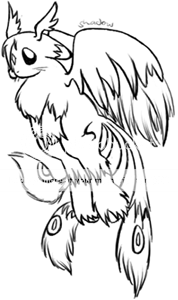
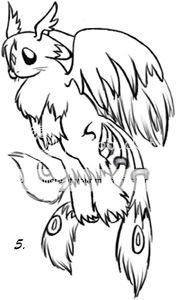
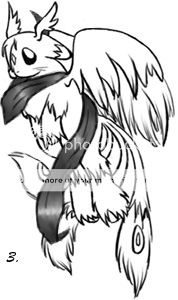
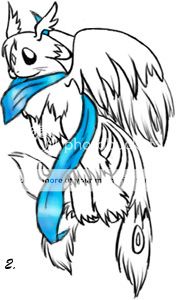
About the Llirin/Moofles and Plancake Isle
The story of the Llirin:
There once was an isle which floated in a sea in the middle of nowhere. It was called Lliri Isle, and was the home of a strange race of creatures which called themselves Llirin. No one knew how they had got there, not even the Llirin themselves, they had always lived there, and, they believed, they always would. But this was not to be. For it so happened that one day, the tectonic plate upon which their idyllic homeland was situated drifted over a particularly hot section of magma- a hot spot. A large globule of magma began to well up in the layers of crust below the surface of this plate, which just happened to be a spot exactly under this most unfortunate isle. For, much gas had accumulated underneath the isle with the magma, and when it reached the surface-
BOOM.
Lliri isle was literally blown to pieces. Lava welled out from where Lliri Isle had once been, creating a new but desolate landmass of dark, brooding basalt as the sea slowly cooled it. But not all the Llirin had perished. For, below the coast of Lliri Isle, an underground bunker had been situated. It had been large, and filled with grass and artificial light and provided a place for all the Llirin eggs to explore before they hatched. It was surrounded by an extremely powerful shield, and had been made to prevent the eggs from getting lost or harmed due to their levitational abilities which could take them almost anywhere, and all the Llirin eggs were contained here as the Llirin considered raising their young to be a community effort. At the time of the eruption, the eggs had been watched over by two Llirin, who happened to be twin sisters of the fire element. The force of the eruption had not been enough to destroy the defensive shield surrounding the bunker, but the massive amounts of lava pouring out were slowly eroding it away. The two Llirin knew that they did not have much time- they coaxed as many of the eggs that would come to the entrance of the bunker, and carried others. They created as strong a shield as they could to protect the eggs as they zoomed out of the bunker, through the lava and out to safety- it only held for about half a minute, but most of the eggs did manage to make it to safety. The two fire Llirin were quite tired from using all the magic they had had to save the eggs, but managed to keep coaxing the eggs to follow them as they looked for a place to land.
Two hours later, the thing that they had been dreading happened. The Llirin eggs that had been following them began to drop out of the sky. It seemed as though they had finally given in to exhaustion- but, zooming down in an attempt to catch as many of the eggs as they could before they all drowned, they saw a tiny speck floating in the water that they had not noticed before. It was a small green kayak, and a blue-haired girl with fox ears on her head and a sparkling pendant around her neck (aka. Keilyna) was sitting in it. The Llirin eggs were all coming down to rest on the kayak, some settling down in the front, and others on the back. Keilyna looked rather surprised, and was eyeing the eggs suspiciously until the two Llirin explained to her what had happened. They asked where the nearest landmass was, but she said that the nearest land she knew was hundreds of kilometres away- though there would probably be others around somewhere, she added. (She had actually gotten lost, but didn't want to admit to that.) She kept rowing and rowing and the two Llirin helped a bit by pushing the kayak at times, but eventually a curved coastline came into view.
As she rowed closer, Keilyna commented that it looked rather like a pancake, and should consequently be called Pancake Isle. When the kayak finally came to rest on the sandy shores of the isle, the eggs floated off and began to zoom around happily and roll in the sand. Noticing how energetic all the eggs seemed to be, the Llirin twins thought that they would be far too much to handle, and asked Keilyna if she would be able to find other people to help look after the Llirin when they hatched. She agreed, though she didn't know if she'd be able to get back to the mainland of Gaia, so, accompanied by the two Llirin and the band of Llirin eggs, went on a journey inland to see if any other people could be found.
After a couple of days walking through ever-changing landscapes, they spotted a large forest in the distance. Shapes seemed to be zooming around above the treetops, and they went closer to investigate. Entering the forest, they were able to see the creatures at a closer distance- they were actually Moofles, but none of the group knew about them at the time. After walking for a while longer, Keilyna saw a person sitting under a tree, surrounded by more of the fuzzy creatures. She suddenly realised that it was her friend Shadow. Deciding to surprise her, she crept up behind her and yelled 'BOO!' Shadow was as surprised to see Kei as Kei had been to see Shadow. Kei found out that the fuzzy creatures were actually called Moofles, and Shadow called the isle Plant Isle because apparently the other half of its coastline, the half that she had seen, was shaped like the leaves of a plant! So they decided that the isle should be called Plancake Isle, a mix of the words pancake and plant. Then, Kei wanted to know how Shadow had found the Moofles, and she said...
The Moofle Story
"Before the Moofles came here, they existed, deep below the earth. A famous explorer found them, whose name has forever gone down in Moofle history as a dark and feared word; many use it as a curse. This explorer, Jhoder, found them, and, thinking they were little more than oversized jewels, exported them to the surface. He was soon proved wrong one night, when, tapping away at the gem, it cracked and split, revealing a Moofle infant inside.
Jhoder realised the profits he could make, and what was more, there seemed to be an un-ending supply of gems. He soon was trading in them, selling Moofles off as slaves, where their work was repaid with torture and eventually, death. What he didn't notice was the different ways Moofles reacted with their surroundings, the way they classed themselves and the fact that they could communicate with each other, using old Mooflen. It was too subtle for him, and all he thought of was his profits.
Of course, with such an attitude to his Moofle, it soon died. He sought out a new one, but by a twist of fate, the egg destined for him fell into the hands of a small child, Kido.
Kido had heard of the Moofles and their race, and was very attatched to her new 'plaything'. However soon she could see that the Moofles weren't simply toys or tools, they were as real and complex as humans. When her Moofle had fully grown, they formed an alliance and overthrew the human-slavers.
But now there was no safe place on land for them. The humans viewed them as a threat and dangerous, and wanted them gone. So, the Moofles flew north, out of their land, looking for an island or safe place to stay. They took with them Kido, now a young teenager. But the journey was perilous, and Kido did not survive.
"Few did, and those who did buried their loved ones and mourned, but they did not forget that it was a human who freed them. On the new Isle they had found, they named it using the human language, and grew human plants and food there.
They set up small memorials in the centre of the island, as a tribute to all the Moofles who had died in slavery and in freedom. In a silent agreement, they named the newest Egg, Kidonizk. The Nizk means, helper, or friend, and the Kido is after the child.
Everything was perfect - save for one thing. The Moofle eggs refused to hatch. The adults tried everything - coaxing, bribing, throwing them against palm trees - yet they stubbornly refused to open. Kido's Moofle theorised that perhaps because humans had been the first to hatch them, they needed humans now in order for them to hatch.
So eventually the Elders of the Isle established a pact with the nearest shores of land, with the promise that they would give Moofle eggs to responsible human beings.
However, they needed help choosing the right children or adults, and that is where the stranger Shadow came in. After observing her for a while, the Moofles decided that she was the one that had most of their routines and habits; and so interrupted her on her way to school. Shadow was thrilled at the chance to miss school and look after pretty flying things, as she thought of them, and agreed at once, whereapon the Moofles abducted her, and she has lived there more-or-less ever since, not really doing her job as picker-and-chooser of responsible owners, but having fun nonetheless. They gave her Kidonizk, who hatched and grew to be just as nuts as she was, so the egg wasn't wasted.
And now, in the thriving numbers, the Moofles are waiting for the right owners..."
Shadow finished, hoping that Kei liked her story. A snoring sound came from the human - Kei was asleep. Frowning, Shadow poked Kei awake, and together, they set up Plancake Isle, and joined the AoI.
The End. ^0^
About the Llirin & Moofle elements:
Llirin/Moofles are able to use small amounts of their element's magic- for example, Llirin/Moofles of the light element can do things like creating small balls of light, and Llirin/Moofles of the fire element can do things like lighting candles with their magic. However, they would not be able to do things like making giant waves of fire that destroy anything in their path or anything ostentatious and requiring lots of power like that.
Air~ Llirin of the air element seem to like spending as much time in the air as possible. Since they cannot do so at all in their infant stage, they are usually more active in exploring and running about to release extra energy/frustration at not being able to fly. But when they are able to fly, they seem to be able to do so better than Llirin of other elements, as they are more attuned to the air.
Dark~ Llirin of this element have very good night-time vision. They can see almost as well at night as they can in daylight, though their vision in both is very sharp. They are also very perceptive, and have excellent hearing.
Earth~ Llirin of the earth element prefer to spend most of their time on the ground, even when they are at a stage when they can fly. Some Llirin of the earth element are even afraid of heights! However, on the ground, they are swift and agile, and have very good reflexes. They are also good at climbing trees.
Fire~ Hot days do not seem to affect Llirin of the fire element at all, though on colder days they seem to prefer curling up under a blanket and sleeping. Llirin of the fire element often have very quick tempers and are very extroverted. They are very talkative, and when they are not angry, they are cheerful. In fact, they can switch back and forth between the two moods very rapidly.
Light~ Light element Llirin are generally in a good mood all the time. They are very friendly and inquisitive, and some are quite hyperactive! They are good at being able to detect others' moods, which helps them to get along well with others. Llirin of the light element are usually quieter when it is dark, and some are even scared of it.
Water~ Llirin of this element are very good swimmers- they almost seem incapable of drowning! They love it when it rains, and don't seem to understand why most others prefer to stay inside when it does. Water Llirin are usually calm and passive, shy Llirin are usually of this element.
Rarer Llirin elements:
Ghost~ Info coming soon.
Moofle Elements
Earth~ Normally quite quiet in a group, but very adventurous when running solo. They dislike flying, and generally high places. They normally camp on the ground or in a low tree-hole. They normally go round in pairs, unless they are needed by their "pack".
Opposite: Air
Fire ~ Loud and very prone to mood-swings, Fire types don't hesitate to voice their opinion and stick up for it. They are extremely stubborn but also intensely loyal. They are often found at the head of the group, and need to be just as good as getting out of trouble as getting in to it!
Opposite: Water
Water~ These Moofles are exceedling graceful in water and dislike leaving it, but are clumsy on land. They are generally cheerful, especially on a rainy day. They love splashing other Moofles, and can be fairely naughty at times!
Opposite: Fire
Ice~ These moofles are quiet and shy, but are happiest when it's cold. They love nothing better than a good snow fight, but dislike warm days. They are very good-natured and are hardly ever angry.
Opposite: Lightning
Dark~ These are the most mischeveaous of all Moofles. They love to play tricks, but sometimes go too far. Most Dark Types are not evil, but there are some who use their intellect in cruel ways.
Opposite: Light
Lightning~ These Moofles are very rare, and hardly ever seen. Their elemental gifts mean they are very fast and deadly attackers. They have harsh tempers when annoyed, and being friends with one if them is like being friends with a thunderstorm, ironically. They hate to see unjustice and will stand up for any victim of it.
Opposite: Ice
Air~ These are the most carefree and bubbly of all Moofle types. They are just always happy! They love the sound of their own laughter as well as everyone elses, and generally know how to cheer people up. However, the everlasting laughter can get annoying, and Air types can be sour when offended.
Opposite: Earth
Light~ Almost always happy, and hyper. They love singing, strangely enough, and dancing. Their smiles are infectious! They are innocent, but naiive and easily misled.
Opposite: Dark
Chocolate~...Nah. xD
Special Moofles~ Special Moofles subclass into several different types, however, there are a few 'main' classes that all Specials can be sorted into.
Mythical/Legendary: Moofles bearing features from legends or myths such as extra wings, horns, spikes, etcetera, etcetera.
Objectical/Digital: Moofles bearing the signs of coming from a modern, technological age! Such as robotic/metal features and characteristics.
Natural/Celestial: Moofles bearing features derived from nature. These Moofles are often named leaders over then rest.
Food: Moofles bearing the likeness to modern day food...o.O;;;
Dictionary of Old Mooflen:
Because the Moofles lived so long amongst humans, they picked up snippets of the languages they heard and adapted them to suit their needs. So 'Mooflen' is really a misnomer, it is more of a mix of languages.
Mooflen is like English, in that it is completely irregular and difficult to understand to an outsider. However some of the more...useful grammer rules from other European languages came in, so some of it will actually make sense.
Pronuciation:
'Z' and 'C' are pronounced 'th'
'J' is prounounced 'hoh'
'H' is silent.
'G' is pronounced 'heh'
'X' is pronounced 'Sh'
Numbers - Numfle
1. Uno (oo-no)
2. Duo (doo-oh)
3. Tres (tres)
4. Quattor (quat-tor)
5. Cinque (chin-quay)
6. Seis (ses)
7. Siete (see-et-tay)
8. Ocho (och-o)
9. Nueve (nuu-weh-vay)
10. Diez (dee-eth)
100. Ciento (thee-en-towh)
1000. Cientoth (thee-en-toth)
10000. Ciento-ciento. (thee-en-towh-thee-en-towh)
100,000. Ciento-cientoth. (thee-en-towh-thee-en-toth)
Eleven is diez-uno, twelve is diez-duo etcetera, etcetera. Twenty is duo-diez, thirty is tres-diez and so on and so forth. Moofles had no word for a million, that number was beyond their brain capacity. Instead, they used 'many thousands' - 'muchas cientoths'. For infinity, they used infinity. Many say it is because they did not understand what it meant, and therefore could not translate it.
Days of the Week - Dias de la sema
Monday - Unodia
Tuesday - Duodia
Wednesday - Tresdia
Thursday - Quattordia
Friday - Cinquedia
Saturday - Libradia
Sunday - Descansadia
Saturdays and Sundays were Moofles' favourite days of the week. Therefore they gave them special names: 'Libradia', free day, 'Descansadia', rest day.
Months - Meses
Unomes - January
Duomes - February
Tresmes - March
Quattormes - April
Cinquemes - May
Seismes - June
Sietemes - July
Ochomes - August
Nuevemes - September
Diezmes - October
Diezunomes - November
Diezduomes - December
Straightforward 'one month', 'two month', 'three month'. However, if your birthday was in that month, it was instead called, '#-cumplemes', # being the number of the month it was.
Colours:
Red - Redsan
Yellow - Yellowsan
Blue - Bluesan
Purple - Purplesan
Black - Blacksan
White - Whitesan
Green - Greensan
Orange - Orangesan
Brown - Brownsan
Multicoloured - Rai-leesan
Bright/Shiny - Shineesan
Sparkly - Sparkleesan
Glowy - Glowleesan
The Moofles simply took the original colours (not having needed them underground) and added -san. What the 'san' means is anyone's guess.
The Moofles do not have a word for pink. They did not like pink, and if they had to refer to it in conversation, they called it 'xipinksan.' Calling someone pink was one of the worst insults a Moofle could recieve.*
For dark colours, da- was added to the front. So dark red would be da-redsan. And for light colours, li- was added to the front. So light purple would be li-purplesan.
*In later generations, if pink was found as a Moofle's coat colour, the Moofles would deny it was pink and call it 'sha-redsan' - shade of red.
Greetings and everyday words
Ciao! - Hello!
Buen dia - Good day.
Buen tarde - Good afternoon.
Buen wangcha - Good evening.
Buen noche - Good night.
Wha'sup? - What's up? (Particularly popular with teenage Moofles.)
Encantada conocerte - Delighted to meet you. (Very formal.)
Estaba encantada conocerte - It was delightful to meet you. (Often said when saying goodbye.)
Ciao-la! - Goodbye!
Duai - Correct/Yes/Right.
Bu duai - Incorrect/No/Not right.
Please - Por-fa
Thank you - Xiexie (shee-er-shee-er)
You're welcome - Denada
Sorry - Desolee (deh-soh-lay)
Excuse me - Disculpa
Yo/h - I, myself (Yoh is more polite)
Ni/n - You, yourself (Nin is more polite)
Ta - He, himself
Taa - Her, herself
Yoh-men - We, ourselves
Ni-men - You (plural), yourselves
Ta-men - They, theirselves
'de' indicates possessive - e.g: 'Yo de cumple' = My birthday.
Whatever - Igualmente
Commands:
Leave me alone! - Dejame en paz!
Leave it! - Dejala!
If only! - Ojala!
Come here! - Ven aqui!
Help me! - Ayudame!
Sit down! - Sientate!
Stand up! - Levantate!
Give it to me! - Damelo!
Moofle Spirits
Moofles believed in Christiannity, however the also believed in spirits and other phantom things could co-exist. They did not worship the spirits and ghostly things, but used them as symbols who would 'watch over them' or were basically, good luck.
Lei-Kyna - The Spirit of the Llirins, Pancakes, and Sparkleeness.
Shoo-mroom - The Spirit of Rocks, Mushrooms, and the Sun.
Mysque-Tilyoom - The Spirit of Names, Fantasy creatures, and Jumping.
Celleth-elbreen - The Spirit of Happiness, Rememberance, and Change.
Xeh-jin - The Spirit of Kitties, Snerks, and Colour.
Ressta-oroscer - The Spirit of Tackling and other glomping techniques, of Tying people up and of Giggles.
Sah-ta - The Spirit of all things Watery, of Blue and of Hope.
Naynay - The Spirit of Chinxies, Sanity and Smiles.
Lamonn-Amdiuela - The Spirit of Annoying, Nutellarns, and Clinging-ness.
Oky-spo - The Spirit of Times, Gifts and Support.
Dowsha - The Sprirt of Moofles, Purple, and Plants.
They are not to be confused with Deybra, the Spirit of all things Evil and, for some reason, all things bread-like.
Excerpts from a dictionary of Ancient Lli'irin-inyi
Lli'iren-inyi was the language of the Llirin of Lliri Isle. However, the teardrops that survived and are now living on Plancake Isle were taught English instead of Lli'irin-inyi so that they would be able to understand their owners and the Moofles. The adult Llirin twins who journeyed to Plancake Isle with them created a dictionary of Lli'iren-inyi- now known as Ancient Lli'iren-inyi since the new generations of Llirin generally do not speak it- so that when they passed away, the language would still survive.
If you wish to use Ancient Lli'irin-inyi in roleplay, and there isn't a translation here for any words you want to use, feel free to invent them yourself, providing they sound like words in Ancient Lli'irin-inyi! Though please include the English translation of whatever your Llirin is saying in your post as well, so that whoever you're roleplaying with doesn't go crazy trying to translate everything...
Syntax:
The syntax of ancient Lli'irin-inyi is different to English. The verbs of Lli-irin-inyi always go at the end of the sentence.
For example, 'I like flowers' would be 'Flowers, I like,' in Lli'irin-inyi. And 'This is strange, I wish Lli'irin-inyi was like normal English' would be 'Strange this is, Lli'irin-inyi like normal English, I wish.' Or something like that. Though if Lli'irin-inyi doesn't quite end up working like a proper language, it's just because... it's different. And it's not my fault if it's odd, it's the fault of the Llirin who invented it! (Akari: ~glares~ Stop shifting the blame on us... it's your fault, Kei!)
Pronounciations:
'A' is pronounced as 'ah'.
'E' is pronounced as 'ay'.
'I' is pronounced like the 'i' in 'kitten'.
'U' is pronounced as 'ooo'.
The letters b, o and x are not used in Ancient Lli'iren-inyi. (Many Llirin believe that it is bad luck to be put into a box.)
Suffixes:
-du: A suffix meaning 'before'. Indicates past tense.
-eila: A suffix used to indicate affection. It is often used after the names of one's family, or the names of very good friends. (Eg. Akari-eila, Keilyna-eila.)
-ia: A suffix used to indicate that something is good.
-inyi: A suffix used to indicate a language.
-masu: A suffix meaning 'after'. Indicates future tense.
-un. A suffix used to indicate evil.
Mihi-u: Colours.
Re'sa: Red.
Yavu: Orange.
Kii'ni: Yellow.
Me'er: Green.
Duvar: Blue.
Llinta: Indigo.
Emal: Violet.
I'via: White.
Ruga: Black.
Nate: Brown.
Ti'ihi: Pink.
Ka-su'lii: Rainbow.
Ai'li: Seasons.
Sa'e-uli-ai'li: 'Sun season'. Summer.
Fa'rui-ean-ai'li: 'Falling leaves season'. Autumn.
Vazi'i: 'Cold season'. Winter.
Da'hana-ai'li: 'Flower season'. Spring.
Days of the week:
a'ela-uli-u: 'Moon's day'. Monday.
a'cuya'ri-u: 'Fire's day'. Tuesday.
a'sha'ia-u: 'Water's day'. Wednesday.
a'rivi'li-u: 'Sky's day.' Thursday.
a'ilye-u: 'Friend's day'. Friday.
a'rui'e-u: 'Earth's day'. Saturday.
a'sa'e-uli-u: 'Sun's day'. Sunday.
Short forms of longer sentences:
Sometimes, Llirin can be lazy and be not wanting to say something that they often say in full. Here is a list of some abbreviations used by Llirin. They are all informal, of course!
Du'kiih? = Hello! How are you?
E'e'za-un! = Give that to me or I'll put you in a box!
Il'a-i'laa! = That is so cute that I think I will die! O.O
Sai'le-nu! = Look at this!
Za-un'un'un!! = I saw an evil box spirit! Save me!!
More words:
A: Day.
Aseu: Spirit/s.
Aseu-un: Evil spirit/s.
Aseu-ia: Good spirit/s.
a'vaa-du: 'Day before today'. Yesterday.
a'vaa-masu: 'Day after today'. Tomorrow.
Aved: Get. As in 'Can you get me this?', not 'A Llirin's get'.
Calu: Did.
Cu'ki: Food.
Cuya'ri: Fire.
Da'hana: Flower/s.
De'a: You.
De'a-u: Your.
De'a-ru'ke: 'You good?' The Lli'irin equivalent of 'How are you?'
De'e: I/Me.
De'e-u: Mine.
De'i: It.
De'i-u: Its.
De'u: They, them.
De'u-i: Theirs.
Ean: Fall, falling.
Ela: Night.
Ela-ghi'sai: Midnight.
Ela-uli: 'Night orb'. The moon.
Elle'ith: The Lli'irin Goddess of Rabbits.
Esa: May. (Not the month or name, the word!)
Esa de'a za'aseu-un aved: 'May the evil box spirits get you.' The worst curse invented by the Lli'irin.
Fa'rui: Leaf, leaves.
Fe: Are.
Fir'a: Here.
Fir'e: There.
Fir'u: Where.
Fu'na: Since.
Ghi'sai: Noon.
Ghi'sai-masu: Afternoon.
Hai'su: Morning.
Ilye: Friend.
Ji'inise: The evil scion of the Ka'mera sect of evil spirits.
Ki'usi: Fly, flying.
Ki'usi-ru'ke!: 'Good flying!' A common phrase used to say goodbye to someone. It is the Lli'irin equivalent of 'See ya,' 'Take care' and 'Goodbye' all rolled up in one.
Laru: Think.
Lli'irin: 'The People' (or the equivalent). The Llirin called themselves this.
Lli'irin-ilye: 'Friend of The People'. A word coined by the fire Llirin twins for Moofles.
Lli'irin-inyi: 'Language of The People'. The name of the language the Llirin of Lliri Isle used.
Lliri: Haven, home.
Lliri-yuve'ri: 'Home Island'. The Lli'irin term for Lliri Isle.
Lu'umi: According to Lli'irin superstition, this is the name of the scion of the evil box spirits.
Mea: Do.
Mi'ist: The good twin of Lu'umi. The Lli'irin Goddess of Poetry.
Mu: The name of the Lli'irin Goddess of Rocks.
Nava: Speak, speaking.
Neya: Probably.
Ni'e: Child.
Niyu-niyu: Gibberish.
Niyu-niyu-inyi: 'Gibberish Language'. Used to refer to any language other than English or Lli'irin-inyi.
Nu'ava: Could.
Nu'eva: Would.
Nu'iva: Should.
Pla'ante: The Lli'irin Goddess of Jellyfish and Squishy Things.
Qe'ah: Thank you.
Qui'vai: Welcome.
Qui'vai de'a fe: 'You are welcome'.
Reka: Of.
Rivi'li: Sky
Rui'e: Earth
Ru'ke: Good.
Ru'ke-hai'su: Good morning.
Ru'ke-ghi'sai-masu: Good afternoon.
Ru'ke-ka: Great, excellent.
Ru'ke-zu'run: Good evening.
Sa'e: Bright.
Sa'e-ilye: 'Bright friend.' Used to refer to one's lover/mate.
Sa'e-uli: 'Bright orb'. The sun.
Sai'i: Pretty.
Sha'ia: Water.
Shie'lli'irin: 'The Big People'. Humans.
Shie'lli'irin-inyi: 'Language of The Big People'. English. (The Lli'irin did not have any name for other languages, such as Chinese/German/Malay or anything like that, because the only other language that the Llirin of Lliri Isle knew how to speak was English- but even then, only a few knew it, such as the fire Llirin twins.)
Si'ne-e: No, not.
Si'ne-e-en: Never.
Sta'a: Marshmallow spirit/s.
Ta'sa: Water spirit/s.
The'ke: Odd, strange.
Thie: So.
Ua'ke: Like.
Uli: Orb.
Unae'i: Very.
Vaa: Today.
Vaa-du: 'Before today'. The past.
Vaa-masu: 'After today'. The future.
Va'zi'i: Cold.
Vesa: Invent.
We'ar: Land.
Wi'ia: How.
Ya: Is.
Ya'viisi: Safe.
Ya'viisi-ela: 'Safe night'. The Lli-irin-inyi equivalent of 'Good night'.
Ye: This.
Yev'na: Say, says.
Yi'iim: Most.
Yuve'ri: Isle/Island.
Za: Container.
Za'aseu-un: Evil box spirit/s.
Za-un: 'Evil container'. In other words, a box. A Lli'iren superstition holds that if you are put inside a box, the evil box-spirits will take over your mind and make you insane.
Zi'fa: Why.
Zi'fe: When.
Zi'fi: Who.
Zi'fu: What.
Zu'run: Evening.
Llirin Types:
Normal Llirin are Llirin that are... normal. XD At least in appearance, that is. Since normal Llirin can be crazy and nutty and hyper and totally... un-normal inside. ^0^
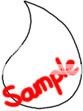
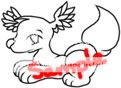
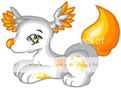
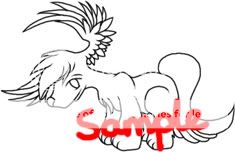
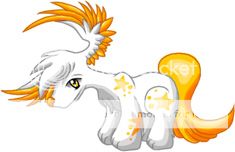
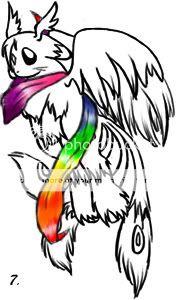
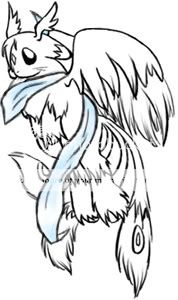
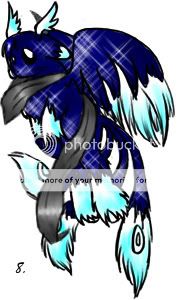
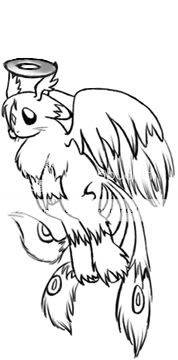
There are several types of Uncommon Llirin- Unicorn Llirin, Pegasus Llirin and Shiny Llirin. Unicorn Llirin are Llirin with unicorn horns sprouting from their foreheads, and their horns contain some healing magic. Pegasus Llirin have little wings sprouting from their feet, and are extremely agile fliers that can change direction in an instant, and fly for longer and faster than any other types of Llirin. Shiny Llirin are just... very shiny and metallic. ^0^ They can easily detect the presence of metals within a 10-metre radius. Also, they can make light converge and diverge and split into all the colours of the rainbow, even though they cannot create it (unless they are also Light Llirin). Uncommon Llirin are slightly rarer than 'normal' Llirin, and are mostly found in auctions, raffles, etc., and sometimes one may find its way into a flatsale...
(Examples: Unicorn Llirin, Pegasus Llirin)
(IMAGE COMING SOON)
There are also a few types of Rare Llirin, but the only one that has been sighted so far was last seen climbing into a Llirin Valentines Day Bag. It was a Unicorn/Pegasus/Shiny all rolled up into one, and from what we were able to tell from the quick glimpse we got of it, the special abilites that Uncommon Llirin have were greatly enhanced in it.
Rare Llirin are slightly less prolific than Uncommon/Normal Llirin. In breedings with Uncommon/Normal Llirin, they produce 2-3 teardrop eggs that usually contain Uncommon Llirin. When two Rare Llirin breed, only 2 teardrop eggs are ever produced. However, at least one of these eggs will always contain another Rare Llirin.