|
|
|
|
|
|
|

Crystal-1ite Vice Captain
|
 Posted: Fri Jan 04, 2008 11:03 pm Posted: Fri Jan 04, 2008 11:03 pm
I am hoping that everyone will find this thread interesting. I will be adding new pictures with site information and biblical reference on an ongoing basis. Since I am using my photobucket ... I may have to delete pics from time to time to make room for new ones, so I will have to delete older entries as we go along. Please feel free to save the pics to your computer or save the page as an htm document for future reference. To do this, click on "File" > "Save As" > then save to document folder.
|
|
|
|
|
|
|
|
|
|
|
|
|
|
|
Posted: Fri Jan 04, 2008 11:33 pm
Mount of Temptation
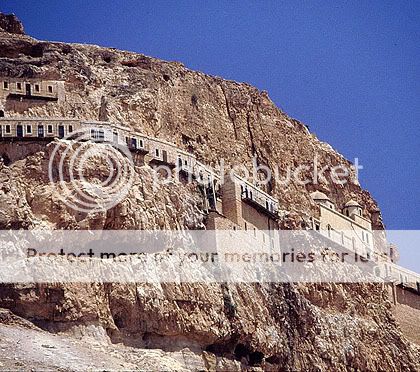
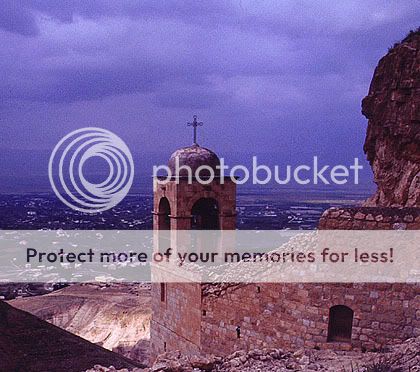
“Then Jesus was led by the Spirit into the desert to be tempted by the devil. After fasting forty days and forty nights, he was hungry. The tempter came to him and said, ‘If you are the Son of God, tell these stones to become bread.’ Jesus answered, "It is written: 'Man does not live on bread alone, but on every word that comes from the mouth of God" [Matthew 4:1-4]. Somewhere in the mountains of the Judean wilderness, the New Testament records that after His baptism by John, Jesus fasted for 40 days and 40 nights. This event is remembered now at a monastery on Qarantal Mountain above Jericho. Although the devil offered him all kinds of splendors, Jesus refused to succumb to temptation. For this reason the heights are also called the Mount of Temptation. Until recently you needed strong legs to reach the Greek Orthodox monastery located on the slopes of Qarantal (an Arabic corruption of the Latin word for “forty.”) Contemporary visitors now ride a cable car almost to the top. During the Byzantine period monks lived in caves scattered on the mountain and the present monastery was erected in the late 19th century.
Hung on a cliff above Jericho is the Monastery of the Temptation
The Wilderness of the Judean Desert was the scene of the temptation of Christ.
|
|
|
|
|
|
Crystal-1ite Vice Captain
|
|
|
|
|
|
|
|
|
|
|
|
Posted: Sat Jan 05, 2008 10:23 am
Good idea. nice pics too. ^^
|
|
|
|
|
|
|
|
|
|
|
|
|
|
|
Posted: Tue Jan 08, 2008 9:00 pm
Sodom
While Abraham had discovered that God desired man to live according to a set of moral precepts, most of the ancient world continued to worship idols and practice abominations. The best known of these wicked cities are Sodom and Gomorrah.
God decided to destroy Sodom and Gomorrah because “the outcry against Sodom and Gomorrah was so great and their sin so grievous. . .” [Genesis 18:20]. However, assuming that there were at least a few righteous souls in the two cities, Abraham begged that they be spared. The Lord agreed, providing that Abraham could find at least ten such men. But Abraham could not come up with even ten names!
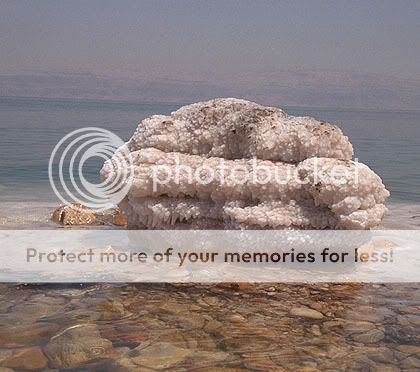
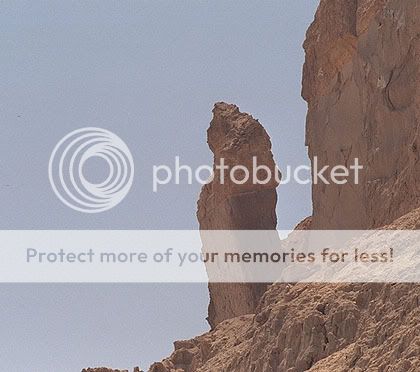
Abraham’s nephew Lot lived in Sodom with his family. They were evacuated from the city by angels and told not to look back. However, Lot’s wife failed to heed the warning and was killed. She was engulfed in a Pillar of Salt amidst the upheaval (Genesis 19:26).
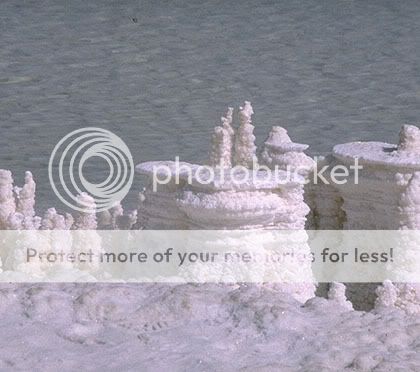
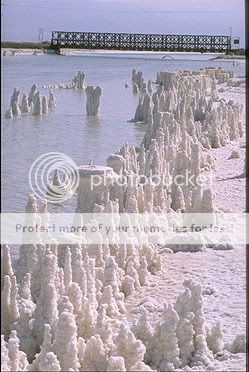
The entire western ridge overlooking the southern area of the Dead Sea is named after Sodom and is composed entirely of salt dikes that shot up out of the earth's crust during violent plate movements.
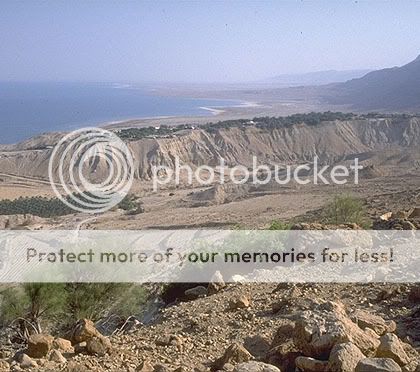
Earthquakes, erosion and the floods of the winter created the unique features of the Judean desert.
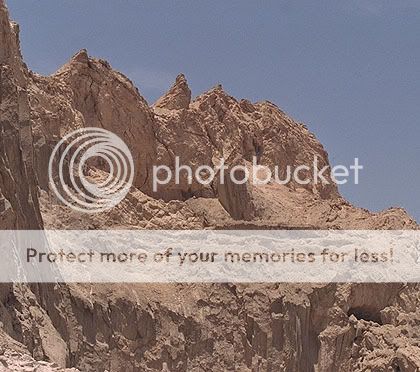
Despite being warned not to turn around, the wife of Lot witnessed the destruction of Sodom and Gemorah and then became a pillar of salt.
|
|
|
|
|
|
Crystal-1ite Vice Captain
|
|
|
|
|
|
|
|
|
|
Crystal-1ite Vice Captain
|
Posted: Tue Jan 08, 2008 9:05 pm
Jericho
Thought by archeologists to be over 10,000 years old, Jericho is the oldest known walled city in the world. When Joshua and the Children of Israel entered the Promised Land for the first time, those walls came “tumbling down.” “When the trumpets sounded, the people shouted, and at the sound of the trumpet, when the people gave a loud shout, the wall collapsed; so every man charged straight in, and they took the city” [Joshua 6:20].
Although archeologists have not yet uncovered remains of the famous walls of that time, Tel Jericho (Tel el Sultan located in the modern city) includes the ruins of a large circular tower and fortifications that indicate Jericho's importance.
The environs of Jericho were once coveted by Cleopatra. She wanted control of the persimmon plantations from which a perfume that 'drove men wild' was produced (unfortunately the plant is now extinct!)
An oasis of lush foliage and abundant springs in a dry desert setting, Jericho has been used over the ages as a winter resort for the wealthy. Herod built himself a palace in Jericho, as did rulers of the Moslem Umayyid dynasty.
In the New Testament, crowds gathered when Jesus paid a visit to Jericho (at nearby Tullul Abu Alaiq). Zacchaeus, a tax collector, wanted to see Jesus, as well. But he was a short man, and he climbed a sycamore-fig tree to get a glimpse of Jesus passing by (Luke 19:1-4).
The Oasis of Jericho, the Oldest City in the World

The magnificent remnants of Hisham's palace near Jericho
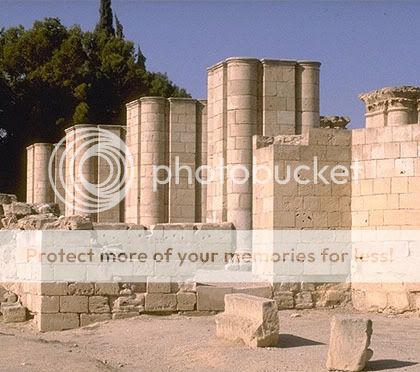
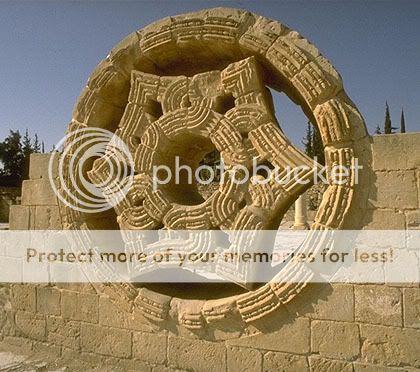
Monumental decoration found in the excavations of Hisham's palace.
The view of the tropical oasis of Jericho and the Jordan River from Tel Jericho.
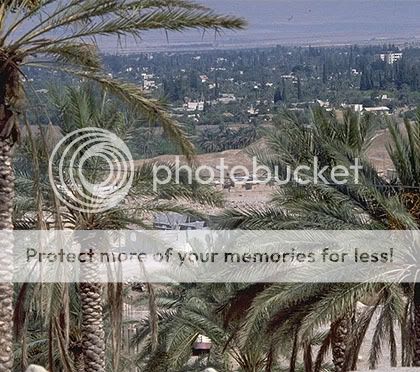
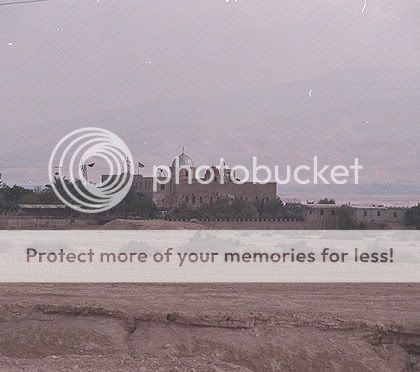
A monastery near Jericho marks the place of the Greek Orthodox baptism celebration.
|
|
|
|
|
|
|
|
|
|
|
|
|
|
|
Posted: Thu Jan 10, 2008 9:52 pm
This is a great idea! I'm enjoying it, thank you.
|
|
|
|
|
|
|
|
|
|
|
|
|
|
|
|
Crystal-1ite Vice Captain
|
Posted: Sat Jan 26, 2008 5:57 pm
Wilderness of Judea
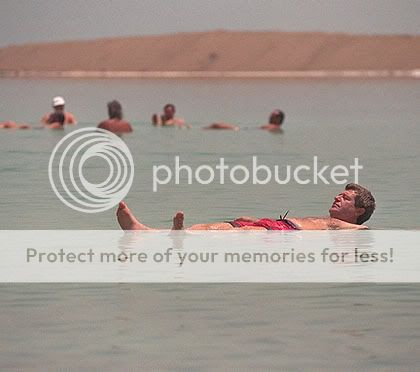
Located along the rift that extends from Mt. Hermon through two thirds of the continent of Africa, the Judean desert receives little direct rainfall and is formed by earthquakes, floods, and the other elements of erosion. Throughout the turbulent history of the Land of Israel, whenever people fled civilization, the wilderness of the Judean desert became the ideal place to hide. It's no accident that many of the events recorded in the Bible take place in this relatively desolate, but uniquely beautiful region. Here David fled the wrath of Saul, Elijah the Prophet found refuge in its caves, and the Essenes escaped Hellenistic domination of Jerusalem. Here the Zealots made their final, desperate last stand against the might of Rome. In later generations, after the growth of Christianity, hermits began to inhabit the caves of the Judean wilderness and build many monasteries there, clinging to stark desert cliffs. The fresh water floods of the desert all flow into the Dead Sea, 400 meters below Sea Level (the lowest point on the earth’s surface). As evaporation is the only form of exit for the waters of the Dead Sea, a salt and mineral content of over 30% has accumulated there. Israel extracts these minerals, including magnesium, potassium, and bromides for export throughout the world. The waters of the Dead Sea are also utilized for medicinal purposes, and people from all over the world frequent the Dead Sea spas for treatment. Often they come simply to relax at the luxurious hotels on the shores of the Dead Sea.
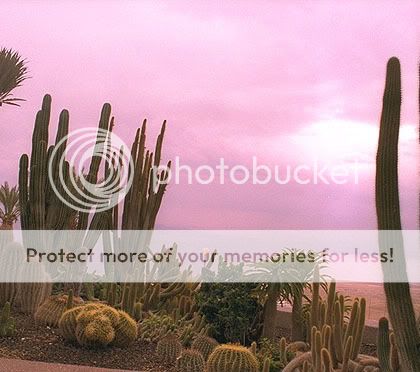
The area around the Dead Sea is an arid wilderness that can be productive with certain kinds of cacti and desert vegetation.
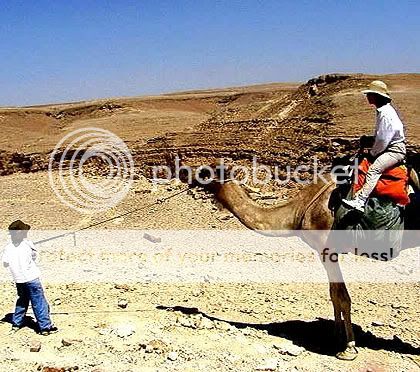
Throughout the ages this was the domain of the camel, and tourists try it even today.
The geological formations contrast to the human remains. Here a Roman camp at Masada is still clearly outlined. 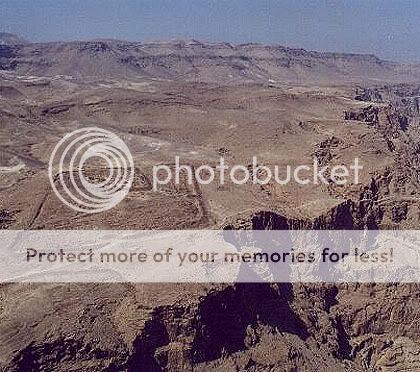
|
|
|
|
|
|
|
|
|
|
|
|
|
|
|
Posted: Thu Jan 31, 2008 2:35 pm
|
Crystal-1ite Vice Captain
|
|
|
|
|
|
|
|
|
|
Crystal-1ite Vice Captain
|
Posted: Thu Jan 31, 2008 2:43 pm
Qumran
There had been small settlements in the desert regions of Qumran during the Israelite period, until the Babylonian conquest. But in the second century B.C. a Jewish sect called the Essenes moved to the area according to many historians. They led communal lives, and practiced an ascetic life as they waited for the Messiah. The site was eventually abandoned about two thousand years ago. In 1947 a young Bedouin boy who was chasing after a goat entered a cave. Here he discovered jars containing scrolls which scholars date all the way back to the Essenes. The scrolls give an excellent picture of life in the community, which is augmented by archeological finds. Excavations have uncovered the ritual baths of the community (mikvaot), rooms used by scribes who wrote the scrolls, the refectory and other public buildings.
Here, in the rugged desert at Qumran, the oldest scrolls of the Old Testament were discovered and are now displayed in the Shrine of the Book of Jerusalem.
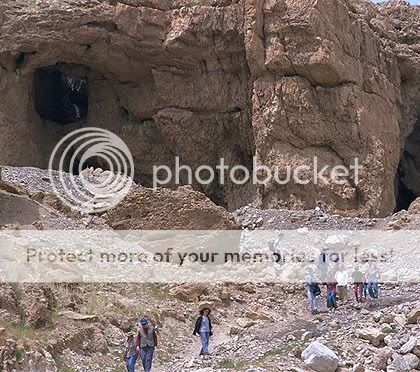
At the end of the small ridge a cave yielding some of the most important scrolls - Cave 4
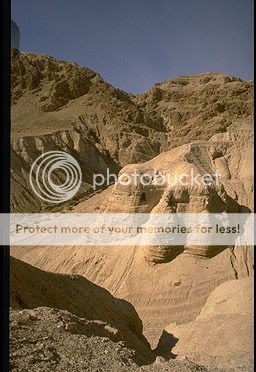
The area around Qumram housed a monastic sect which may have been the Essenes.
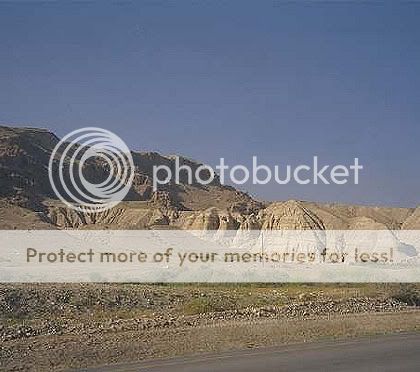
A display in the museum shows the kinds of jars that once contained the scrolls. 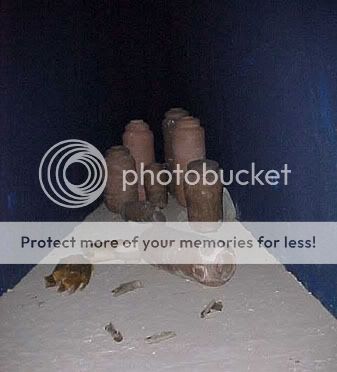
|
|
|
|
|
|
|
|
|
|
|
|
|
|
|
Posted: Thu Jan 31, 2008 2:55 pm
Ein Gedi
Ein Gedi is a tropical oasis rich in flora and fauna whose Hebrew name means “spring of the young goat.” David fled to the caves of Ein Gedi when hiding from Saul: “And David went up from there and lived in the strongholds of En Gedi . . . So Saul took three thousand chosen men from all Israel and set out to look for David and his men near the Crags of the Wild Goats” [I Samuel 23:29; 24:1-2]. It is so beautiful that it is found in a poetic description in the Song of Songs, 1:14: “My lover is to me a cluster of henna blossoms from the vineyards of En Gedi.” In the Second Temple era, historian Josephus Flavius wrote that the persimmon plantations of Ein Gedi and Jericho provided the fruit for a perfume that, according to Cleopatra, drove men to madness. During excavations at Ein Gedi a synagogue floor was uncovered, engraved with a unique warning: "whoever revealed the secret of this perfume’s production would be forever excommunicated from the House of Israel!" The plantations were apparently uprooted during the Jewish revolt against the Romans (66-73) and the plant is now extinct. Along with the Temple’s seven-branched candelabrum, the persimmon was later depicted in a victory arch in Rome (the Arch of Titus). The environs of Ein Gedi are an ideal spot for meeting the ibex (mountain goats) of the Judean desert and for a refreshing swim in one of its many pools and under its ever-changing waterfalls.
Waterfall in the oasis of Ein Gedi in the Judean desert.
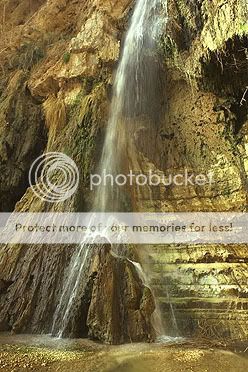
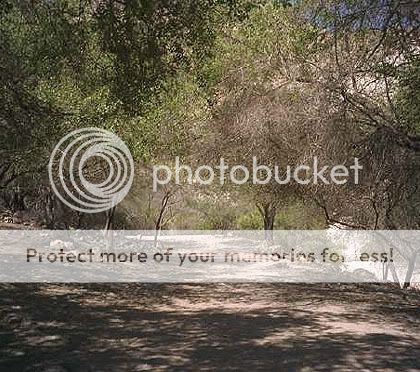
A perfect refuge area. David fled from King Saul and hid here.
The horns of the ibex are used to make the shofar (trumpet). 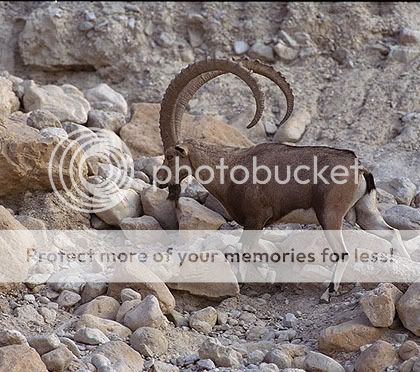
|
|
|
|
|
|
Crystal-1ite Vice Captain
|
|
|
|
|
|
|
|
|
|
Crystal-1ite Vice Captain
|
Posted: Thu Jan 31, 2008 2:59 pm
Massada
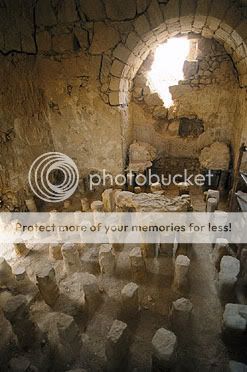
Surrounded on all sides by deep ravines overlooking the Dead Sea and cut off from civilization by the Judean desert, the fortress of Massada was built for the personal needs of King Herod. Having usurped the throne with Roman support, Herod was worried that either the Jews or the Romans would try to overthrow him, so he built for himself this private, luxurious fortress-palace. Herod diverted the floods of the Judean desert into cisterns carved into the plateau of Massada, and stored there huge quantities of foods, and weapons - all for his personal use. Remains of Herod's luxurious palace-fortress have been uncovered on Massada; so have the Roman bathhouse, storerooms and northern palace. About 70 years after Herod’s death, Jewish Zealots turned Massada into their final bastion. The Romans, in their desire to lower Jewish morale, sent several legions to Massada. Their aim: to destroy the 960 men, women, and children who had fled Jerusalem after the Temple was destroyed in 70 A.D. Unable to live their lives in the tradition of their forefathers, the defenders of Massada chose to die at their own hand rather than fall into the hands of the Romans and fall into slavery.
Herod's private fortress and castle. Massada has become the symbol of the Jewish struggle for survival.
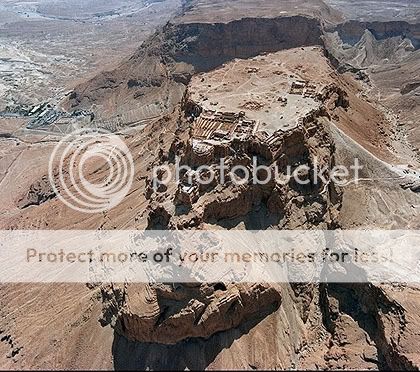
Massada means "fortress," and from this natural mountain Herod carved a retreat and palace.
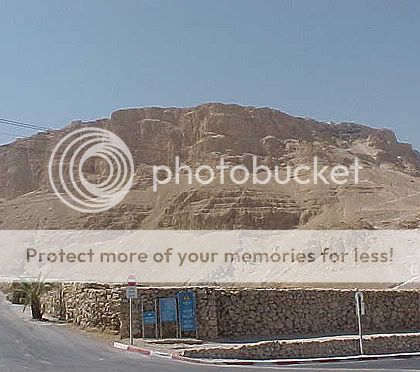
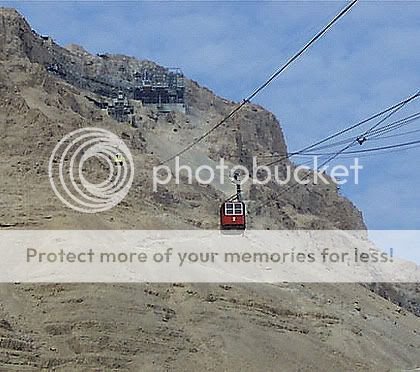
Though accessible in the ancient period only by the "snake" path, today cable cars service the mountain.
Roman-style baths were built, including this hot room or "caldarium".
To assault Massada, the Romans poured buckets of debris to build a ramp.
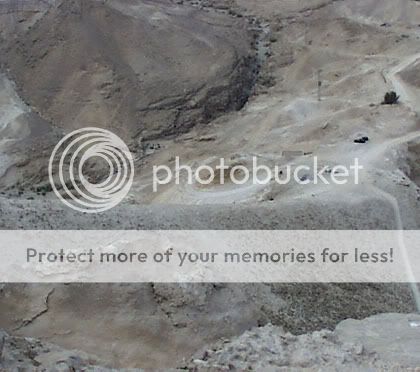
The plateaus of the Judean Desert are formed from marl.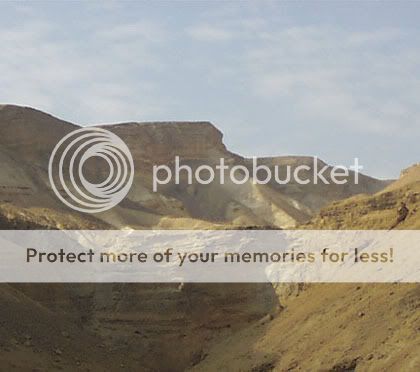
|
|
|
|
|
|
|
|
|
|
|
|
|
|
|
Posted: Sat Feb 02, 2008 12:18 pm
Wow! these are gorgeous. It's great that you're so well informed!
|
|
|
|
|
|
|
|
|
|
|
|
|
|
|
|
|
|
|





 Reply
Reply