





If you have any information that Izumi misses, please post and Izumi will add it here!
first, some terms used in Nihon Buyo (taken from http://immortalgeisha.com Thank you Bai Mianxi)
Quote:
From the introduction, A View from Outside:
buyo dance
buyo-geki dance-drama
michiyuki dance interludes depicting travelers on a journey
kudoki love or entreaty scenes
monogatari dramatic recital scene miming the actions of some past event
dammari mime
tachmawari stage fights
hanamichi raised passage from the rear of the auditorium to the stage
de posturing on the hanamichi before arriving onstage
sewamono a play about the lives of commoners
tobi-roppo leaping dance
aragoto "bravura" style of presentation
shinobisanju a single-note style of shamisen accompaniment
henge onstage change of costume
hikinuki a quick change in which one garment is removed to reveal a new one underneath
hada o nugu partial costume change, in which the upper half of a garment is dropped to hang from the waist
rakugo art of the professional storyteller
kata forms; the traditional choreography handed down to the present
iemoto seido headmaster system
From Chapter 1:
kamigata-mai a representative style of dance in the Kyoto-Osaka district, in which the dancer's movements are restricted the one tatami mat
kagura ancient ceremonial dances; liturgical dances
asobi play
This section is full of words without direct translations.
kakucho "rank and style;" having high kakucho is going above/beyond humanness
okisa "largeness;" breadth of expression and depth of content, rather than physical dimension; techniques that make more of each gesture without making them bigger
iki "breath," "spirit," "an artistic way of life"
ma space or time between one movement and the next, one pose and the next; flow, timing
hodo "extent" or "degree" (defined in the same section as "ma")
utsuri "transition" between moods, situations, characters; also the transitions between individual gestures
buyo traditional Japanese dance; a combination of the kanji for mai and odori
buto word for dance before Taisho era; now (1970) the word for Western-style ballroom dancing
odori historically, leaping-jumping dance; rustic, folk, dancing; now (1970) dance, in the Tokyo district
mai historically, rotating-circling dance; court, ritual, religious dancing; now (1970) dance, in the Kansai (Kyoto-Osaka) area
nihon buyo full term for Japanese classical dance
nichibu abbreviated term for Japanese classical dance
kabuki buyo classical dance, as derived from kabuki
shosagoto Kabuki dance piece, in Tokyo area
furigoto Kabuki dance piece, in Tokyo area
keigoto Kabuki dance piece, in Kansai area
bon odori rustic festival dances; summertime Bon festival dances
nembutsu odori semireligious dance
furyu odori townspeople's dance
furi realistic pantomime movement; any pantomime gestures; choreography
nakaha middle part of a dance number, in which dancers move in unison
momomane-buri extremely realistic furi
fuzei buri abstract furi
ningyo-buri human dancers moving in imitation of Bunraku puppets
Gagaku court music
shomyo Buddhist chants
nagauta kind of vocal music, sung
joruri recitative music, from Bunraku puppet drama
tokiwazu a style of joruri
kiyomoto a style of joruri
geza ongaku a group of musicians who perform behind the scenes
su odori a dance performed with only kurotomesode as a costume, usually at a recital or banquet
han isho a performance in which parts of the stage costume are worn, but the wig is omitted; literally, "half-costume"
ji-shibai rough forms of Kabuki popular in castle towns and farming villages
te odori smaller performances like ji-shibai, after Kabuki was restricted to Edo; literally "hand dances"
taikomochi literally "drum-bearers;" also comic dancers
This from Izumi's website on kimono And Nihon Buyo Basics page:
Quote:
Posture

in this image the one to the right is how most people stand, the one on the left is considered proper posture and should be how one stands.. the one in the middle, though it says 'too erect', that is the ideal posture for when in kimono.
Sitting
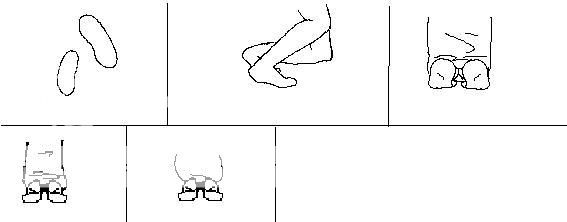
place one foot slightly behind the other. Lower yourself straight down onto knees keeping toes tucked under you (do not rest your rear on your heels). One foot at a time, move so you sit on your heels, top of feet flat against floor
Standing
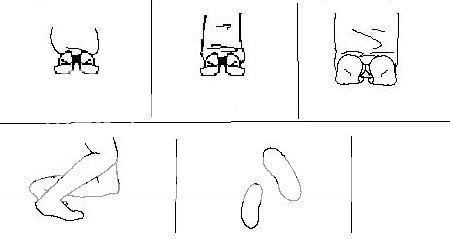
raise up just enough to tuck toes underneath you, one foot slightly in front of the other. raise yourself streight up (imagine you are being pulled straight up by a string attached to the top of your head)
Bowing
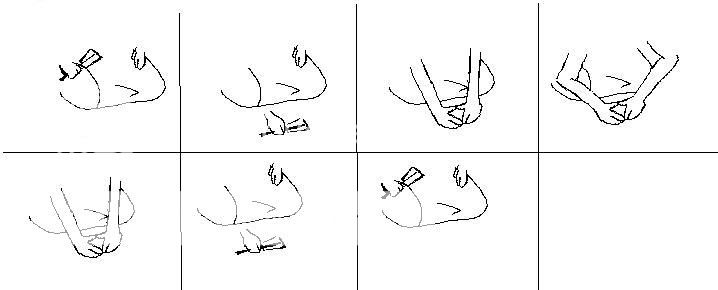
sit down as explained above, and remove sensu (Japanese paper folding fan) from obi. Place hands on thighs, then place sensu onto the floor in front of you. As you bring your hand back away from the sensu, move left hand from thigh to meet right hand on floor just in front of you, making a triangle with your fingers. Slowly lower your top half, bending at the waist, keeping rear resting on heels. Raise back to sitting position, pick up sensu and both hands return to rest on top of thighs at same time. Stand as instructed above.
Open Sensu
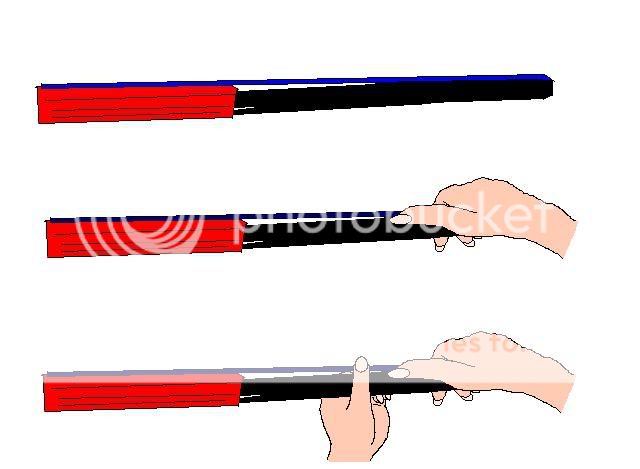
Hold out in front of you in right (hand is on top of sensu) as shown. Hold sensu with left hand (hand is below sensu). Use thumbs to push the top bar away from you (the top bar is shown in blue in Izumi's crappy drawing), and use left index finger to pull the other bars toward you -that's the hard part-. Now straighten right arm and slide left hand to edge of sensu, pulling the sensu open the rest of the way as you do so.
Hold Sensu

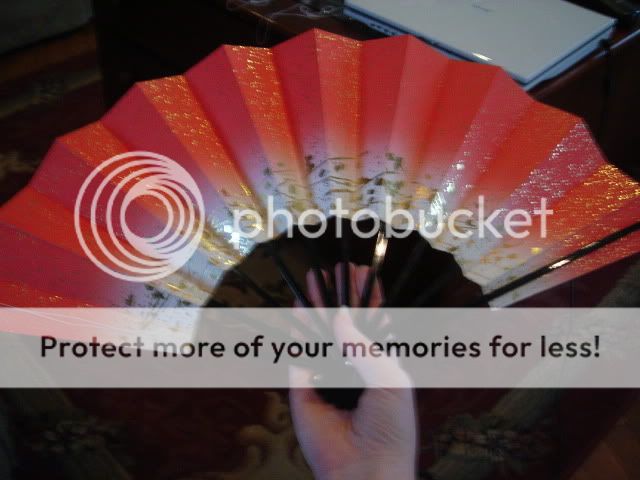



How to hold your hand during Nihon-buyo


How to hold your hand for man's dance


How to slide hand into sleeve during Nihon-buyo
First hold sleeve with index finger curled over the edge of the sleeve

Next streighten all fingers and you are done!

in this image the one to the right is how most people stand, the one on the left is considered proper posture and should be how one stands.. the one in the middle, though it says 'too erect', that is the ideal posture for when in kimono.
Sitting
place one foot slightly behind the other. Lower yourself straight down onto knees keeping toes tucked under you (do not rest your rear on your heels). One foot at a time, move so you sit on your heels, top of feet flat against floor
Standing
raise up just enough to tuck toes underneath you, one foot slightly in front of the other. raise yourself streight up (imagine you are being pulled straight up by a string attached to the top of your head)
Bowing
sit down as explained above, and remove sensu (Japanese paper folding fan) from obi. Place hands on thighs, then place sensu onto the floor in front of you. As you bring your hand back away from the sensu, move left hand from thigh to meet right hand on floor just in front of you, making a triangle with your fingers. Slowly lower your top half, bending at the waist, keeping rear resting on heels. Raise back to sitting position, pick up sensu and both hands return to rest on top of thighs at same time. Stand as instructed above.
Open Sensu
Hold out in front of you in right (hand is on top of sensu) as shown. Hold sensu with left hand (hand is below sensu). Use thumbs to push the top bar away from you (the top bar is shown in blue in Izumi's crappy drawing), and use left index finger to pull the other bars toward you -that's the hard part-. Now straighten right arm and slide left hand to edge of sensu, pulling the sensu open the rest of the way as you do so.
Hold Sensu
How to hold your hand during Nihon-buyo
How to hold your hand for man's dance
How to slide hand into sleeve during Nihon-buyo
First hold sleeve with index finger curled over the edge of the sleeve
Next streighten all fingers and you are done!
Izumi will add more as she thinks of it..
