|
|
|
|
|
|
|
|
|
 Posted: Wed Sep 21, 2005 7:07 pm Posted: Wed Sep 21, 2005 7:07 pm
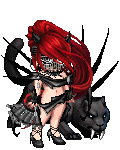
Name: Suika Nicknames: Gender: Female Status/rank: Semi-Loner DNA: Snow Leopard Hobbies: Likes: Dislikes: Only Kouseki can post.
|
 |
|
|
|
|
|
|
|
|
|
|
|
|
|
Posted: Tue Jan 03, 2006 12:29 pm
Navigation
1. Shop Post
2. Navigation
3. Rules
4. About Suika
5. About Kendo
6. Friends
7. Family
8. Events
9. Photo Album
10. Toys/Items
11. Pets
12. Lessons
13. Mew Info
14. Reserved
15. Credits
|
|
|
|
|
|
|
|
|
|
|
|
|
|
|
|
|
|
Posted: Tue Jan 03, 2006 12:30 pm
Rules
- Don't post here unless I give you permission.
- If I have Suika have offspring, don't ask for it.
- DON'T STEAL ANYTHING. >/
- Don't ask if you can have Suika, I'll let her go psyco on you.
- If you're interested in RP just PM me~
- Don't call Suika 'Kawaii' or any form of cute. Just a warning.
- Listen to what Arafel/Dulcea say.
|
|
|
|
|
|
|
|
|
|
|
|
|
|
|
Posted: Tue Jan 03, 2006 12:32 pm
About Suika
Name: Suika.
Nicknames: Su-Su, Suika-sama, Ka-chan.
Stage: Human.
Animal: Snow Leopard.
Side: Good.
Pet Peeves: To be called Kawaii, Being ignored, When someone insults Kendo.
Likes: Kendo, Manga, Drawing, Talking to People.
Favorite Month: October.
Favorite Sport: Kendo
|
|
|
|
|
|
|
|
|
|
|
|
|
|
|
|
|
|
Posted: Tue Jan 03, 2006 12:34 pm
About Kendo
Kendo, the Way of the Sword is the art of Japanese Samurai Swordsmanship. It is rooted in the traditions of Budo, the Martial Way. It is both exhilarating and demanding to learn.
In these pages we'd like to provide some information about Kendo and Kendo in the United States.
Origin of Kendo
Modern Kendo bears but faint resemblance to Kenjutsu and to its feudal origins of sword wielding samurai warriors which are today depicted in movies and television. Kendo, literally translated, "the way of the sword," cannot be traced to a single founder or given an exact founding date. The story of the rise of modern Kendo begins with the samurai and extends over the culture of several centuries.
By the end of the 12th century, the authority of the Japanese central government had declined. Bands of warriors grouped together for protection forming local aristocracies. Feudalism had come of age, and was to dominate Japan for several centuries. With the establishment of the Shogun in Kamakura and military rule controlling Japan, a new military class and their lifestyle called Bushido, "the way of the warrior," gained prominence. Bushido stressed the virtues of bravery, loyalty, honor, self discipline and stoical acceptance of death. Certainly, the influence of Bushido extended to modern Japanese society and Kendo was also to be greatly influenced by this thinking.
The Japanese warrior had no contempt for learning or the arts. Although Kenjutsu, "the art of swordsmanship," had been recorded since the 8th century, it gained new prominence and took on religious and cultural aspects as well. Sword making became a revered art. Zen and other sects of Buddhism developed and the samurai often devoted time to fine calligraphy or poetry.
The next great advance in the martial arts occurred during the late Muromachi period (1336-156 cool often call the "age of Warring Provinces" because of the many internal conflicts. This period brought an increased demand and respect for men trained in the martial arts. Consequently, many schools of Kenjutsu arose, eventually numbering about 200. Each was taught by a famous swordsman whose techniques earned him honor in battle. Real blades or hardwood swords without protective equipment were used in training resulting in many injuries. These schools continued to flourish through the Tokugawa period (1600-186 cool , with the Ittoryu or "one sword school," having the greatest influence on modern Kendo.
Kendo began to take its modern appearance during the late 18th century with the introduction of protective equipment: the men, kote and do and the use of the bamboo sword, the shinai. The use of the shinai and protective armor made possible the full delivery of blows without injury. This forced the establishment of new regulations and practice formats which set the foundation of modern Kendo.
With the Meiji Restoration (186 cool and Japan's entry into the modern world, Kendo suffered a great decline. The Samurai class was abolished and the wearing of swords in public outlawed. This decline was only temporary, however, interest in Kendo was revived first in 1887 when uprisings against the government showed the need for the training of police officers. Later the Sino-Japanese War (1894-95) and the Russo-Japanese War (1904-05) again encouraged an awareness of the martial spirit.
Consequently in 1895, the Butokukai, an organization devoted to the martial arts was established. In 1911, Kendo was officially introduced into the physical education curriculum of middle schools and in 1912, the Nihon Kendo Kata, a set of regulations for Kendo, was published. In 1939 as Japan prepared for war, Kendo became a required course for all boys.
After Would War II, because of its nationalistic and militaristic associations, Kendo was outlawed and the Butokukai was disbanded. However by 1952, supporters of Kendo successfully reintroduced a "pure sport" form of Kendo, called Shinai Kyogi which excluded the militaristic attitudes and some of the rougher aspects of practice characteristic of prewar Kendo, into the public schools. Today, Kendo continues to grow under the auspices of the All Japan Kendo Federation, the International Kendo Federation, and federations all over the world.
Although the outward appearance and some of the ideals have changed with the changing needs of the people, Kendo continues to build character, self-discipline and respect. Despite a sportlike atmosphere, Kendo remains steeped in tradition which must never be forgotten. For here lies the strength of Kendo which has carried it throughout history and will carry it far into the future.
Kendo Equipment
Kendo equipment consists of the swords, uniform and armor. There are two types of wooden swords used. First, the bokken or bokuto, a solid wood sword made of oak or another suitable hardwood. The bokken is used for basics and forms practice (kata). Second, the shinai, is made up of four bamboo staves and leather. The shinai is used for full contact sparring practice. The uniform or dogi consists of woven cotton top called a keikogi and pleated skirt-like trousers called a hakama. The armor or bogu consists of four pieces: the helmet (men), the body protector (do), the gloves (kote), and the hip and groin protector (tare). Modern Kendo armor design is fashioned after the Oyoroi of the Samurai.
Kendo Practice
A Kendo practice is composed of many types of training. Each type has a different purpose for developing the Kendo student.
Kendo, like other martial arts requires discipline and a dedication to training. A new student begins with learning the basics such as: etiquette (reigi), different postures and footwork, and how to properly swing a sword. The student progresses through a series of skills preparing them to begin training with armor (bogu).
Once a student begins to practice in armor, a practice may be composed of any or all of the following types of practice and this will depend upon what the instructor's focus is at a particular time:
Kiri-Kaeshi: successively striking the left and right men, practice centering, distance, and proper cutting while building spirit and stamina.
Waza-Geiko: technique practice in which the student learns to use the many techniques of Kendo with a receiving partner.
Kakari-Geiko: short, intense, attack practice which teaches continuous alertness, the ability to attack no matter what has come before, as well as building spirit and stamina.
Ji-Geiko: sparring practice where the kendoist has a chance to try all that he or she has learned with a resisting partner.
Gokaku-Geiko: sparring practice between two kendoist of similar skill level.
Hikitate-Geiko: sparring practice where a senior kendoist guides a junior kendoist through practice.
Shiai-Geiko: competition matches which are judged on the basis of a person scoring valid cuts against an opponent.
Kendo Kata
Almost all martial arts have a set of kata. Kendo is no exception. Kata are pre-set sequences of motions which illustrate very deeply one or more aspects of the art. Repetitive practice of kata internalizes the lessons of the kata.
Kendo kata are practiced with a solid wooden sword called a bokken. There are ten kendo kata specified by the All Japan Kendo Federation. Each kata studies a single set of concepts in a very pure setting allowing the practitioner to delve deeply into these concepts.
Kendo kata are practiced between two people, the Uchitachi and the Shidachi. In kendo kata, the Uchitachi attacks the Shidachi who in turn demonstrates a proper response to the attack. Seven of these kata are illustrations of the technique of the long sword against the long sword. The last three kata illustrate the short sword defending against attacks by the long sword.
Prior to the invention of the shinai and bogu, kata were the only way that kendoists could safely practice. Originally, the role of Uchitachi was taken by the teacher and the role of Shidachi by the student. This tradition carries over into modern Kendo kata in that the Uchitachi always sets the pace and distance at which the actions are performed.
Taken from here.
|
|
|
|
|
|
|
|
|
|
|
|
|
|
|
Posted: Tue Jan 03, 2006 12:34 pm
Friends
Rinji - I ran into him just before practice and he seemed very lost.
|
|
|
|
|
|
|
|
|
|
|
|
|
|
|
|
|
|
Posted: Tue Jan 03, 2006 12:40 pm
Family
Parents: Both of Suika's parents are still alive, and their family has quite a good bit of money, as well. It's rare that she sees her father.. Three or four times a week because of his work. Her mother works as well, even though she doesn't need to. Suika looks up to her mother for this, because she's a hard worker.
Siblings: Suika has two siblings, a younger sister and a younger brother. Nao, her younger sister, is thirteen, and she always tries to get into Suika's closet to try on her clothing. And Yuki, her younger brother, is ten, and tries to pry into her diary, talk to her friends and always wants to get into her personal life.
|
|
|
|
|
|
|
|
|
|
|
|
|
|
|
Posted: Tue Jan 03, 2006 1:55 pm
Events
Jan 3rd 2006: Made the journal. <3
|
|
|
|
|
|
|
|
|
|
|
|
|
|
|
|
|
|
Posted: Tue Jan 03, 2006 2:01 pm
Photo album
- IMG PENDING-
Suika Anima
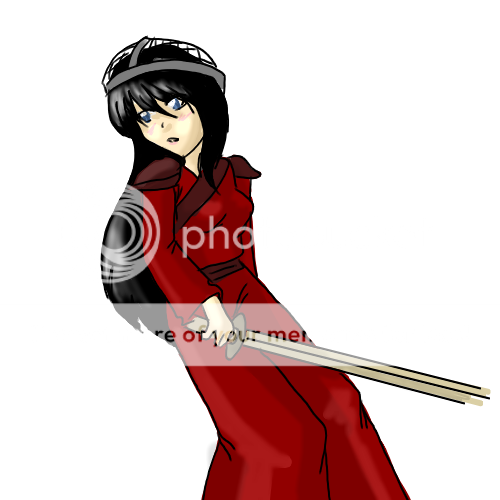
Suika Human
|
|
|
|
|
|
|
|
|
|
|
|
|
|
|
Posted: Tue Jan 03, 2006 2:03 pm
Toys/Items
None as of yet.
|
|
|
|
|
|
|
|
|
|
|
|
|
|
|
|
|
|
Posted: Tue Jan 03, 2006 2:04 pm
|
|
|
|
|
|
|
|
|
|
Posted: Tue Jan 03, 2006 2:07 pm
Lessons
School: Seiryo Senior High.
Opinion: Loves the Kendo Team.
School Friends: Rinji
Currently studying: Coming soon.
|
|
|
|
|
|
|
|
|
|
|
|
|
|
|
|
|
|
Posted: Tue Jan 03, 2006 2:09 pm
Mew Info
She's not a MewMew yet!
|
|
|
|
|
|
|
|
|
|
|
|
|
|
|
Posted: Tue Jan 03, 2006 2:11 pm
|
|
|
|
|
|
|
|
|
|
|
|
|
Posted: Tue Jan 03, 2006 2:13 pm
Credits
Suika (c) Kouseki
Art/Shop (c) Arafel
Journal and Plot Ideas (c) Kouseki
|
|
|
|
|
|
|
|
|
|
|
|
|
|
|
|
|
|


 Reply
Reply