|
|
|
|
|
|
|
|
|
 Posted: Tue Jan 27, 2009 9:51 pm Posted: Tue Jan 27, 2009 9:51 pm
Some people travel for entertainment and traveling can be very fun so here is a forum for all things travel.
|
 |
|
|
|
|
|
|
|
|
|
|
|
|
|
Posted: Tue Jan 27, 2009 9:56 pm
Tourist Traps Worth a VisitTourist Traps Worth a Visit
A destination’s most popular sites got that way for good reason. So why not embrace the masses along with the monuments?
By Peter Jon Lindberg, Travel+Leisure
Once I got into an argument with a friend over the hot-button issue of cannoli. We were standing in Mike’s Pastry, a popular stop for bus tourists and presidential candidates in Boston’s North End. My friend’s problem was not so much with the cannoli (which he called “flaky” and “cheesy”) as with a prominently displayed photograph of Bill Clinton gobbling one up. “How can you like this place?” Alex ranted. “It’s like a funnel siphoning the souls out of hapless tourists.”
“Really? And I thought the filling was ricotta.”
My side of the argument was also less about Mike’s cannoli (which I call “Proustian” and “delicious”) than Alex’s counterintuitive conviction to boycott Mike’s Pastry because Bill Clinton and bus tours went there. When his own grandparents had come to town asking about “that bakery the president likes,” Alex shanghaied them across Hanover Street to Modern Pastry—a shop serving an adequate cannoli and not one head shot. God forbid they be suckered into the sublime, “touristy” rendition at Mike’s.
I admit, though, that I’m prone to thinking like Alex when I travel. Maybe you are too. We’ll come upon this fabulous Japanese izakaya or Czech jazz club or Parisian zinc bar—some corner of the universe that seems to have been created to our own specifications—and then, suddenly, all these other people show up. And then more of them. And then still more. Ohhhhhh, this is all wrong, we think; our beloved discovery is a tourist trap.
Yet recently I got to wondering: maybe it was my worrying that was all wrong. What did I really care about the presence or absence of fellow travelers, or the character thereof? Was this precious zinc bar so fragile it couldn’t withstand the affection of a hundred other like-minded visitors? Perhaps it wasn’t the place that needed saving, but my outlook. Doesn’t every traveler start out as a tourist?
You know how politicians are always saying this is no time to engage in politics? Well, what politics is to politics, tourist is to tourism. And touristy has devolved from “of or relating to tourists” to “ignoble, tacky, cloying, ersatz.” For travel writers, touristy is the ultimate slander. Even flea-ridden flophouse seems less damning. We’re forever distinguishing between hip travelers and sheeplike tourists. We parse the world’s offerings into things tourists do versus things “locals” do, as if the mere act of residing somewhere confers a sense of style. For all the times I’ve indulged that facile distinction, I offer my apologies. Because frankly, this ridiculous fixation on what is and what isn’t “touristy”—and who is or isn’t a “tourist”—can ruin a vacation.
In the age of mass tourism, high-end travel becomes increasingly about exclusivity—seeking out isolated places and rarefied encounters that only a lucky few can enjoy. (It was easier back in the day: when Delacroix visited Tangier, there were no bus tours to flee from.) By this equation, the merit of an experience corresponds inversely to the number of people we’re obliged to share it with. In the urge to legitimize, singularize, and privatize our travel experiences, we trade the proverbial hell of other people for the hell of trying in vain to avoid other people. That’s a terribly cool way to travel, and when I say cool I mean chilly, and when I say chilly I mean obnoxious.
Sure, certain places are so extraordinary we forgive them their teeming hordes. No traveler could honestly dismiss as tourist traps the terra-cotta warriors at Xi’an, Machu Picchu, the Taj Mahal, or the British Museum. But when it comes to choosing what other sites to visit, where to have dinner, or which show to see that evening, we go out of our way to leave the hoi polloi behind. Exclusivity threatens to become an end in itself, wherein we base our itineraries not on what’s actually worth seeing but on where other Americans aren’t.
For most of my life, I believed independent travel was the only route to the real unfiltered stuff. I eschewed group experiences like the plague, running from cruises, luaus, dinner shows, and, most of all, anything incorporating the word tour: carriage tours, walking tours, eight-seat tandem-bike tours, gondola tours, duck-boat tours, harbor tours, sunset harbor tours, ghost tours, foliage tours…. To me they all sounded silly and artificial. Why would I actually plan to put other people between me and what I’d come to see?
My mistake. Since being cajoled into what turned out to be a brilliant London Walks ramble through Hampstead Heath, I’ve gained some of my best travel memories from being herded around with a bunch of strangers—on a Big Onion Walking Tour of Irish New York; on a 20-person nature trek in the Malaysian jungle; on a National Park Service stroll through New Orleans’s French Quarter under the tutelage of an erudite ranger in a funny hat. It struck me that independent travelers, so adamant about seeing the world on their own terms, tend not to line up to listen to People Who Know Things, and therefore tend not to learn about, say, the Great Boston Molasses Flood of 1919. Seriously, Google that. I lived in Boston for years, yet the first time I heard of this sticky and surreal episode was on a Boston Duck Tours boat with my nephew.
Being a tourist can give you access to experiences you wouldn’t have otherwise—experiences that aren’t so much exclusive as inclusive, drawing their appeal from the company of other people. Independent travel may offer the tantalizing possibility of disappearing into a place, name-tagless, and acting the part of the vaunted native, but that rarely pans out. Traveling solo through India, I always expected some local shopkeeper or templegoer to invite me home for chai and divulge all the secrets of the culture. Never happened. Last year a couple I know took a Road Scholar tour of Rajasthan with a dozen other Americans; every day they shared tea or a home-cooked meal with Rajasthanis, several of whom they still correspond with. If that’s “touristy,” somebody strap a Nikon around my neck.
Snooty travelers would instinctively dismiss a place like Bukhara as a feedlot for tourist cattle. Every New Delhi guidebook recommends this boisterous kebab restaurant, which is why it’s always packed to its exposed rafters. Whole planeloads of tour groups come through Bukhara each evening, and guess what: they’re having a way better meal than you are tonight. The chicken and lamb kebabs are easily the best I’ve tasted (and not a word to my Iranian mother-in-law). After one visit, Bukhara shot to the top of my Really Is list—as in, “No, no, it really is that good.” I laughed and thought of my old friend Alex as I scanned the house specialties: the “presidential” platter and the “Chelsea” platter, the former named after Alex’s North End cannoli nemesis, who dined here during a state visit to India in 2000. Judging from the proportions of their namesake dishes, Bill and Chelsea Clinton not only took a village, they devoured most of its livestock. Yet the crowd at Bukhara is so consumed with enjoying themselves that one can imagine the Clintons hardly making a stir. British honeymooners, Elderhostel groups from Sarasota, Kuwaiti businessmen, Indian clans with toddlers in tow—all are having a blast. And in the ultimate mark of a proud tourist haunt, every last patron is wearing a gingham bib.
The problem with the term touristy is that it broadly applies to—and condemns—a whole lot of things that are merely guilty of being popular with out-of-towners. The leather-bound guest directory at New Orleans’s Ritz-Carlton recommends a night at Vaughan’s Lounge with Kermit Ruffins & the Barbecue Swingers. If I were a hotel guest directory, I would too: Ruffins’s Thursday sets at Vaughan’s are incendiary, and a favorite even among (ahem) locals. Should it matter that a bunch of people from Minneapolis and Osaka are there too? When something inherently cool is adopted by tourists, does that render it uncool? In Reykjavík, Iceland, the Islandia shop is exactly what you’d expect of a state-sponsored tourist emporium, packed with souvenir puffin dolls, die-cast Viking figurines, and overpriced wool sweaters for your dad. They also sell the complete discographies of Björk, Sigur Rós, and the Sugarcubes. So: Is Björk “touristy”? Is Kermit Ruffins? No. The answer is no.
Considering that only 28 percent of Americans have passports, you sort of have to hand it to anyone who leaves home in the first place, no matter how often they show up in your photos of the Pont Neuf. Rather than resenting your compatriots for the audacity of choosing the same vacation spot as you, why not tip your hat to them for having found their way there at all? Would that more of us had the time and money to travel. As for cynical travelers, they can arguably learn, or relearn, something from the wide-eyed “tourist”—from the sense of wonder and unmitigated joy he brings to those top-of-the–Eiffel Tower, crest-of-the-Cyclone, edge-of-the–Grand Canyon moments that all travelers, no matter how jaded, long for. This involves surrendering to the inherent awkwardness of being a stranger in a foreign land, yet somehow losing yourself—and your self-consciousness—at the same time. It means letting go of the suspicion, letting down the defenses, and allowing for a genuine response, even if that response is simply “Wow.” It means enjoying a Central Park carriage ride or a London walking tour or a sunset cruise on San Francisco Bay without second-guessing whether you should be doing so. It means finally quieting—or ignoring—that nagging inner voice that asks, Do I dare to eat a peach? Or are peaches just a little too...touristy?
|
|
|
|
|
|
|
|
|
|
|
|
|
|
|
|
|
|
Posted: Wed Jan 28, 2009 8:08 am
Nice story, and i enjoy traveling. When i get the chance, i shall hit the
road, and become like a nomad.
|
|
|
|
|
|
|
|
|
|
|
|
|
|
|
Posted: Wed Jan 28, 2009 9:44 pm
That's fun to do for a while but it's hard to do for an entire life. I love to travel and have been all over, some of the best places are the ones not everyone goes to or thinks about.
|
|
|
|
|
|
|
|
|
|
|
|
|
|
|
|
|
|
Posted: Wed Mar 11, 2009 8:56 pm
12 Travel Myths, Dispelled
By Ingela Ratledge
You’ve heard that New Yorkers are rude, London is rainy and China is just a shovel away. Here, the truth behind the rumors.
The Rumor: London is always gray and rainy, and the food is terrible.
The Truth: “In terms of rainfall, it’s actually low on the list,” says Nicole Mitchell, a Weather Channel meteorologist. (The statistics: London gets 23 inches a year, while, on average, supposedly sunny Miami gets a whopping 60 and soggy Seattle gets 39.) “Because London is coastal, it gets drizzly during the winter. But, as with any place, you have to pick the right time to visit,” says Mitchell. (She recommends the summer, when it’s warmer and sunnier.) And as for the local fare, it has come a long way since the days of ubiquitous bangers and mash. “There was a time when English food was, by definition, bad food, but that reputation is about 10 years out of date,” says Tim Zagat, a co-founder of Zagat Survey, a publisher of international restaurant guides. “Now it is one of the best places in the world to eat.” (The turnaround is due in part to the increased availability of fresh ingredients.)
The Rumor: It is rude to make eye contact during conversation in Japan.
• RealSimple.com: 20 Tips From Air-Travel Insiders
• RealSimple.com: Vacation Planning Checklist
• RealSimple.com: What to Do if You Leave Your Belongings on a Plane
The Truth: In the Land of the Rising Sun, do not avert your gaze just yet. “That used to be the rule, back in the old days, during the Meiji and Taisho eras (the late 1800s and early 1900s),” explains Robert Whiting, a Japanese-culture expert and the author of "The Samurai Way of Baseball" (Grand Central Publishing, $15, www.amazon.com). “It was considered disrespectful, especially when talking to a superior.” These days, however, “people in Japan act just like people in the West. Not making eye contact would be considered a bit odd when talking to someone, even the emperor,” says Whiting.
The Rumor: Venice is sinking.
The Truth: Not so much, says Fabio Carrera, a native of Venice and a professor of urban studies and planning at the Worcester Polytechnic Institute, in Massachusetts. “If by sinking you mean that the land is going under and losing elevation, then, no, that is no longer true,” says Carrera. Once upon a time — from around 1900 up until the 1970s — Venice did dip deeper into the water, by nearly five inches, because the aquifer beneath it was being drained to provide water to the mainland. “When people realized what was happening, they stopped pumping water out, and Venice rebounded by about half an inch,” says Carrera.
Still, the city is not totally out of hot water. Thanks to global warming and rising sea levels, Venice — along with other low-lying locales, like New Orleans — remains vulnerable to flooding. But as long as it stays one step ahead of the problem by incorporating preventive measures, like the underwater floodgates currently being constructed, Venice should be the home of many a piazza (and pigeon) for years to come.
The Rumor: New Yorkers are rude.
The Truth: Fuhgeddaboudit! “It’s absolutely false that New Yorkers are unfriendly — they may seem standoffish at first, but that’s just concealing a very big heart,” insists Ed Koch, a former mayor and a quintessential New Yorker. (Hey, someone who appeared in "The Muppets Take Manhattan" should know.) So what is with the gruff exterior, then? Call it a coping mechanism for living in a city of more than 8 million people. “We believe that people want their own space, so we don’t intrude unless asked for assistance. But if you’re visiting from out of town, just walk over to any New Yorker and he’ll immediately help you out,” says Koch. And rather than feeling upset about a brusque cab driver or a bagel guy who seems to toss your change at you, remember that they are just trying to keep the wheels in motion. “People here want to help you get on with your day!” says Koch.
The Rumor: Afternoon thunderstorms in Florida always pass within an hour.
The Truth: “This does not always happen, but a lot of storms are pretty quick,” says meteorologist Nicole Mitchell. “In the heat of the afternoon, there is enough of a contrast between the slightly cooler ocean air temperature and the warmer air temperature over land to trigger storms,” she says. “By late afternoon, there is less of a contrast and you lose the trigger for the storms, so they start dying out.” And Florida is not the only place you should keep an umbrella handy. Mitchell says the same conditions exist up and down the Gulf Coast, making the weather in places such as Biloxi, Mississippi; Mobile, Alabama; and New Orleans equally erratic.
The Rumor: South of the equator, toilet water swirls in the opposite direction.
The Truth: This one goes straight down the commode. Wondering where that crackpot theory originated? “South of the equator, tornadoes go clockwise, while north of the equator, they go counterclockwise, because of the earth’s rotation and something called Coriolis force. In principle, the same would happen to water in a toilet or a bath,” explains Michael Goodchild, a professor of geography at the University of California, Santa Barbara, and a 2007 recipient of the field’s highest honor, the Prix Vautrin Lud. “But the effect of Coriolis force on a small scale is very weak and outweighed by other forces, like the relative positions of the inlet faucet and the plug hole.”
The Rumor: The Leaning Tower of Pisa will eventually topple over.
The Truth: It seems inevitable that the tilting medieval bell tower will take a dive someday. But the structure, which developed its famous wonky posture when its foundation settled into the soft ground beneath it, is actually on surprisingly solid footing. About 10 years ago, the base of the tower was reinforced with a combination of concrete and other bracing methods, decreasing the lean by 17 inches to 13 feet 6 inches. “It was the culmination of years of work and planning — the new foundation will last indefinitely,” says Donald Friedman, a structural engineer at Old Structures Engineering, in New York City. “It is not going to tip. Now it has the heaviest foundation of anything in that whole city!”
The Rumor: In Russia, locally made vodka is cheaper than water.
The Truth: The answer is a flat-out nyet, says Paul Richardson, who has visited the country more than 20 times and is the publisher of Russian Life magazine. While locally made vodka can be nearly half as cheap in Russia as the imported stuff we buy here — prices start at around $2 a bottle in Moscow — it still outprices water by a long shot.
The Rumor: If you dug a hole straight through the earth, you would probably make it to China.
The Truth: “It depends on where you start out,” says author Michael Goodchild. “If you dug through the center of the earth, you would emerge at a point opposite to where you started,” he says. “Most of the time, if you started from land, you would end in water. But you would end up in China if you started digging in northern Chile.” Oh yeah, there is one more little catch. Says Goodchild, “You would need a machine that could form a tunnel through liquid metal at a temperature of around 5,000 degrees.” Um, try eBay?
The Rumor: There is a top-secret city beneath Disneyland.
The Truth: Legend has it that there’s a top-secret command center under the theme park in Anaheim, California, but, alas, not even a wave of Tinker Bell’s wand could make this a reality. “There is not much under there — certainly not a city,” says Bob Sehlinger, who has visited the park hundreds of times over the past 20 years and recently wrote "The Unofficial Guide to Disneyland 2008" (John Wiley & Sons, $20, www.amazon.com). It is very likely that this rumor stems from a case of mistaken identity. As it turns out, sister amusement park Disney World, in Orlando, Florida, does have a subterranean setup of sorts, though it is not quite a metropolis. “In Disney World, there is something called utilidors — Disney-speak for a huge system of tunnels under the park, which allow costumed cast members to scurry underneath the property,” explains Sehlinger.
The Rumor: The security X-ray machine at the airport will ruin your film.
The Truth: It turns out that this is a legitimate risk for folks who still shoot with real film. While most rolls can sustain one pass on the conveyor belt, multiple run-throughs in the high-radiation environment — like when the security team is trying to make sure your hair dryer is not a handgun — can expose the film, erasing precious memories in the process.
The alternative? “Get to the airport early, and always ask for a hand inspection,” says Shannon Greer, a professional photographer who constantly travels the globe for his work. Also, higher-speed film, like 800-ISO and up, is more susceptible to damage, says Greer. “The faster the film, the more sensitive it is to light, so generally you are safest traveling with 400-ISO film and lower.” Adds David Lanzillo, vice president of corporate communication at the Eastman Kodak Company, “Never put film in your checked luggage, which is exposed to even higher levels of radiation.”
The Rumor: Using a cell phone midflight could cause the plane to crash.
The Truth: There’s no need to panic, but “some cell phones can interfere with the navigational systems on some airplanes,” confirms David P. Carson, a Boeing engineer and the co-chair of a special advisory committee to the Federal Aviation Administration. While it’s true that many aircraft — typically newer models, like Airbuses and Boeing 787s — are totally unaffected by current cell-phone technologies, the wide variety of planes and cell phones out there makes it impossible to lift the overall restrictions just yet. “You don’t want to say, ‘This one cell phone is good to go, but the other two aren’t,’” says Carson, who notes that cell phone–friendly design guidelines for future planes are in the works.
|
|
|
|
|
|
|
|
|
|
|
|
|
|
|
Posted: Mon Mar 30, 2009 6:37 pm
10 Travel Taboos
Travelers beware! Customs, laws and etiquette in foreign countries can trip up even the most seasoned tourist.
10 Travel Taboos
Most people try to be mindful of local customs when they're traveling abroad, but the cultural landscape can be a minefield. To help you avoid embarrassment (or worse), we've gathered a sampling of cultural taboos — from common sense to comedy — to pack with you on your next trip out of the country.
Chopsticks: In Japan, it's considered a bad omen to insert your chopsticks into the rice bowl and leave them there for any reason. That's because resting chopsticks vertically in a rice bowl reminds the Japanese of grave markers. Instead, when you're putting down your chopsticks, place them on top of your bowl or plate, parallel to the table. It's also considered poor manners to take food from the serving plate with the ends of the chopsticks you've eaten from. Instead, turn your chopsticks with that side toward you, and then pick the food up.
Visiting mosques: All visitors — Muslim and non-Muslim — must remove their shoes before stepping into a mosque. Visitors should also follow customs for dress when visiting a mosque. Men should wear long pants and long-sleeved shirts, while women should wear dresses or skirts that cover the knees, as well as tops with sleeves that at least cover the elbows. Women should also wear a head scarf; however, if you don't have one, most large mosques will have head scarves that you can borrow at the entrance.
Giving flowers: If you plan to give flowers as a gift in Ukraine, be sure the bouquet contains an odd number of blossoms, as even-numbered bunches are customary for funerals. If you're bringing flowers as a hostess gift or to celebrate a birthday or other special occasion, you should avoid yellow flowers or Easter lilies, which are also reserved for funerals. When invited to a Ukrainian's home for a meal, you may want to play it safe by bringing a bottle of imported liquor instead.
Kissing: Train passengers in Cheshire, England, can run afoul of local authorities if they linger over long, romantic farewells. Officials at Warrington Railway Station posted a "No Kissing" sign to stop smooching couples from holding up other commuters. However, if you need to say a longer goodbye, you still can … in the newly designated "Kissing Zone."
Salt: Although Egyptians are considered to be extremely friendly and hospitable, their cooks must have very tender egos. When traveling to Egypt, don't put salt on your food, as doing so is considered an insult to the chef. Fortunately, Egyptian food is usually quite flavorful, thanks to abundantly available spices and the use of garlic, onions and other aromatics.
Visiting churches: If you're planning a trip to Italy in the warmer months, be sure to pack more than shorts and tank tops. Visitors to the country's churches and cathedrals are expected to dress modestly, which excludes short shorts or sleeveless tops for both men and women. Expect your dress to be scrutinized at the door by guards or other parishioners; to avoid being called out, pack a shawl, sweatshirt or other layer you can slip on before entering the church.
"V for victory" sign: Don't make the "V for victory" sign with your palm facing inward in Great Britain, as it's considered to be both a gesture of defiance and an insult. According to popular legend, the two-fingered salute derives from the gestures of longbowmen fighting for the English army during the Hundred Years' War. As the story goes, the French claimed that they would cut off the arrow-shooting fingers of all longbowmen after they had won a decisive battle. But the English came out victorious and showed off their two fingers, still intact.
Insulting the king: Thais deeply revere their 80-year-old King Bhumibol Adulyadej — some see him as almost divine and carry his image on talismans to bring good luck — and insulting him is a crime known as lese majeste, punishable by imprisonment for up to 15 years. The law, a throwback to the era of absolute sovereign power, has led to Web sites being censored and at least one foreign writer having been arrested.
Clinking beer glasses: Hungarians don't clink beer glasses or bottles when they're making a toast, due to the tradition of remembering soldiers killed in the 1848 revolution against the Habsburg Empire. Legend has it that after Austrians celebrated the executions of 13 Hungarian martyrs by clinking their beer glasses, it was decreed that no Hungarian would toast with beer for 150 years. Even though it's now more than a decade after the end of that time period, old habits die hard. For travelers, this taboo may be easier to remember than how to say cheers in Hungarian: "Egészségedre."
Cleaning your plate: The "clean plate club" doesn't exist in Cambodia. If you eat everything on your plate, it means you still want more and signifies that your hosts have not served you enough. Cambodians enjoy a strong sour taste in many of their dishes, especially through the addition of prahok, a pungent fish paste. This is an acquired taste for most foreigners, so maybe cleaning your plate isn't a big risk after all.
|
|
|
|
|
|
|
|
|
|
|
|
|
|
|
|
|
|
Posted: Mon Mar 30, 2009 6:39 pm
Never Give an Umbrella as a Gift in Beijing
Knowing the local customs—from how to dress appropriately to which utensils to use at dinner—can save you from embarrassment when you're traveling in a foreign country.
By Robert Isenberg
Whatever you do, never use your left hand to eat a meal in India. When you visit a Japanese household, remember to take off your shoes (and face them so the toes point outside). And always ask before you photograph a Masai warrior.
On the other hand, feel free to loudly slurp your udon soup, belch proudly at a Mandarin dinner table or hold hands with a Kenyan friend of the same gender.
No matter where you go in the world, you're likely to observe unfamiliar behavior — rituals or rules of etiquette that everyone seems to know but you. What may seem like a major faux pas in America might be ordinary behavior across the globe. Learning the norms of different countries can help prevent you from offending the locals — and more important, can allow you to gain a better understanding of cultures and traditions that are different from your own.
Dress for success
It may sound superficial, but how you dress is extremely important to how you'll be perceived abroad. Most Saudi Arabian women — as well as female visitors — are expected to cover their heads as a sign of modesty. In some parts of West Africa, white fabric worn in public is seen as ominous, because all-white garments are typically worn at funerals.
Since Americans tend to be casual with their dress, you should also be aware of distinctions between formal wear (for banquets and weddings) and casual wear (for the beach or the cafe). For example, in many cultures, women wear gowns to dine with friends, and men don tuxes at the casino.
Prepare for your trip by reading books of cultural etiquette or by finding recent photos or films about your destination. A Saigon street might depict young men in cargo shorts, sandals and undershirts (common Vietnamese street wear). A picture of rural Sicilians might feature the locals wearing hats, suspenders and button-down shirts. You don't have to mimic the style precisely, but try to learn what's normal and what's certain to raise eyebrows.
Talk the talk
No matter what the brochures promise, you'll never learn to speak a foreign language in just 15 minutes a day. But knowing a few simple phrases can be both helpful and flattering. Parisians have the reputation of being rude to Americans, but most will open up after you speak a few words of French (no matter how butchered your pronunciation may be). Learn a few basic pleasantries: Hello, good-bye, thank you, excuse me, I'm sorry, how are you? These six little phrases will get you a long way — especially when you can add "Do you speak English?" in the native tongue.
It's also good to remember that language isn't just verbal; body language is also a provocative method of communication. Most Japanese people aren't familiar with the American thumbs-up, and many Americans are surprised when Japanese tourists pose for photographs with two fingers raised — what's known in the U.S. as the peace sign.
Learn the religion
Reading up on the principles and daily rituals of a religion can lead to a richer experience abroad. For non-Muslim visitors, Islamic rules and customs, such as wearing burqas or praying multiple times a day, can seem strange and exotic, but they're an important part of daily life in many countries. To secular Americans, the sight of cows in Chennai may seem odd — wandering public roads, unowned and unattended — but for traditional Hindus, the cow is a sacred being.
Every religion on earth has its unique rituals. Even in a globalized, high-tech world, religion is still a major cultural backbone, informing many of our opinions and behaviors. In intensely religious nations, it's important to respect the people and their traditions, even if you don't believe in them yourself. After all, you can never know too much about another faith.
Dine like the locals
Customs around food are often some of the most interesting cultural traditions, as well as the situations that are most fraught with the potential for embarrassment. It would be unthinkable to eat Ethiopian cuisine with utensils — all you need is some injera bread and delicate fingers. Some Indians eat off of banana leaves, using their hands. In many upscale European restaurants, guests dine with the knife in their right hands and the fork in their left (with little or no crossover). Most Americans would balk at stuffing your napkin into your collar, but in many places this is common.
Dietary restrictions are also a part of many countries. Most Indians will refuse beef, and millions are also vegetarians. The Quran forbids alcohol. People who eat kosher meals eschew pork products.
Before you visit an exotic culture, try the cuisine at home, either by cooking simple dishes or by visiting an authentic restaurant. Sometimes you'll need to ask a friendly local to explain the steps to eating that require an insider's explanation, as with sushi (cleansing your palate with pickled ginger) or shrimp in the Mediterranean (eating the head as well as the body). After all, food is a powerful key to unlocking the beliefs of a foreign culture.
Avoid gift faux pas
Gift-giving is more than a nice sentiment; in many places, it's expected. Guests and hosts in China and Japan exchange gifts as a sign of friendship. Givers must choose their gifts wisely, because their meaning and purpose are often heavily weighed. If you're visiting a family, for instance, pick something that both parents and children can use (such as desserts or decorations). Keep in mind that cultural beliefs and superstitions may also limit the gifts that will be appropriate. For example, while you should always bring your Beijing host a gift, never give an umbrella or a green hat; both words are similar to Mandarin words that could be considered offensive.
You may also want to consider bringing something from your hometown when you're going abroad — especially if you've scheduled a home-stay, a visit to a subsistence village or a spiritual retreat. Small gestures are always appreciated, just as you would enjoy a German beer stein or a silk mandala brought by a guest to your home.
Expect mistakes
No matter how much you prepare, you're likely to encounter the unexpected in a foreign country. Cultural guidelines aren't hard-and-fast rules, and stereotypes — even positive ones — aren't true for everybody. Just when you think you should bow, someone might offer to shake your hand instead.
And although you may be courteous, informed and nonjudgmental, you still might accidentally offend someone with your actions. While it's best to try to follow the local norms, that doesn't mean you have to compromise any of your own beliefs or eat something you find objectionable. In every culture on earth, there's a polite way to say no thank you.
|
|
|
|
|
|
|
|
|
|
|
|
|
|
|
Posted: Mon Mar 30, 2009 6:44 pm
The Most Shocking Laws OverseasWeird Foreign Laws
Seasoned travelers know to watch out for the accidents, illnesses and delays that can ruin a vacation. But a few laws are so unexpected that they can catch even the biggest travel junkies off guard.
By Katherine Spiers, Budget Travel
A penny spurned: The phrase "legal tender" isn't entirely straightforward in Canada. There are lots of pennies in circulation, but there's a limit on how many can be used at a time. The maximum number allowable per transaction is 25, so no getting cute with excessive change at the mini-mart.
(Suda)fed up: Careful what you try to bring into Japan. Medicines that can be bought without a prescription in the U.S. are sometimes illegal there, and that includes some Vicks and Sudafed products and anything else containing pseudoephedrine. Getting caught at customs with such products can lead to detainment. Who cares if your sinuses are clear if they and the rest of you are stuck in jail?
A flush of pride: Along with many other things, Singapore puts a great deal of effort into keeping its public toilets pristine. And visitors are expected to help keep them gleaming. Failure to flush may result in fines.
Red-light special: In Sweden, traveling lonely hearts shouldn't expect any sympathy from ladies of the evening if they get caught in a clinch with one. The independent businesswomen there are well within their rights to practice their profession. However, the gentlemen paying for their services are at risk for punishments ranging from a fine to as much as six months in jail.
A canine "autoban": Planning a long Alpine adventure with Puddles, your lovable pit bull? Read up on animal laws first. In Germany, breeds that the government considers dangerous aren't welcome for more than a four-week visit—and they aren't allowed to live there at all. Even a bit of mastiff, Rhodesian ridgeback, or Staffordshire terrier blood may mean no lederhosen for Fluffy.
No Lone Ranger for you: Planning an autumn visit to Scandinavia? Hoping to show them what an American Halloween's all about? Stick to the simple costumes. In Denmark, wearing a mask in public can lead to your being arrested.
Playing the numbers: Rush-hour regulations in many major cities of the Philippines seem meant only for mathematicians: A vehicle can only be driven on days determined by the last digits of its license plate—this is called, for murky historical reasons, the "color-coding scheme." With all this, borrowing a local's car may require more number crunching than it's worth. Even traveling by scooter has its own challenges, since you can get ticketed for driving in sandals or bare feet.
Gun control: New Year's in Southeast Asia is often a watery celebration, with lots of buckets, water balloons, and drenched revelers. But in Cambodia, you must choose your method of aquatic conveyance carefully. Water guns will be snatched away on sight. Rumor has it some ruffians filled their Super Soakers with, er, "used" water, ruining the party for everyone.
Watch your mouth: Think foreigners in Thailand are exempt from the country's famous "never bad-mouth the King" laws? Think again. Non-Thais may have a better chance of being able to claim that it was all a big misunderstanding, but as one disrespectful Australian novelist just discovered, their pardon may come after five months in prison.
Listen up: In Finland, taxi drivers playing music in their cars are required to pay a copyright fee. The idea is that the music is being presented to the "public"—the cabs' paying customers. If a cabbie won't turn on the radio for you, understand that he's not necessarily interested in talking instead. He might just be trying to save a few euros.
|
|
|
|
|
|
|
|
|
|
|
|
|
|
|
|
|
|
Posted: Wed Apr 15, 2009 9:14 pm
A Traveler's Guide to Toilets
Our tips and tricks for seeking out — and using — bathroom facilities around the world.
A Traveler's Guide to Toilets
Travelers are often faced with unfamiliar situations on the road, from language barriers and unusual foods to strange currencies and cultural taboos. And there's no challenge more urgent than figuring out where to go — when you need to go. Here's some advice about what you might encounter.
Public restrooms around the world use the abbreviation "W.C.," meaning "water closet." This was the original term for a room with a toilet, since the bathroom was the place where one also would bathe. Worldwide, signs often say "toilet" in English. Some countries may use only the local language, however, so it's handy to know the written and spoken word for toilet in the language of each country you're planning to travel to. In Arabic, one word for toilet is mirhad; the Arabic spelling appears in the photo above.
Throughout Europe, keep an eye (and a nose) out for freestanding public urinals called pissoirs (a French word describing the activity that takes place there). These convenient stations are easy to overlook, but the smell will usually give you a clear indication of what occurs behind the decorative screen. Pissoirs are for men only; women are out of luck and should continue searching for a public toilet.
On the streets of Beijing and in other cities around the world, strong odors are no longer a problem thanks to high-tech, self-cleaning public toilets. A small fee (exact change is sometimes required) allows you entrance to the unit. When you exit, the doors lock and the interior is automatically washed and sanitized for the next customer.
Not all pay toilets are high-tech, like this one in India. Whether rustic or modern, some facilities are staffed by an attendant who takes money at the entrance. Generally, the presence of an attendant and a fee means the facilities will be relatively clean. It's a good idea to carry plenty of spare change when you're traveling — some places even charge extra for toilet paper!
In Japan, the introduction of the Toto toilet in the 1980s heralded the age of the "high-tech toilet." In 2002, The New York Times reported that at least half of all private homes in Japan had toilets with high-tech features, more than the number of households with a personal computer. Commonly known as the "Washlet," the most popular model offers a dazzling array of features that can include a heated, adjustable seat, water jets, massage options, a blow dryer, flushing sounds and more. Travelers may encounter similar units at Tokyo's Narita Airport; thankfully, you can use the toilet the old-fashioned way and forgo the bonus features entirely.
The Hang Fung Gold Technology Group — a jeweler in Hong Kong — features the "Hall of Gold," a showroom that contains several everyday items crafted in gold, including a 24-karat solid gold toilet. Before the hall was suddenly closed in 2008, a rise in the price of gold led some to worry that the famous toilet might be melted down. The jewelers said at the time that the toilet would remain intact, but its fate is currently unknown.
In Beijing public toilets were once the bane of travelers, who complained they were dirty and smelly and lacked privacy. However, in preparation for the 2008 Olympics, the city spent millions to improve its bathrooms, and China instituted a star-rating system. Some of the nicer public restrooms today offer attendants, carpeted waiting areas and refreshments. One facility was even built to look like a giant insect, perhaps a nod to the days when insects were frequent (and unwelcome) guests around public toilets.
Often referred to as the "Turkish toilet" or "Eastern toilet," squat toilets are common from France to Bangkok. They generally consist of a hole in the ground with a footprint on either side. Proponents of this style of toilet contend that they are more hygienic, use less water and are easier to clean and maintain than traditional facilities. Some even argue that squatting is a more natural position for 1) urination and 2) well, number two.
Even if the squat toilet leaves you squeamish, you might prefer it to communal facilities like the ones at the Roman site of Ostia Antica. Travelers can get a look at this ancient public latrine (no longer in operation) that includes 20 "stations"; it's "flushed" by water that's carried by an aqueduct below each seat.
Enjoying the great outdoors often means having to find a shrub or tree to squat behind when nature calls. In Kootenay National Park in British Columbia, public latrines offer a more civilized — though not exactly private — option for hikers. It's hard to imagine a loo with a more beautiful view.
If you find yourself in the desert, squatting behind a tree or shrub is hardly an option. These portable outhouses in the Sahara Desert give weary travelers a place to ahem, take care of business.
|
|
|
|
|
|
|
|
|
|
|
|
|
|
|
Posted: Fri May 01, 2009 5:05 pm
Honey, I Sunk the Maldives
Environmental changes could wipe out some of the world's most well-known travel destinations
By Megan Angelo
As if an eroding worldwide economy weren’t enough to depress travel this year, some hot spots are facing even scarier scenarios: sinking, melting, or literally vanishing from the face of the earth. Thanks to global warming and tourist wear and tear, locales from the Galápagos Islands to Croatia’s Dalmatian coast are breaking down.
Maldive Islands
Country: Republic of Maldives
At stake: $490 million
On the Ground: This chain of islands in the Indian Ocean is about three feet above sea level, and scientists fear it could be submerged by 2050. A $63 million buffer built in the 1990s hasn’t solved the problem, so the government is in talks to relocate all 386,000 of its residents to either Sri Lanka, Australia, or India. That would end the Maldives’ tourism industry—more than 600,000 people visit annually—which accounts for 30 percent of the country’s gross domestic product.
By the numbers: The Maldives could be completely submerged as early as 2050.
Dalmation Coast
Country: Croatia
At stake: $9 billion
On the ground: The Dalmatian coast, with its picturesque white beaches, became a travel-media darling about a decade ago. Since 1999, the annual tourist count has shot up from 5 million to 11 million. To help boost revenue in its tiny seaside villages, Croatia initially encouraged foreign investment in the villas that dot its coast. But last year, the government reversed its position, imposing a new set of laws on villa owners that requires them to register for business as well as residential permits, a process that can take as long as a year. The new layer of red tape has scared away foreign investment and is threatening Croatian tourism revenue, which makes up 12 percent of the country’s GDP.
By the numbers: Since 1999, the annual tourist count has shot up from 5 million to 11 million.
Great Barrier Reef
Country: Australia
At stake: $46 million
On the ground: Because of heavy tourist traffic, ocean acidification, and rising water temperatures, the 135,000 square miles of live coral off Australia’s northeast coast are shrinking rapidly. To slow the erosion, the Great Barrier Reef Marine Park Authority has imposed limits on ship passage and has blocked off some areas surrounding the reef to oversize yachts and cruise lines like Royal Caribbean. So far, these measures have had little impact: In January, the Australian Institute of Marine Science released a study stating that the coral’s natural growth has decreased by 14 percent since 1990. Experts say that by 2050, water temperatures will rise by 1.5°C and the reef will have lost about 95 percent of its living coral.
By the numbers: By 2050, the reef will have lost an estimated 95 percentof its living coral.
Mount Kilimanjaro
Country: Tanzania
At stake: $1 billion
On the ground: About 15,000 climbers tackle Kilimanjaro each year, making the mountain one of the world’s most popular climbs. But the glaciers that cover the landmark are receding rapidly. They’ve lost 84 percent of their ice since 1912 and today cover less than one square mile. Scientists believe the glaciers could be gone completely by 2020, taking with them Tanzania’s main tourist draw. As a result, travelers are flocking to the mountain in greater numbers than ever before. Some of them are combining troubleshooting with sightseeing to help alleviate the problem: Abercrombie & Kent offers expeditions in which travelers (paying $8,195 apiece) deliver weather-monitoring devices to various spots on the cliffs.
By the numbers: Mount Kilimanjaro’s glaciers have lost 84 percent of their ice since 1912.
The Alps
Country: Switzerland
At stake: $17 billion
On the ground: More than 8 million people travel to Switzerland every year, many of them to ski the country’s world-famous Alps. Because of global warming, it is estimated that about 40 percent of the mountain range’s pristine skiing areas will disappear by 2100. Low-altitude destinations are especially susceptible because of their warmer temperatures, and owners have already had to turn to artificial snow to get through the season. The owner of one ski complex in Ernen sold his property to a British businessman for one Swiss franc last year. Other spots—like the $125 million InterContinental Davos, slated to open in 2011—are scrambling to add attractions that don’t require snow, such as indoor sports facilities and spas.
By the numbers: About 40 percent of the Alps’ skiing areas will disappear by 2100.
Galápagos Islands
Country: Ecuador
At stake: $418 million
On the ground: The number of visitors to the archipelago, where Charles Darwin developed his theory of evolution, has increased from 40,000 to 180,000 since 1990; air traffic, meanwhile, has risen by 193 percent since 2001. Those trends are likely to accelerate this year, the 200th anniversary of Darwin’s birth. Even today, scientists consider the Galápagos to be the world’s purest biodiversity environment, so they’re especially concerned about the way the traffic surge will affect the islands’ life forms. They consider 39 percent of animal species, 50 percent of marine species, and 59 percent of plant species to be threatened. To curb the problem, Ecuador is considering setting a yearly tourist cap and imposing an entry fee of up to $300.
By the numbers: Since 1990, visitors to the Galápagos have more than quadrupled, to 180,000.
|
|
|
|
|
|
|
|
|
|
|
|
|
|
|
|
|
|
Posted: Sun Jun 28, 2009 8:52 pm
Roadside Distractions: 15 Reasons to Pull Off the HighwayPlanning a long road trip this summer? Miles of driving on the interstate might lull you into thinking that every town seems the same. But look closer: There are plenty of unusual attractions that can spice a long, dreary car trip. Here are 15 of our favorites. Paul Bunyan and Babe the Blue Ox (Bemidji, Minn.): The folks in Bemidji have long claimed their town is the real birthplace of the mythical, oversized lumberjack known as Paul Bunyan, though tall tales about his exploits and giant statues in his honor stretch from California to Maine. To stake their claim, Bemidji townsfolk built an 18-foot tall, 2.5-ton Bunyan statue in 1937 on what they say is his actual birth site. And because Bunyan was rarely seen without his assistant, a 5-ton statue of Babe the Blue Ox was soon added. These are not the country’s biggest Bunyan and Babe statues, but they’ve been around so long and photographed so often that in 1988 they gained a spot on the National Register of Historic Places. If you go: The statues of Paul Bunyan and Babe the Blue Ox stand next to Lake Bemidji in Bemidji, Minn. For more information, visit http://visitbemidji.com. John Dillinger Museum (Hammond, Ind.): Most highway “welcome centers” offer maps, brochures and clean restrooms. The one in Hammond has all that, plus an unusual museum documenting the life and times of John Dillinger, the gangster whom J. Edgar Hoover named as Public Enemy No. 1 in 1934. In addition to historical artifacts and interactive exhibits that illustrate why “crime doesn’t pay,” the museum displays Dillinger’s lucky rabbit foot and his “death trousers” (the pants the gangster was wearing when police gunned him down outside Chicago’s Biograph Theater later that year). If you go: Hammond, Ind. is on the Indiana/Illinois border, near Chicago and Interstate 90. For more information, visit http://www.dillingermuseum.com.Pez Museum (Burlingame, Calif.): The Burlingame Museum of Pez Memorabilia displays more than 720 vintage and modern-day Pez dispensers — every Pez dispenser ever made. Museum owner Gary Doss says the collection includes a rare make-your-own, Mr. Potato Head-style dispenser that was taken off the market because it had too many small parts, as well as the world’s largest Pez dispenser — a record-setting snowman that’s 7 feet, 10 inches tall. Instead of dispensing the classic brick-shaped Pez candy, the giant Snowman Pez offers standard-sized Snowman Pez dispensers, which are the museum’s official souvenir. If you go: The Burlingame Pez Museum is at 214 California Drive in Burlingame, Calif., near San Francisco International Airport and Interstate 280. For more information, visit http://www.burlingamepezmuseum.com.Mummies named Sylvia & Sylvester (Seattle): Visitors have been flocking to Seattle’s Ye Olde Curiosity Shop since 1899. They come to see oddities such as shrunken heads, taxidermied twin calves, a pickled pig, a merman and a petrified dog. Mostly, though, they come to see Sylvia, an alarmed-looking South American mummy, and her companion, Sylvester, who is said to have been discovered in 1895 in the Arizona desert, perfectly preserved, dehydrated and complete with his mustache, his eyelashes and all his teeth. If you go: The Ye Olde Curiosity Shop is at 1001 Alaskan Way on the Seattle waterfront. For more information, visit http://www.yeoldecuriosityshop.com.World’s largest basket-shaped building (Newark, Ohio): The Longaberger Co. is best-known for its handcrafted baskets. Still, unless you’re ready for it, it’s a shock to come upon the company’s home office, which is a giant replica of one of the company’s wares. The building, which is open to visitors, has offices set around a seven-story, 30,000-square-foot atrium. Daylight streams in from an overhead skylight and from 84 windows in the “basket’s” walls. There are also two basket handles that together weigh about 150 tons and are attached with copper and wooden rivets that look just like those on a real Longaberger basket. The building even has giant, 725-pound Longaberger gold-leaf-painted tags attached to its sides. If you go: The Longaberger Co.’s basket-shaped building is at 1500 E. Main St. in Newark, Ohio, near Interstate 70. For more information, visit http://www.longaberger.com.Giant sculptures (Houston): Artist David Adickes is best-known for his oversized sculptures, including a 67-foot-tall statue of Sam Houston in Huntsville, Texas, and the 20-foot-tall busts of U.S. presidents at Presidents Park in Black Hills, S.D., and in Williamsburg, Va. (A bust of President Barack Obama will arrive at the South Dakota park by July 4.) Many of the sculptor’s yet-to-be-placed works and works in progress sit outdoors at his studio/warehouse in downtown Houston, where visitors are welcome to wander through and take pictures. If you go: David Adickes SculpturWorx Studio is at 2500 Summer St. in downtown Houston. For more information, visit http://www.visithoustontexas.com/media/ghcvb_press_kit/Art_Galleries. Harvey the Rabbit statue (Aloha, Ore.): Years ago, someone brought a 26-foot-tall, wind-damaged statue of a blue-jacketed Texaco gas station attendant to the fiberglass department at Ed Harvey’s boat shop. The repair estimate topped $2,000, so the owner abandoned the statue. That’s when Harvey, who was a big fan of the 1950 movie “Harvey,” starring a giant imaginary rabbit of the same name (as well as Jimmy Stewart), decided to put a rabbit head on the fiberglass man and post him in front of the store. The giant bunny-man was an instant hit. And he still is: His giant outstretched hand has held a Christmas tree, a Thanksgiving turkey, a Halloween pumpkin and even an old freezer decorated to look like a box of Girl Scout cookies. If you go: Harvey the Rabbit stands outside Harvey Marine at 21250 S.W. Tualatin Valley Highway in Aloha, Ore., near Portland and Interstate 5. For more information, visit http://www.harvey-marine.com.Superman’s hometown (Metropolis, Ill.): As Clark Kent, comic book superhero Superman lived and worked in the fictional town of Metropolis. You won’t need a disguise to visit the real town of Metropolis, Ill., where there’s a Super Museum filled with more than 20,000 Superman-related items, a newspaper called The Metropolis Planet, a 15-foot-tall bronze Superman statue guarding the courthouse and, each June, a Superman Celebration that features celebrities, Superman Jeopardy and a Superman costume contest. If you go: Metropolis is in southern Illinois, near Interstate 24. For more information, visit http://www.metropolischamber.com.The Cardiff Giant (Cooperstown, N.Y.): Most people go to Cooperstown to visit the National Baseball Hall of Fame and Museum. Curiosity seekers who venture beyond baseball will encounter a rare and unusual treat: the “stupendous stone statue” known as the Cardiff Giant. In 1869, when this 10-foot tall “fossilized” man was found buried on a farm near Cardiff, N.Y., it caused quite a furor. Was it an ancient statue, a petrified giant or a hoax? Find out for yourself: Since 1947, the Cardiff Giant has been at rest at the Farmers’ Museum in Cooperstown. If you go: The Farmers’ Museum is at 5775 State Highway 80 in Cooperstown, N.Y. For more information about the museum and the Cardiff Giant, visit http://www.farmersmuseum.org.Atomic Testing Museum (Las Vegas): The exhibits here do a bang-up job of documenting the history of nuclear testing from 1951, when tests were first conducted at the Nevada Test Site in the desert north of Las Vegas, to the present. Visitors can see Geiger counters and other radiation testing devices, watch a Disney film explaining what happens during a nuclear reaction, learn about the challenges of disposing of nuclear waste and experience a simulated, but safe, above-ground test. If you go: The Atomic Testing Museum is at 755 E. Flamingo Road in Las Vegas. For more information, visit http://www.atomictestingmuseum.org.Haines Shoe House (Hellam, Pa.): Col. Mahlon Haines, an eccentric businessman known as the Shoe Wizard, created a 40-store shoe empire, and in 1948 had this shoe-shaped house built as an advertisement for his business. Modeled after a high-topped work shoe, the 48-foot-long, 25-foot-high structure has three bedrooms, two baths, a living room, kitchen and windows decorated with stained glass shoes. In the early days, when the big shoe was a guesthouse, Haines gave away complimentary weekend stays to elderly couples as well as to newlyweds for memorable, if unusual, honeymoon stays. Over the years, the big shoe has also served as an ice cream shop, a store and a private home. These days, it’s open for tours. If you go: The Haines Shoe House is at 197 Shoe House Road in Hellam, Pa., near Interstate 83. For more information, call 717-840-8339. Coral Castle (Homestead, Fla.): Don’t be surprised if you leave the Coral Castle feeling glad that Edward Leedskalnin’s fiancée ditched him just a day before their wedding in 1913. If she hadn’t, this slight, heartbroken Latvian wouldn’t have come to America and spent nearly 30 years single-handedly moving, carving, sculpting and transforming more than 1,100 tons of coral rock into a two-story castle tower that features a 9-ton gate, a sundial, a telescope, a bathtub and furniture including rocking chairs, beds and, fittingly, a heart-shaped table. If you go: The Coral Castle is at 28655 S. Dixie Highway in Homestead, Fla. For more information, visit http://www.coralcastle.com. Giant jackalope statue (Douglas, Wyo.): A jackalope is a strange-looking critter with the body of a rabbit and a small set of antelope antlers on its head. Impossible to find in the wild, the jackalope was invented back in the 1930s by two brothers who had both taxidermy skills and an offbeat sense of humor. Thousands of stuffed and mounted jackalopes later, the town of Douglas, Wyo., remains Jackalope Central, boasting the world’s largest jackalope statue. Douglas’ Chamber of Commerce, with tongue planted firmly in cheek, even issues jackalope hunting licenses, and says they can be used only between “midnight and 2 a.m. each year on June 31.” If you go: Douglas is in southeast Wyoming, east of Casper, near Interstate 25. For more information, visit http://www.jackalope.org.Giant peanut statue (Ashburn, Ga.): A tribute to Georgia's No. 1 cash crop, this 33-foot-tall fiberglass, brick and concrete peanut shrine, complete with bright yellow crown, is believed to be the world’s largest peanut monument (yes, there are others!). You’ll find it in Ashburn, one of several towns that proclaim themselves to be the Peanut Capital of the World; surprisingly, peanut butter and jelly sandwiches are not on the menu at the Last Meal Café inside Ashburn’s Crime and Punishment Museum. (Nearby Sylvester, home to the Peter Pan peanut butter plant, has an annual peanut festival each October, highlighted by the Goober Gala and the Miss Georgia Peanut Pageant.) If you go: The giant peanut statue is on Sylvia Drive in Ashburn, Ga., just off Interstate 75. For more information, visit http://www.turnerchamber.com. World’s largest ball of sisal twine (Cawker City, Kansas): This string bean of a town is the proud home of the world’s largest ball of sisal twine. At 9 tons, with a circumference of 40 feet, the ball is certainly big, but it wasn’t always this hefty. In 1961, when Frank Stoeber gave Cawker City this spherical oddity, it weighed in at “just” 5,000 pounds. But thanks to the town’s annual twine-a-thon, the ball just keeps on growing. Got time for more twine? The largest twine ball rolled by one man (twine ball-wise, an important distinction) is on display in Darwin, Minn. If you go: The world’s largest ball of sisal twine is in downtown Cawker City, Kansas, on Wisconsin Street (Highway 24). For more information, visit http://skyways.lib.ks.us/towns/Cawker/twine.html. The world’s largest twine ball rolled by one man is two blocks south of Highway 12 in Darwin, Minn. For more information, visit http://www.darwintwineball.com. Both twine balls can be viewed 24 hours a day.
|
|
|
|
|
|
|
|
|
|
|
|
|
|
|
Posted: Fri Jul 03, 2009 11:19 pm
The Worst Fake Cities On Earth
By Meredith Woerner
3:47 PM on Thu Jul 2 2009
Fantasy versions of urban life are on the rise, from a backwater, vamp-infested Louisiana town to Robert Rodiguez's new privately-owned Black Falls. It's time to check out our gallery of the worst fake cities on the planet.
Sunnydale
Location: California near Santa Barbara
Where does it appear? Buffy the Vampire Slayer universe
Locals: A slowly declining population of families and commuters, with a thriving underground community of demons and vampires.
Dangers: It's situated directly over the Hellmouth, so there's that. Think of this city as a magnet for everything in the world that wants to do harm to humankind. Demons, vampires, plagues, ghosts, trolls, witches...the list goes on. If you live in this city and wanted a small family of two kids, I'd have three just to be safe.
Gotham City
Location: Depends, many maps put Gotham right where Manhattan or Vancouver would be situated. But generally you're looking for a Northern city near the coast.
Where does it appear? Batman
Locals: Home to Batman, the Wayne family, and stomping grounds of many other superheroes and villains. This town is full of hard-working city folk with a lot of attitude and gumption, which is imperative as the crime rate is so high they need to keep their spirits up to get through the day. The town is riddled with psychotics, superheroes and masked avengers all looking to either do some good or some harm.
Dangers: Highways, banks, the docking yards and hospitals all seem to be violent areas. Rule of thumb, stay away from these places or any government official or people with strollers, as they all seem to be large walking targets in this town.
Bon Temps
Location: Northern Louisiana, above Alexandria
Where does it appear? True Blood and the Sookie Stackhouse series
Locals: Blue collar Southern types. People who have lived in the same place for years, centuries even. Bon Temps, home to Sookie Stackhouse and her many supernatural friends has a pretty steady fatality rate. While it's nowhere near Sunnydale or Gotham City numbers, there are still a fair number of citizens getting snacked on by the lush supernatural life that populates the woods nearby.
Dangers: Unruly vampire nests, bull people with poison talons, werewolves, werepuppies - it's basically an all-the-time party for anything unnatural. Living here is a dangerous balancing act of being aware of the dangers in front of you, so you know how to respond, but not being so infatuated that you're putting yourself in harms way. Plus there's the fact that the law enforcement is pretty lax, so should you get murdered it may be weeks until they find your body.
The local Louisiana Tourist Board has set up a Welcome To Bon Temps site - "everyone wants a taste."
Smallville
Location: Kansas
Where does it appear? Smallville TV series, Superman
Locals: Good salt of the Earth farmer folk that attract doom like honey does flies.
Dangers: If you live in Smallville, you run the chance of having one of your relatives getting killed by a radioactive meteor - or the risk that you will become exposed or mutated by a radioactive meteor, or that you will be attacked on a weekly basis by someone who has been mutated by a radioactive meteor.
Eureka
Located: Somewhere in the Pacific Northwest, possibly Oregon or Washington state. It's a secret town built by Global Dynamics - if they want you to know the exact location, you'll know.
Where does it appear? EurekaTV series
Locals: Scientists, superbrains, and the best of the best of every field all in one town.
Dangers: Malfunctioning science experiments that could potentially harm you or your belongings (most likely the belongings). Things are always exploding or ripping the fabric of time. Also the world ends just about every week and at one time or another you could be called upon to roll up your sleeves and help solve the problem, which has lead to a few fatalities here and there. The town has been known to bust out into song time and again (similar to Sunnydale).
Hill Valley
Location: Pasadena area of California
Where does it appear? Back To The Future
Locals: A never ending loop of faces that pass on generation to generation.
Dangers: When your city houses a meddlesome scientist and his good-looking assistant who can't help but dabble in time travel, your life is going to be greatly influenced by these two and their shenanigans. Of course the entire world will be changed with time travel, but if you're a resident in Hill Valley and your great, great grandfather gets knocked off a cliff by a DeLorean, you can bet that will impact your future a whole lot more.
Coast City
Location: Midway between San Francisco and LA
Where does it appear? The Green Lantern universe
Locals: Regular people and a space cop or two.
Dangers: This poor city looks nuclear disaster square in the face. It was destroyed in a nuclear explosion in the mid-1990s and magically restored a few years back. But who can say how long that's going to last?
Bludhaven
Location: Gotham's suburb
Where does it appear? Batman universe
Locals: Family folk commuting into Gotham.
Dangers: Turned into a post-nuclear wasteland, then ground zero for the anti-life equation outbreak that led to humanity becoming mindless zombie drones. So it attracts serious outbreaks and attacks as opposed to the smaller but more frequent Gotham City crime waves.
Black Falls Community
Location: Classified
Where does it appear? Robert Rodriguez's movie Shorts
Locals: The families of Black Box Industries.
Dangers: Besides the usual bullies, the products from Black Box industries seem to make all the inhabitants a little bit more dangerous. Then there's that rainbow rock that the kids have where they can turn you into a dung beetle just by wishing it. So slightly dangerous if in the wrong hands.
|
|
|
|
|
|
|
|
|
|
|
|
|
|
|
|
|
|
Posted: Wed Jul 08, 2009 9:53 pm
The World's Most Amazing Hotel PoolsThe World's Most Amazing Hotel Pools Swimming is almost beside the point at these 10 pools found in gorgeous, unexpected locations. Tell the roving pool butlers we say hi. 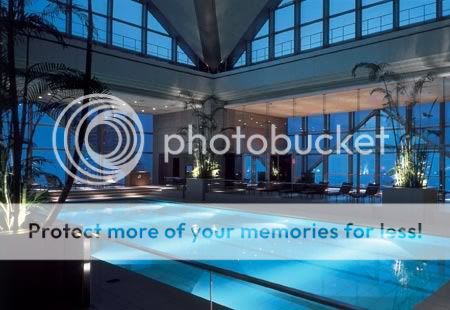 Hotel: Park Hyatt Tokyo Why It's Cool: Sure, Bill Murray took a dip here in Lost in Translation, but it's the view from this sleek, 47th-floor swimming pool that's truly remarkable: Floor-to-ceiling windows frame jaw-dropping vistas of Tokyo, and even venerable Mount Fuji, while the steel-and-glass pyramid-shaped ceiling floods the pool with natural light. The 65-foot-long, four-lane pool is striking at night, too, when the city's skyscrapers light up. 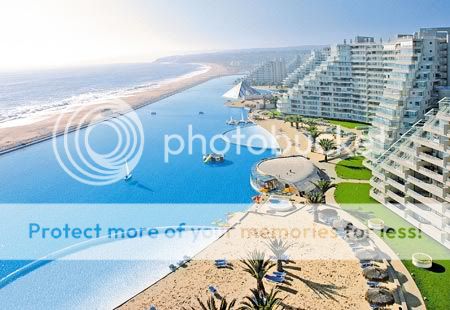 Hotel: San Alfonso del Mar, Algarrobo, Chile Why It's Cool: You can take small sailboats out on this saltwater pool that Guinness World Records calls the largest in the world. At two thirds of a mile in length, the massive stretch of water has room for several man-made sand beaches. For nighttime swimming, head to the temperature-controlled beach inside the pool's centrally located glass pyramid—the water and the sand are heated.  Hotel: Hotel Caruso Belvedere, Ravello, Italy Why It's Cool: The Hotel Caruso Belvedere is set at the highest point in the sun-splashed Amalfi Coast town of Ravello, so the open-air infinity pool offers unobstructed, panoramic views of one of the world's most dramatic coastlines—and the sea beyond. It doesn't hurt that the pool itself is flanked by 11th-century Roman ruins. 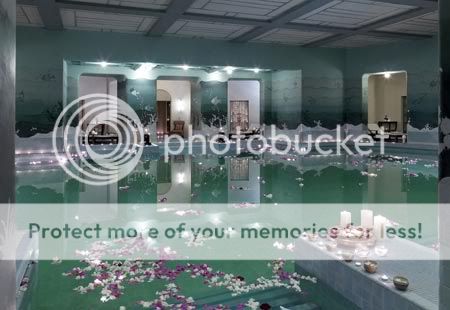 Hotel: Umaid Bhawan Palace, Jodhpur, India Why It's Cool: In a massive, 347-room palace overlooking the Blue City of Jodhpur in the Indian state of Rajasthan, this serene, temperature-controlled swimming basin takes advantage of natural candlelight—with rose petals sometimes strewn on the surface. The hotel is run by the Taj Hotels Resorts and Palaces, which shares the property with the palace's owner, the Maharaja of Jodhpur—who has been known to swim laps with the guests from time to time. Hotel: Viceroy Miami Why It's Cool: In a city loaded with cool pools, the recently opened pool at the Viceroy stands out. The two-acre pool deck—with Japanese blueberry trees and swanky chaise lounges and beds—features three types of pools: an 80-person hot tub, a wading pool, and a football-field-size swimming pool. Perhaps coolest of all, it's 15 floors above the street, with in-the-middle-of-it-all views of downtown Miami and glimpses of Biscayne Bay in the distance. Hotel: InterContinental Hong Kong Why It's Cool: Set on the third floor of the InterContinental Hong Kong, the hotel's three pools—two hot and one cold, but all with underwater music piped in—give the almost unnerving illusion that you're floating in Victoria Harbor. After your swim, park yourself in one of the poolside cabanas and gaze out at Hong Kong's skyline. Hotel: Golden Nugget, Las Vegas Why It's Cool: You'll swim with five species of sharks (16 sharks in all) at the Nugget's $30 million pool complex. The Tank, as it's called, houses a three-story waterslide, waterfalls, and the pool's pièce de resistance, the 200,000-gallon shark tank. You're in more danger at the Golden Nugget's roulette wheel: The sharks, stingrays, massive Queensland grouper, and silvery jack crevalle are separated from the swimming pool by a four-inch clear acrylic wall. Hotel: Quincy Hotel, Singapore Why It's Cool: This brand-new, glass-enclosed pool is cantilevered from the 12th floor of the futuristic-looking Quincy Hotel, suspending swimmers high above the passing cars and pedestrians at street level. At night, special lighting effects make the pool appear to glow. Bask and swim for a bit, then retire to one of the rattan chairs at poolside for a nap. Hotel: Al Bustan Palace InterContinental Muscat, Muttrah, Oman Why It's Cool: After an extensive 18-month renovation, this InterContinental property in Oman recently reopened with a major pool upgrade—which the roving pool butlers (you heard us) are more than happy to tell you about, after refreshing your rose-scented spritzer. The spacious, 164-foot-long infinity pool is flanked by shady, palm-studded islands. The water is temperature controlled, so it's always an oasis-like 84 degrees. Hotel: Anantara Koh Samui Resort & Spa, Samui, Thailand Why It's Cool: You look straight out into the Gulf of Thailand from the 98-foot-long infinity pool at this stylish resort on the island of Samui, Thailand. If the views aren't soothing enough, order a stiff drink at the swim-up bar and laugh it off with the comical, spitting monkey statues along the pool's perimeter.
|
|
|
|
|
|
|
|
|
|
|
|
|
|
|
Posted: Sat Jul 11, 2009 10:32 pm
French travelers ranked as world’s worst
Survey results blast tourists for speaking little English, being tight-fisted
updated 6:21 a.m. PT, Thurs., July 9, 2009
PARIS - French tourists are the worst in the world, coming across as bad at foreign languages, tight-fisted and arrogant, according to a survey of 4,500 hotel owners across the world.
They finish in last place in the survey carried out for internet travel agency Expedia by polling company TNS Infratest, which said French holidaymakers don't speak local languages and are seen as impolite.
"It's mainly the fact that they speak little or no English when they're abroad, and they don't speak much of the local language," Expedia Marketing Director Timothee de Roux told radio station France Info.
"The French don't go abroad very much. We're lucky enough to have a country which is magnificent in terms of its landscape and culture," he said, adding that 90 percent of French people did their traveling at home.
"So when they're on holiday they can be a bit stressed, they're not used to things, and this can lead them to be demanding in a way which could be seen as a certain arrogance."
French tourists are also accused of generally spending less than other nationalities when abroad.
De Roux said the French, not accustomed to leaving large tips at home where a service charge is automatically levied on restaurant bills, can seem "tight-fisted" compared with other nationalities.
The Japanese ranked top of the Best Tourist survey, with the British and the Germans judged the best of the Europeans.
But French tourists received some consolation for their poor performance, finishing third after the Italians and British for dress sense while on holiday.
|
|
|
|
|
|
|
|
|
|
|
|
|
|
|
|
|
|
Posted: Sat Jul 11, 2009 11:21 pm
Top 10 national park lodges
Nothing says 'summer escape' like a visit to a national park — sleep over in style
Introduction
In the early 1900s, railroad companies built the first lodge hotels to lure well-off easterners westward, promising easy living against a stunning backdrop.
A century later, the clientele has changed but the appeal has not. We chose lodges that are urban and remote, refined and rustic, classic and contemporary.
Some are creaky-old and rife with history; others have gone modern with yoga classes and spa treatments. All say “summer escape,” and fill up fast — so book early.
The Ahwahnee
Yosemite National Park, California
Bound by the craggy Sierra Nevada mountain range and roughly the size of Rhode Island, Yosemite is a park of dramatic backcountry grandeur. Befittingly majestic, the massive granite, glass, and timber Ahwahnee is an impressive piece of the past that dates back to 1927.
In terms of both history and architecture, it is among the most iconic lodges in the country, with a roster of past guests that includes Queen Elizabeth II, Clark Gable, John F. Kennedy, and Franklin and Eleanor Roosevelt. The design is a blend of Art Deco and Native American styles, and the lobby boasts elegant tapestries, floor-to- ceiling windows, and fireplaces big enough to stand in.
To top it off, almost every room, suite, and cottage offers a prime view of famous natural landmarks — Yosemite Falls, Half Dome, and Glacier Point. www.yosemitepark.com.
Many Glacier Hotel
Glacier National Park, Montana
If there was ever a time to visit this park in northern Montana, it’s now: Of the 120 glaciers that existed in the park more than a century ago, only 26 remain. Scientists predict that if global warming continues at its current rate, they all might disappear by 2030, adversely affecting the ecosystem and landscape. For now, the air and water are magnificently pristine, and the species of flora and fauna are practically unchanged since the park’s inception (which is rare).
With more than 700 miles of trails, it’s ideal for backpackers of all levels. At the park’s center sits the isolated Swiftcurrent Lake, next to the charming, Swiss chalet–style Many Glacier Hotel. At 93 years old, the hotel is starting to show its age, but the basic rooms are quaint.
The suites with balconies looking out on alpine views (watch for bears), the cozy lobby where afternoon fondue is served, and, ultimately, the unparalleled location all make the hotel worth seeking out — before the park changes forever. www.glacierparkinc.com/manyglacierhotel.
Banff Springs Hotel
Banff National Park, Alberta, Canada
Built under the auspices of the Canadian Pacific Railway in 1887, the four-diamond Banff Springs Hotel has the look of a Scottish baronial castle and the feel of an indulgent weekend retreat.
A Fairmont property, all rooms are appointed with de rigeur comforts and most offer views of the Bow River or Tunnel Mountain. There’s golf, tennis, and mountain biking, but the primo activity takes place at the Willow Stream spa, a 38,000-squarefoot operation fresh from a multimillion-dollar makeover.
Many of the treatments involve native plants and minerals (making the wildflower meadow come to you for a change). Yet even an Alpine Aromatherapy Massage can’t compete with the miles of unadulterated Rocky Mountain beauty just outside the door. www.fairmont.com/banffsprings.
Big Meadows Lodge
Shenandoah National Park, Virginia
Tucked into the Blue Ridge Mountains, Shenandoah is an easy and scenic 90-minute drive from Washington, D.C., but feels remarkably remote.
At Big Meadows Lodge, televisions are scarce; instead, guests watch deer and black bears wander through the nearby meadow for which the lodge is named. Accommodations, with views of the sprawling Shenandoah Valley, run from private cabins to in-lodge rooms and suites.
An architectural attraction in itself, the interior of the lodge is paneled in native oak and chestnut, while the outside is made of chunky stone mined from the nearby Appalachians. Lately the park has been getting serious about its food, hiring chef Peter Bizon to infuse the menus at Big Meadows and nearby Skyland Resort with Southern-inspired flavors, as well as oversee occasional cooking workshops and wine-pairing dinners. www.visitshenandoah.com.
Jasper Park Lodge
Jasper National Park, Alberta, Canada
There are more accessible places to play golf, but few are set among such rugged beauty, where clear lakes border wildflower meadows and elk, caribou, and moose roam freely.
The 83-year-old course at Jasper Park Lodge, which was designed by the legendary Stanley Thompson and ranks among the best in North America, is 224 miles away from the Edmonton airport, but it’s worth the trek.
This lakeside Fairmont property is a sprawling compound of cedar chalets and log cabins, with Signature Cabins like the eight-bedroom Milligan Manor, perched right on the fairway. From $499/night; fairmont.com/jasper.
Crater Lake Lodge
Crater Lake National Park, Oregon
Famous for its intensely blue water, Crater Lake is one of the deepest and most pristine lakes in North America. Hovering near the edge of its steep rim (the lake was formed in a collapsed volcano 7,700 years ago), Crater Lake Lodge is the park’s only actual lakeside hotel and, thanks to a major overhaul in the 1990s, also it's most comfortable.
The lodge originally opened in 1915, and despite the remodel, it retains the feel of days gone by, down to the rustic rocking chairs on the veranda overlooking the lake and the families who claim them for remarkable stargazing after dark. With no modern distractions at the lodge, diversions center around the lake, where there is hiking, biking, boating, or fishing for rainbow trout and kokanee salmon.
From mid-October to early summer, roads to the park are covered in snow, which makes for a short tourist season (the lodge opens in late spring). Consequently, early reservations are essential — especially for the precious few rooms with water views. www.craterlakelodges.com.
Jenny Lake Lodge
Grand Teton National Park, Wyoming
For those who prefer equal parts rusticity and refinement, there’s no better choice than the classic Jenny Lake Lodge in northwest Wyoming. Grand Teton, as well as Yellowstone Park to the north, get slammed with visitors in the summer, but quiet Jenny Lake offers a respite.
Bordering a bucolic wildflower meadow, the lodge’s 37 cabins have handmade quilts, dark-wood floors, and stunning views of the serrated Tetons towering above. Nightly five-course dinners (jackets suggested) evoke the park’s Rockefeller roots (the famous philanthropist played a major role in its creation); the lack of tech gadgets is in keeping with the sylvan setting.
Conceived as a dude ranch for easterners in the 1920s, the lodge has since hosted Rockefeller offspring, Princess Grace of Monaco and her family, and an exceptionally loyal clientele who return year after year. The loyalty factor, combined with the limited number of cabins, means that early reservations are a must.
Breakfast, dinner, bicycling, and horseback riding are included in the price. Other activities range from fly-fishing and float trips on the Snake River to golf and tennis at the Jackson Hole Golf & Tennis Club. www.gtlc.com/lodgejen.aspx.
El Tovar
Grand Canyon National Park, Arizona
The first guests arrived at El Tovar in 1905; a few years ago, it received a $4.6 million renovation for its 100th birthday, including a major sprucing up of guestrooms (the most upscale in the park). In between, the sweeping, multitiered structure has hosted no fewer than eight U.S. presidents, from Teddy Roosevelt to Bill Clinton.
Built during a period of architectural mash-up, the hotel has been described as a cross between Swiss chalet and Norwegian villa, with the interior of a hunting lodge (taxidermy included). Situated just 100 yards from the canyon’s south rim, the view all but steals the show.
It can be appreciated from many angles — on the lounge porch during cocktail hour; in the dining room over buckwheat pancakes drizzled with prickly pear syrup; sitting on the private deck of one of three suites with prize views, which consistently sell out more than a year in advance. www.grandcanyonlodges.com.
Cavallo Point Lodge
Golden Gate National Parks, California
This national park is not one piece of land but a composite of sites in the Bay Area, including spots in San Francisco. In 2001, the park acquired Fort Baker, a historic army outpost a mile from Sausalito in Marin County, and recently transformed it into Cavallo Point Lodge.
Opened in 2008, accommodations in both the new and restored buildings are hardly barracklike — the park wisely partnered with the folks behind Post Ranch Inn at Big Sur, and the results are stunning.
On top of spa services and yoga, guests can take photography classes, train for a triathlon, or channel their inner Alice Waters through a culinary program that includes olive oil tastings and day trips to wineries in the Napa and Sonoma valleys. www.cavallopoint.com.
Paradise Inn
Mt. Rainier National Park, Washington
The last eruption of Mt. Rainier, the 14,410-foot peak an hour drive southeast of Seattle, occurred 150 years ago, and though scientists predict there may eventually be another, the park is safe now for visitors. Its top lodge is the historic Paradise Inn, built in 1916 from hand-carved Alaskan cedar logs.
Closed the for two years for a renovation, the lodge reopened in May 2008.
Besides a few new rooms and a fresh menu at the café, the changes were largely structural. Rooms are still spare and small, but you’ll want to spend your time outdoors anyway enjoying the wildflowers, miles of secluded hiking trails, and spectacular mountain views. www.mtrainierguestservices.com.
|
|
|
|
|
|
|
|
|
|
|
|
|
|
|
|
|
|




 Reply
Reply