






Magical Girl
Magical girls (魔法少女 ,mahō shōjo?) belong to a sub-genre of Japanese fantasy anime and manga. Magical girl stories feature young girls with superhuman abilities, forced to fight evil and protect the Earth. They generally possess a secret identity,[1] although the name can just refer to young girls who follow a plotline involving magic and a transformation (such as Full Moon wo Sagashite). Magical girls are known in Japan as majokko (魔女っ子 ?, lit. "witch girl"), though this term is generally not used to refer to modern magical girl anime. Sally, the Witch in 1966 is seen as the first magical girl anime.[1]
Magical boys occur much more rarely, but easily identifiable as they are designed along similar lines such as with D.N.Angel. A magical girl should not be confused with a catgirl or a magical girlfriend. Sometimes, the catgirl and magical girl character types cross over; the magical girl may have cat ears and tail as part of her costume or a catgirl could have some form of magical powers. Examples of these include Tokyo Mew Mew and Hyper Police. A magical girl and a magical girlfriend typically differ in that the magical girlfriend is not the protagonist.
In 1962, Secret Akko-chan created the convention that the magical girl gets her powers from a "special object".[2] Paul Gravett considers Princess Sapphire to be a prototype for magical girls. Born with two hearts, one of a girl and one of a boy, she must pretend to be a boy in order to save her kingdom from falling into the clutches of her evil uncle. In feminine guise (with aid of a blonde wig) she romances a prince.[3] The Japanese dub of the American TV series Bewitched became popular among Japanese young girls in the 1960s.[4] This was in the formative years of Japanese animation as a genre, and animators wanted to create a series aimed at young girls;[who?] since Bewitched was popular with them, animators decided to make a series about a witch.[citation needed] This witch would not be a witch in the usual Western sense of the word, such as that of the evil witch in Hansel and Gretel, but a witch of the same vein as Bewitched's Samantha: a witch who looked just like a normal person and used her magic for everyday tasks and the good of others around her. This inspired Mitsuteru Yokoyama—best known in the U.S. as the creator of Tetsujin 28-go—to create Sally the Witch,[5] which was serialised and aired on television in 1966.[2]
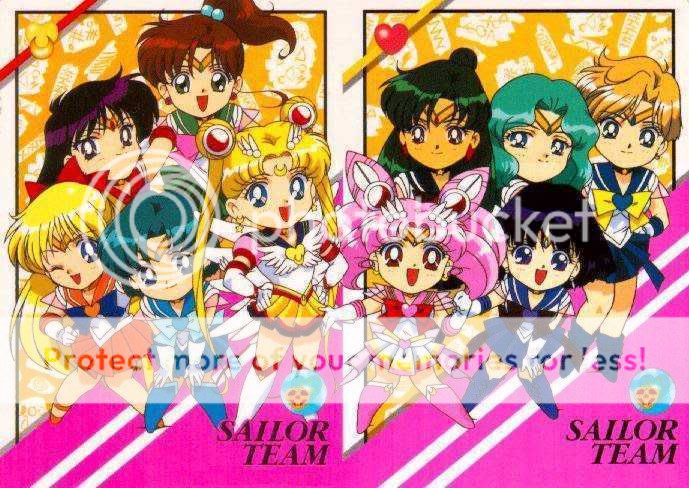
Commentators[who?] regard Cutie Honey, which began in 1973, as the prototype for the transforming magical girl genre.[citation needed] The transforming magical girl genre was later popularized by Sailor Moon, which began in 1992.
According to the analyst John Oppliger of AnimeNation, since 2003, magical girl anime targeted at least partially at male audiences has become a prolific trend alongside the traditional female-oriented works, coinciding with the rise of moe genre popularity.[6]
Until the appearance of Sailor Moon, the original term mahō shōjo in Japan referred primarily to girls who did not transform themselves and used magic for acts of mercy and succor rather than heroism against evil; for example, Mako of Mahō no Mako-chan. In fact, magical girl series existed such as Himitsu no Akko-chan and Fushigi na Merumo in which the heroines were given the power to transform themselves into whatever they wished, not for the sake of fighting evil, but for the sake of adventure. However, the term is generally used in the west to refer only to evil-fighting magical girls. The series Sally, the Witch and Magical Princess Gigi are hardly known in the United States[citation needed] although they are popular works of magical girl series in Japan.
An example of a series that transcended[clarification needed] these two cases was Akazukin Chacha, a Japanese mahō shōjo manga that portrayed adventures of the protagonist Chacha and her friends. When it was adapted to anime, Chacha became a "Magical Princess" in order to battle with villains. Another is Majokko Megu-chan (Toei, 1974-75), in which the heroine, Megu, uses her magic not only to fight villains but also in dealing with everyday situations (such as in teaching her younger brother to swim). In 2004, Magical Girl Lyrical Nanoha premiered featuring a set of magical girls whose powers are predominantly combat related.
Magical girls (魔法少女 ,mahō shōjo?) belong to a sub-genre of Japanese fantasy anime and manga. Magical girl stories feature young girls with superhuman abilities, forced to fight evil and protect the Earth. They generally possess a secret identity,[1] although the name can just refer to young girls who follow a plotline involving magic and a transformation (such as Full Moon wo Sagashite). Magical girls are known in Japan as majokko (魔女っ子 ?, lit. "witch girl"), though this term is generally not used to refer to modern magical girl anime. Sally, the Witch in 1966 is seen as the first magical girl anime.[1]
Magical boys occur much more rarely, but easily identifiable as they are designed along similar lines such as with D.N.Angel. A magical girl should not be confused with a catgirl or a magical girlfriend. Sometimes, the catgirl and magical girl character types cross over; the magical girl may have cat ears and tail as part of her costume or a catgirl could have some form of magical powers. Examples of these include Tokyo Mew Mew and Hyper Police. A magical girl and a magical girlfriend typically differ in that the magical girlfriend is not the protagonist.
In 1962, Secret Akko-chan created the convention that the magical girl gets her powers from a "special object".[2] Paul Gravett considers Princess Sapphire to be a prototype for magical girls. Born with two hearts, one of a girl and one of a boy, she must pretend to be a boy in order to save her kingdom from falling into the clutches of her evil uncle. In feminine guise (with aid of a blonde wig) she romances a prince.[3] The Japanese dub of the American TV series Bewitched became popular among Japanese young girls in the 1960s.[4] This was in the formative years of Japanese animation as a genre, and animators wanted to create a series aimed at young girls;[who?] since Bewitched was popular with them, animators decided to make a series about a witch.[citation needed] This witch would not be a witch in the usual Western sense of the word, such as that of the evil witch in Hansel and Gretel, but a witch of the same vein as Bewitched's Samantha: a witch who looked just like a normal person and used her magic for everyday tasks and the good of others around her. This inspired Mitsuteru Yokoyama—best known in the U.S. as the creator of Tetsujin 28-go—to create Sally the Witch,[5] which was serialised and aired on television in 1966.[2]
Commentators[who?] regard Cutie Honey, which began in 1973, as the prototype for the transforming magical girl genre.[citation needed] The transforming magical girl genre was later popularized by Sailor Moon, which began in 1992.
According to the analyst John Oppliger of AnimeNation, since 2003, magical girl anime targeted at least partially at male audiences has become a prolific trend alongside the traditional female-oriented works, coinciding with the rise of moe genre popularity.[6]
Until the appearance of Sailor Moon, the original term mahō shōjo in Japan referred primarily to girls who did not transform themselves and used magic for acts of mercy and succor rather than heroism against evil; for example, Mako of Mahō no Mako-chan. In fact, magical girl series existed such as Himitsu no Akko-chan and Fushigi na Merumo in which the heroines were given the power to transform themselves into whatever they wished, not for the sake of fighting evil, but for the sake of adventure. However, the term is generally used in the west to refer only to evil-fighting magical girls. The series Sally, the Witch and Magical Princess Gigi are hardly known in the United States[citation needed] although they are popular works of magical girl series in Japan.
An example of a series that transcended[clarification needed] these two cases was Akazukin Chacha, a Japanese mahō shōjo manga that portrayed adventures of the protagonist Chacha and her friends. When it was adapted to anime, Chacha became a "Magical Princess" in order to battle with villains. Another is Majokko Megu-chan (Toei, 1974-75), in which the heroine, Megu, uses her magic not only to fight villains but also in dealing with everyday situations (such as in teaching her younger brother to swim). In 2004, Magical Girl Lyrical Nanoha premiered featuring a set of magical girls whose powers are predominantly combat related.

Magical Boys
A magical boy (魔法少年 ,mahō shōnen?) is a type of fictional character in anime and manga. They are the male counterpart of mahō shōjo or magical girl anime. Because they are usually associated with shōjo, magical boys are typically bishōnen and designed to be romantically attractive, (although sometimes with a mischievous or cold demeanor,) such as Tuxedo Mask. Magical boys are traditionally supporting characters, who help or hinder the lead magical girl(s). Still, DNAngel is one exception, as is Tokyo Babylon. Another exception is the recent "magical girl" manga Mei no Naisho: the manga is the story of a young boy who was raised as a girl by his witch mother, and possesses witch powers, a wand and a talking cat familiar.

Yaoi
Yaoi (やおい)[nb 1] is a popular term for fictional media that focuses on homoerotic or homoromantic male relationships. Originally referring to a specific type of dōjinshi (self-published works) parody of mainstream anime and manga works, yaoi came to be used as a generic term for female-oriented manga, anime, dating sims, novels and dōjinshi featuring homosexual male relationships.
In Japan, the term has largely been replaced by the rubric Boys' Love (ボーイズラブ ,Bōizu Rabu?), which subsumes both parodies and original works, and commercial as well as dōjinshi works. Although the genre is called Boys' Love (commonly abbreviated as "BL"), the males featured are pubescent or older. Works featuring prepubescent boys are labeled shotacon, and seen as a distinct genre. Yaoi (as it continues to be known among English-speaking fans) has spread beyond Japan: both translated and original yaoi is now available in many countries and languages.
Yaoi began in the dōjinshi markets of Japan in the late 1970s/early 1980s as an outgrowth of shōnen-ai (also known as "Juné" or "tanbi"), but whereas shōnen-ai (both commercial and dōjinshi) were original works, yaoi were parodies of popular "straight" shōnen anime and manga, such as Captain Tsubasa and Saint Seiya. BL creators and fans are careful to distinguish the genre from “gay manga,” which are created by and for gay men.[1][2] However, some male manga creators have produced BL works.[3]
The main characters in BL usually conform to the formula of the seme (aggressor) who pursues the uke (the target)

Yuri
Yuri (百合 ?), also known by the wasei-eigo construction Girls Love (ガールズラブ ,gāruzu rabu?),[3] is a Japanese jargon term for content and a genre involving love between women in manga, anime, and related Japanese media.[4][5] Yuri can focus either on the sexual or the emotional aspects of the relationship, the latter sometimes being called shōjo-ai by western fans.[6]
The themes yuri deals with have their roots in the Japanese lesbian literature of early twentieth century,[7][8] with pieces such as Yaneura no Nishojo by Nobuko Yoshiya.[9] Nevertheless, it is not until the 1970s that lesbian-themed works began to appear in manga, by the hand of artists such as Ryoko Yamagishi and Riyoko Ikeda.[1] The 1990s brought new trends in manga and anime, as well as in dōjinshi productions, along with more acceptance for this kind of content.[10] In 2003 the first manga magazine specifically dedicated to yuri was launched under the name Yuri Shimai, followed by its revival Comic Yuri Hime, launched after the former was discontinued in 2004.[11][12]
Although yuri originated in female-targeted (shōjo, josei) works, today it is featured in male-targeted (shōnen, seinen) ones as well.[8] Yuri manga from male-targeted magazines include titles such as Kannazuki no Miko and Strawberry Panic!, as well as those from Comic Yuri Hime's male-targeted sister magazine, Comic Yuri Hime S, which was launched in 2007.[13]
Yuri (百合 ?), also known by the wasei-eigo construction Girls Love (ガールズラブ ,gāruzu rabu?),[3] is a Japanese jargon term for content and a genre involving love between women in manga, anime, and related Japanese media.[4][5] Yuri can focus either on the sexual or the emotional aspects of the relationship, the latter sometimes being called shōjo-ai by western fans.[6]
The themes yuri deals with have their roots in the Japanese lesbian literature of early twentieth century,[7][8] with pieces such as Yaneura no Nishojo by Nobuko Yoshiya.[9] Nevertheless, it is not until the 1970s that lesbian-themed works began to appear in manga, by the hand of artists such as Ryoko Yamagishi and Riyoko Ikeda.[1] The 1990s brought new trends in manga and anime, as well as in dōjinshi productions, along with more acceptance for this kind of content.[10] In 2003 the first manga magazine specifically dedicated to yuri was launched under the name Yuri Shimai, followed by its revival Comic Yuri Hime, launched after the former was discontinued in 2004.[11][12]
Although yuri originated in female-targeted (shōjo, josei) works, today it is featured in male-targeted (shōnen, seinen) ones as well.[8] Yuri manga from male-targeted magazines include titles such as Kannazuki no Miko and Strawberry Panic!, as well as those from Comic Yuri Hime's male-targeted sister magazine, Comic Yuri Hime S, which was launched in 2007.[13]
