

June 19, 2009 -- NASA's Lunar Reconnaissance Orbiter (LRO), which blasted off for the moon on Thursday, will not only scout out safe spots for astronauts to land, it will let them know how the harsh radioactive environment might impact their bodies.
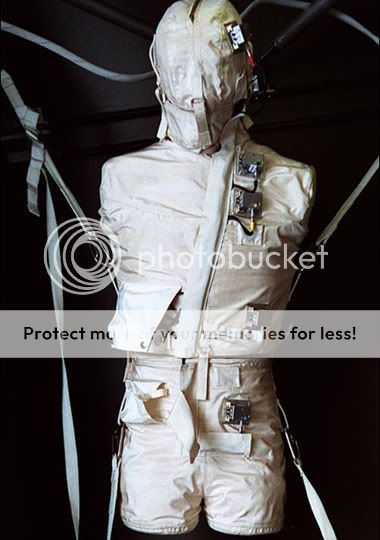
LRO is carrying patches of fake human tissue that will help NASA assess radiation risks to future crews and develop countermeasures.
The spacecraft's primary job is to spend a year taking high-resolution images of the moon's surface so NASA can find safe and scientifically interesting places to land future crews.
The United States is planning to return astronauts to the moon in 2020, about 50 years after the pioneering Apollo missions of 1969-72.
The agency plans to keep its crews on the moon far longer than the Apollo voyages and also travel beyond the equatorial zone where all six of the Apollo moon landings occurred.
"That part of the radiation environment has not been well observed in the past," said Boston University's Harlan Spence, the lead scientist for LRO's Cosmic Ray Telescope for the Effects of Radiation, or CRaTER instrument. "There's a huge difference between being in low-Earth [orbit] and deep space."
Crews aboard the International Space Station and the space shuttle, which fly about 225 miles above Earth, are shielded by Earth's magnetic field and particles escaping from the planet's atmosphere.
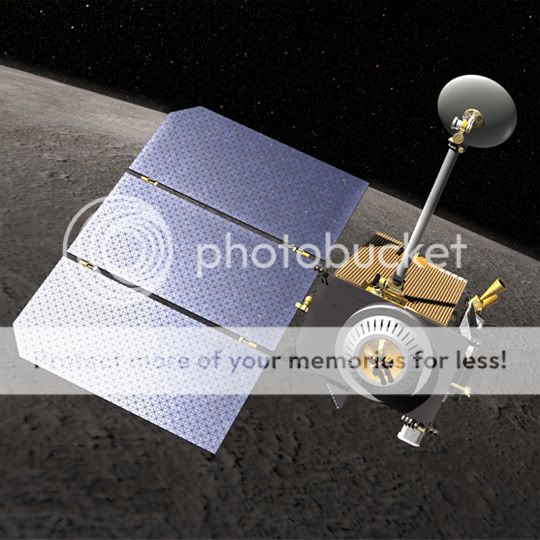
LRO is carrying patches of fake human tissue that will help NASA assess radiation risks to future crews and develop countermeasures.
The spacecraft's primary job is to spend a year taking high-resolution images of the moon's surface so NASA can find safe and scientifically interesting places to land future crews.
The United States is planning to return astronauts to the moon in 2020, about 50 years after the pioneering Apollo missions of 1969-72.
The agency plans to keep its crews on the moon far longer than the Apollo voyages and also travel beyond the equatorial zone where all six of the Apollo moon landings occurred.
"That part of the radiation environment has not been well observed in the past," said Boston University's Harlan Spence, the lead scientist for LRO's Cosmic Ray Telescope for the Effects of Radiation, or CRaTER instrument. "There's a huge difference between being in low-Earth [orbit] and deep space."
Crews aboard the International Space Station and the space shuttle, which fly about 225 miles above Earth, are shielded by Earth's magnetic field and particles escaping from the planet's atmosphere.