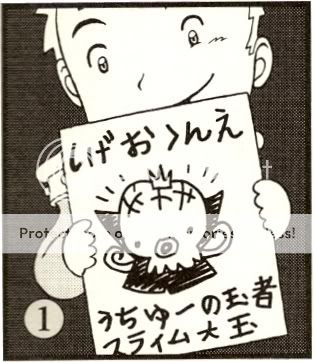


For us to learn Japanese, we are gonna start in China...at least long enough for us to understand the history of the language.
About 5,000 years ago, in China, a system of writing was invented based on drawings. Similar to the Egyptian hieroglyphics, this drawings represented different materials and abstract concepts. Usually, as time goes, writing systems become simpler, forming an alphabet in the end, an alphabet which usually expresses sounds, much like the Western writing system. In China, the function of ideograms (or logograms) was to express both sound and meaning.
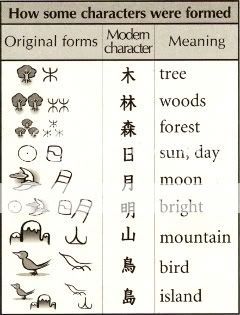
For example, here is the traditional Chinese symbol for sun.

And this is the modern Chinese symbol for sun and day.

Below, are some more examples comparing the traditional to the modern.
In the 4th century, the Chinese writing system was introduced to Japan through the Korean peninsula and gradually spread throughout the country, and was eventually used to write the Japanese language. There was a problem, however, the Japanese language already existed prior to the introduction of the Chinese language, it only lacked a writing system. So, Chinese characters were imported along with their pronunciation (with substantial changes due to the limited Japanese phonetics), and now there are two or more ways to read the same character (kanji). These differences in pronunciation which takes us to the second post.
On'yomi Vs. Kun'yomi
Kanji will often have multiple pronunciations and will either be read the on'yomi way or the kun'yomi way. On'yomi is the Chinese reading, and kun'yomi is the Japanese reading.
Let's take 山 for an example. 山 is the kanji for mountain, pronounced as yama (Japanese) and san (Chinese). 富士山 Mount Fuji could be pronounced Fuji-yama or Fuji-san (as well as several other pronunciations).
But how do you know which one to use and when. Well, there are some basic rules when dealing with on'yomi and kun'yomi pronunciations.
•When a character is on its own in a sentence, it is uausally read the kun'yomi way (Japanese), but if it is accompanied by other kanji, it is usually read the on'yomi way (Chinese).
•Also, names of people and places are almost always read the kun'yomi way.
(Please note, these rules work about 90% of the time.)
So, 山 by itself would be pronounced yama, but 富士山 would be Fuji-san.
Here's another example featuring the kanji 新 (new):
その新しい新聞はおもしろいです。
Sono atarashii shinbun wa omoshiroi desu.
That new newspaper is interesting.
The first time 新 appears, it is pronounced the kun'yomi way, atara(shii). We know this because the character is on its own in the sentence, surrounded by kana, not kanji.
The second time it is read shin, or the on'yomi way, because it comes with another kanji. 新 shin (new) and 聞 bun (to hear). Together these kanji form 新聞 shinbun or "newspaper".
Japanese and Nihongo
Nihongo is the name given to the Japanese language, and to help you learn more about this word and its kanji, let's break it down.
Ni 日 stands for day and sun. Hon 本 means origin and root. Go 語 stands for language. All together, Nihongo would be written 日本語.
In Japanese, Japan's name is Nihon and is written 日本.
For those of you wondering why the kanji for "sun" and "origin" are used to write the name for Japan, there is a simple reason. I'm sure you have heard, at some point in your life, the phrase, "land of the rising sun." This phrase comes from the use of these kanji. Therefore, nihongo means "the language of the land of the rising sun", otherwise known as, Japanese.
Complexities of Kanji
Learning kanji can be very frustrating and daunting. There is an estimated 45,000 or 50,000 kanji. On top of that, there is the on'yomi and kun'yomi variations. Of these some odd 50k kanji, there are some very simple kanji such as the two stroke kanji for "person" 人 (hito, nin, or jin) to some very complex kanji like the one for "machine" 機 (ki) comprised of 16 strokes.
But there is some light at the end of the tunnel. Of the 50,000 kanji, only about 3,000 are normally used. There is also a list of 1,945 kanji called Jōyō Kanji or "common use kanji". The kanji on this list are those that are used in the press (newspapers, magazines). If a kanji is used that is not on the list, then its reading must also be given in furigana (small font hiragana written above kanji).