Welcome to Gaia! ::

Learn To Speak Japanese!

Back to Guilds

A Guild for learning how to speak Japanese on a daily basis! 

Tags: Learn, Japanese, Nihongo, Speak, Japan 

Reply Learn To Speak Japanese~!
Lesson 7: Greetings and Daily Expressions

Quick Reply

Enter both words below, separated by a space:

Can't read the text? Click here

Submit

Great_Aku_Ha
Captain

8,000 Points
  • Beta Critic 0
  • Beta Contributor 0
  • Beta Explorer 0
PostPosted: Sun Apr 25, 2010 8:02 pm


Ohayou gozaimasu. (おはようございます。) - Good morning.

Japanese people greet many ways depending on the time of day. Some greetings differ depending on the relationship you have with the person you are greeting.

One can also say just "Ohayou (おはよう)". This is casual, and should not be used with one's boss.


Konnichiwa. (こんにちは。) - Hello/Good afternoon.

There is a rule for writing hiragana "wa" and "ha." When "wa" is used as a particle, it is written in hiragana as "ha." "Konnichiwa" is now a fixed greeting. However, in the old days it was a part of sentence such as "Today is ~ (Konnichi wa ~)" and "wa" functioned as a particle. That's why it is still written in hiragana as "ha."


Konbanwa. (こんばんは。) - Good evening.

The same "wa" and "ha" rule applies here. "Konbanwa" is now a fixed greeting. However, in the old days it was a part of sentence such as "Tonight is ~ (Konban wa ~)" and "wa" functioned as a particle. That's why it is still written in hiragana as "ha."


Oyasuminasai. (おやすみなさい。) - Good night.

Unlike English, "Oyasuninasai (おやすみなさい) is mostly used before going to bed.


Sayonara. (さよなら。)- Good-bye.

"Sayounara (さようなら)" can be also used instead of "sayonara (さよなら)." People do not say "sayonara (さよなら)" when leaving their own home. "Ittekimasu(いってきます)" is normally used. The response to "Ittekimasu (いってきます)" is "Itterasshai (いってらっしゃい)". "Dewa mata (ではまた)" is also often used as "see you later", similar to the English expression.

How about "See you tomorrow"? "Tomorrow" is "ashita (明日)" in Japanese. I think you can guess what the the answer is: "Mata ashita (また明日)".

I hope you can practice these greetings. I am going to tell you one more phrase, "Mata raishuu(また来週)". This means "See you next week".
PostPosted: Sun Apr 25, 2010 10:54 pm


Here are some very useful and simple expressions.

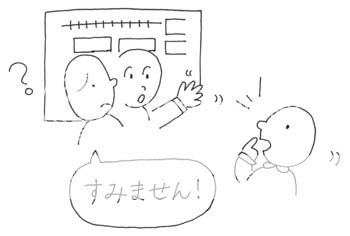
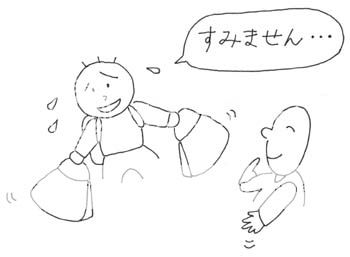
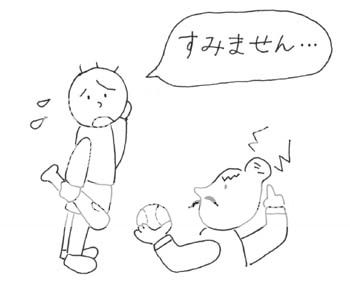
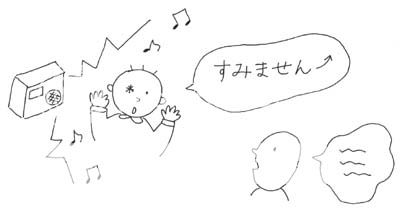
Sumimasen (すみません)-one can use this in several situations:


User Image
(1) Excuse me!

User Image
(2) Thank you.

User Image
(3) I'm sorry.

User Image
(4) Pardon me.


If you have ever had the chance to hear Japanese being spoken, you might notice that they often use "sumimasen(すみません)". Also, if you have ever hear a Japanese person speaking English, you might notice they sometimes mix up "excuse me" and "I'm sorry" because the Japanese use the same word for both expressions.

Douzo and Doumo

When one offers something "douzo(どうぞ)" can be used. A simple reply is "doumo(どうも)". "Doumo arigatou gozaimasu(どうもありがとうございます)" is a very polite way of saying, "Thank you very much". A more casual response is either "arigatou(ありがとう)" or "doumo(どうも)".

Great_Aku_Ha
Captain

8,000 Points
  • Beta Critic 0
  • Beta Contributor 0
  • Beta Explorer 0

USSR Brothers

PostPosted: Mon Apr 26, 2010 5:34 pm


Watash-I
Sensei-teacher
namae-name
chugakko-Jr.high school
seito-student
suki-like
Reply
Learn To Speak Japanese~!

 
Manage Your Items
Other Stuff
Get GCash
Offers
Get Items
More Items
Where Everyone Hangs Out
Other Community Areas
Virtual Spaces
Fun Stuff
Gaia's Games
Mini-Games
Play with GCash
Play with Platinum