Member Races
Humans*: Humans have a fairly robust physiology. Their internal makeup and reproductive processes are typical of most bipedal mammals, and their size and proportions give the appearance of being strong, fast and agile. In comparison to the other Alliance races, humans are roughly physically on par with turians (as very fit humans can punch them over and even throw them off the ground unassisted), and less agile than asari (whom they closely resemble), though fit human males are likely to be far stronger than the average asari. Humans would appear on average to be stronger than salarians but not as fast, due to the extremely elevated metabolisms of the latter. Like most organic races, humans are also capable of producing biotic individuals but there is a high risk of medical complications.
Humans can live to about 150 years, and medical advances have eradicated almost all known diseases that afflict them. Humans reach physical maturity at eighteen years of age, at which point they have usually finished their academic education and either directly enter the workforce or begin training for a profession.
It has been noted that humans are unusual in the galactic community, because they have far greater genetic diversity compared to other species with more peaks and valleys. This makes human genetic material useful in biological experiments, as a control.
Turians: 
Originally from the planet Palaven, turians are best known for their military role, particularly their contributions of soldiers and starships to the Systems Alliance Fleet. They are respected for their 'public service' ethic but are sometimes seen as imperialist or rigid by other races.
Turians typically stand over six feet tall, have two long, proportionately thick fingers and an opposable thumb on each hand, each tipped with talons, and a set of mandibles around their mouths. The most distinguishing feature of turians is their metallic carapace, which is a result of their evolution (see below). Turian features are avian, making them resemble humanoid birds or raptors.
Since the Unification War, turians normally wear elaborate facial tattoos marking their colony of origin, though it is not known which markings distinguish which colony. These tattoos are usually white — particularly on turians with darker carapaces — but can be of various colours. As a point of interest, the turian term 'barefaced' refers to one who is beguiling or not to be trusted. It is also a slang term for politicians.
Turians are also recognizable by their voices, which have a distinctive 'flanging' effect.
Turians exhibit the characteristics of predators rather than those of prey species (compare to krogan biology). Their forward-facing alert eyes give the impression that they possess outstanding eyesight and their teeth and jaws mimic the structures possessed by apex predators such as crocodiles or ancient, carnivorous dinosaurs. Needless to say, their talons on both their feet and hands seem capable of ripping flesh. Their slender bodies also seem to suggest that they are also capable of moving at high speeds.
The turian homeworld, Palaven, has a metal-poor core, generating a weak magnetic field and allowing more solar radiation into the atmosphere. To deal with this, most forms of life on Palaven evolved some form of metallic 'exoskeleton' to protect themselves. Their reflective plate-like skin makes turians less susceptible to long-term, low-level radiation exposure, but they do not possess any sort of 'natural armor'. A turian's thick skin does not stop projectiles and directed energy bolts. Turian blood has a dark blue colouration, possibly from the presence of hemocyanin rather than hemoglobin, which would fit with the biology of a metallic exoskeleton.
Although life on Palaven is carbon-based and oxygen-breathing, it is built on dextro-amino acids. This places the turians in a distinct minority on the galactic stage; the quarians are the only other sapient dextro-protein race. The food of humans, asari, or salarians (who evolved in levo-amino acid-based biospheres), will at best pass through turian systems without providing any nutrition. At worst, it will trigger an allergic reaction that can be fatal if not immediately treated. The turian mechanic Lilihierax on Noveria uses the idiom, "if you can polish enough gizzard". This suggests that the turians have a digestive system similar to birds and reptiles on Earth, some of whom swallow stones to help break down harder foods in the stomach.
The lifespan of turians is described as "not particularly longer or shorter than humans".
Turians are noted for their strong sense of public service. It is rare to find one who puts his needs ahead of the group. Every citizen from age 15 to 30 serves the state in some capacity, as anything from a soldier to an administrator, from a construction engineer to a sanitation worker. Turians have a strong inclination toward public service and self-sacrifice, so they tend to be poor entrepreneurs.
Turian society is highly regimented and very organized, and the species is known for its strict discipline and work ethic. Turians are willing to do what needs to be done, and they always follow through. They are not easily spurred to violence, but when conflict is inevitable, they only understand a concept of "total war." They do not believe in skirmishes or small-scale battles; they use massive fleets and numbers to defeat an adversary so completely that they remove any threat of having to fight the same opponent more than once. They do not exterminate their enemy, but so completely devastate their military that the enemy has no choice but to become a colony of the turians.
The turian military is the center of their society. It is not just an armed force; it is an all-encompassing public works organization. The military police are also the civic police. The fire brigades serve the civilian population as well as military facilities. The corps of engineers builds and maintains spaceports, schools, water purification plants, and power stations. The merchant marine ensures that all worlds get needed resources.
Other species see turians as "men of action," and they are generally regarded as the most progressive of the Alliance races (though some species believe humans are rivaling this position). Since their culture is based on the structure of a military hierarchy, changes and advances accepted by the leadership are quickly adopted by the rest of society with minimal resistance.
While turians are individuals with personal desires, their instinct is to equate the self with the group, and to set aside all personal desires for the good of all. Turians are taught to have a strong sense of personal accountability, the 'turian honor' that other races find so remarkable. Turians are taught to own every decision they make, good or ill. The worst sin they can make in the eyes of their people is to lie about their own actions. Turians who murder will try to get away with it, but if directly questioned, most will confess the crime.
Salarians: 
Salarians are warm-blooded amphibians with a hyperactive metabolism; salarians think fast, talk fast, and move fast. To salarians, other species seem sluggish and dull-witted. Unfortunately, their metabolic speed leaves them with a relatively short lifespan; salarians over the age of 40 are a rarity.
Salarians are known for their observational capability and non-linear thinking. This manifests as an aptitude for research and espionage. They are constantly experimenting and inventing, and it is generally accepted that they always know more than they are letting on.
The salarians are a bipedal race of aliens, with tall, elongated bodies suited for their high metabolism. Their heads are long and thin, and have a pair of horns protruding from the top of their skulls. Their skin varies in color, but is mostly a shade of blue or grey. However, this does not apply to all salarians, as some are brightly colored, ranging from light red to green.
Salarian eyes are large, oval and have thin membranes in place of eyelids. The pupils are a wide slit, oriented horizontally, and iris colours - while normally not visible - include green, purple and brown.
Salarians are noted for their high speed metabolism, which allows them to function on just one hour of sleep a day. Their minds and bodies work faster than most sapient races, making them seem restless or hyperactive. The drawback of this active metabolism is a short lifespan.
The salarians are amphibian haplo-diploid egg-layers; unfertilized eggs produce males and fertilized eggs produce females. Once a year, a salarian female will lay a clutch of dozens of eggs. Social rules prevent all but a fraction from being fertilized. As a result, 90% of the species is male.
Salarians have photographic memories and rarely forget a fact. They also possess a form of psychological ‘imprinting’, tending to defer to those they knew in their youth. Salarian hatching is a solemn ritual in which the clan Dalatrass (matriarch) isolates herself with the eggs. The young salarians psychologically imprint on her and tend to defer to her wishes.
During the hatching of daughters, the Dalatrasses of the mother and father’s clans are present at the imprinting. This ensures the offspring have equal loyalty to both, ensuring the desired dynastic and political unity.
Salarians excel at invention, preferring to use cutting-edge technology rather than settle for anything less. For example, their GARDIAN starship defenses put emphasis on high performance over reliability even though a malfunction could cost lives.
The salarians see information gathering and even spying as a matter of course when dealing with other races, but this is not underhanded: they simply embrace the dictum of 'knowledge is power'.
Normally, the rare salarian females are cloistered on their worlds out of tradition and respect. Powerful female Dalatrasses are dynasts and political kingpins. They determine the political course of their respective regions through shrewd negotiation. Though male salarians rise to positions of great authority in business, academia, or the military, they rarely have any input on politics, though salarian representatives in Parliament are male.
Due to their method of reproduction, salarians have no concept of romantic love, sexual attraction, or the biological impulses and social rituals that complicate other species' lives. Male-female relationships are rare (due to the scarcity of females) and more akin to human friendship. Sexuality is strictly for the purpose of reproduction. Ancient social codes determine who gets to fertilize eggs, which produces more daughters to continue the bloodline. Fertilization generally only occurs after months of negotiation between the parents’ clans, and is done for purposes of political and dynastic alliance. No salarian would imagine defying this code.
In principle, the salarian military is a small volunteer army that focuses on maneuver warfare. What differentiates the salarians is not their equipment or doctrine, but their intelligence services and rules of engagement. The salarians believe that a war should be won before it begins.
The unquestioned superiority of their intelligence services allows them to use their small military to maximum effectiveness. Well before fighting breaks out, they possess complete knowledge of their enemy's positions, intentions and timetable. Their powerful intelligence network is spearheaded in the field by Special Tasks Groups (the basis for the Alliance organization) who monitor developing situations and take necessary action, usually without the shackles of traditional laws and procedures. This may be as simple as scouting and information gathering, or as complex as ensuring a conveniently unstable political situation stays that way.
In every war the salarians have fought, they struck first and without warning. For the salarians, to know an enemy plans to attack and let it happen is folly; to announce their own plans to attack is insanity. They find the concepts of 'do not fire until fired upon' and 'declare a war before prosecuting it' incredibly naive. In defensive wars, they execute devastating preemptive strikes hours before the enemy's own attacks. On the offense, they have never issued an official declaration of war before attacking.
Biotics are virtually unknown in the salarian military. Those with such abilities are considered too valuable to be used as cannon fodder and are assigned to the intelligence services.
While capable of defending themselves against most threats, the salarians know that they are small fish in a universe filled with sharks. As a point of survival, they have cultivated strong alliances with larger powers, particularly with the turians.
Asari: 
The asari, native to the planet Thessia, are often considered the most powerful and respected sentient species in Alliance space. This is partly due to the fact the asari were the first Alliance race to achieve interstellar flight, and the were the primary designers of the Citadel.
A mono-gender race—distinctly feminine in appearance—the asari are known for their elegance, diplomacy, and biotic talent. Their millennia-long lifespan and unique physiology—allowing them to reproduce with a partner of any gender or species—give them a conservative but convivial attitude toward other races. The asari were instrumental in proposing and founding the Systems Alliance Parliament.
A typical asari individual has a blue to purple complexion; the gas giant Sharblu was named after a famous asari soprano with a distinctive skin tone that resembled the planet's atmosphere. Some asari have facial markings.They appear to be genetic and may denote the 'father' species. In the place of head hair, asari possess wavy folds of sculpted skin; aside from this and their skin tone, aesthetically the asari are the closest alien species to humans.
Asari have a robust cellular regenerative system. While they do not heal faster than other species, asari are known to reach 1000 years of age.
Although asari have one gender, they are not asexual. An asari provides two copies of her own genes to her offspring, which—regardless of the species or sex of the 'father'—is always an asari. The second set is altered in a unique process called melding, also known as the joining.
During melding, an asari consciously attunes her nervous system to her partner's, sending and receiving electrical impulses directly through the skin. Effectively, the asari and her partner briefly become one unified nervous system. This unique means of reproduction is the reason asari are all talented biotics. Their evolved ability to consciously control nerve impulses is very similar to biotic training. The partner can be another asari, or an alien of any gender. However, since the asari began encountering other sentient species, non-asari mates have become preferred for the diversity they provide. This reproductive process can lead to some confusion among non-asari, who might expect offspring with "mixed" genes. However, the offspring is always 100% asari, as it does not actually take DNA from the partner, simply use it as a "map" to randomize the genes of the offspring.
An asari's melding ability extends to a mental connection as well. It allows the asari to explore her partner's genetic heritage and pass desirable traits on to any offspring. During mating an asari and her partner share memories, thoughts, and feelings. It is also possible for an asari to meld with another for the sole purpose of transferring thoughts, without reproduction.
Krogan: 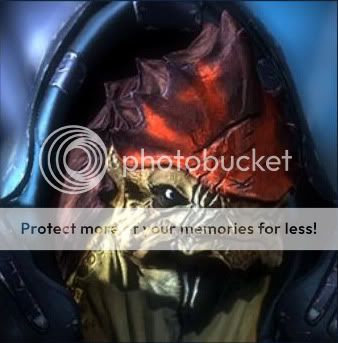
The krogan are a species of large reptilian bipeds native to the planet Tuchanka, a world known for its harsh environments, scarce resources, and overabundance of vicious predators. The krogan managed to not only survive on their unforgiving homeworld, but actually thrived in the extreme conditions. Unfortunately, as krogan society became more technologically advanced so did their weaponry.
Due to the brutality of their surroundings, natural selection has played a significant role in the evolution of the krogan. Unlike most species of the Alliance, krogan eyes are wide-set - often this is distinctive of prey animals, but in this case it gives the krogan 240-degree vision, giving them greater visual acuity and awareness of approaching predators.
Their large shoulder humps store fluids and nutrients, enabling them to survive extended periods without food or water. A bigger shoulder hump is seen as a sign of high status, showing how successful an individual krogan is at hunting. Their thick hides are virtually impervious to cuts, scrapes or contusions, and they are highly resistant to environmental hazards, including toxins, radiation, and extreme heat and cold. Younger krogan have yellow or green markings on their hides. These markings darken to brown or tan over time, showing their age.
Biotic individuals are rare, though those who do possess the talent typically have strong abilities. The most amazing physiological feature of krogan biology is the multiple instances of major organs. These secondary (and where applicable, tertiary) systems are capable of serving as back-ups in the event of damage to the primary biological structures. They have, for example, two hearts and four lungs. Krogan also have a secondary nervous system using a neuroconductive fluid, meaning they are almost impossible to paralyze. Krogan bleed a yellow or orange fluid when shot, which may be this fluid or actual blood.
Having redundant systems makes krogan difficult to kill or incapacitate in normal combat scenarios. Sheer physical hardiness means an individual krogan can expect to live for centuries. Krogan typically stand over 7 feet and weigh roughly a ton in armor.
The harsh krogan homeworld conditioned the krogan psychology for toughness just as it did the body. Krogan have always had a tendency to be selfish, unsympathetic, and blunt. They respect strength and self-reliance and are neither surprised nor offended by treachery. The weak and selfless do not live long. In their culture, 'looking out for number one' is simply a matter of course. Young krogan undergo a rite of passage that is overseen by a shaman respective to the clan the krogan wishes to join. Few outsiders have seen the rite of passage take place, even though there are no rules in krogan tradition that state that a non-krogan can't help with the undertaking of the rite. The rite of passage and all other rites and traditions are preserved by the clan shaman. The shaman must undergo lengthy and torturous rites to assume the position, and is required to give up his name. Because of this level of commitment, the shaman is one of the most respected members of a clan. Membership of a clan allows a krogan to own property, join the army and apply to serve under a battlemaster. Krogan have powerful territorial instincts which serve them well in combat, but can create problems; when traveling on starships, for example, krogan find sharing quarters nearly impossible.
It is speculated that their instinctive aggression and territorial nature prevent the krogan from forming any kind of centralized government or parliament that is not based on fear or obedience. Most krogan trust and serve no one but themselves.
This solitary attitude stems in part from a deep sense of fatalism and futility, a profound social effect of the genophage that caused krogan numbers to dwindle to a relative handful. Not only are they angry that the entire galaxy seems out to get them, the krogan are also generally pessimistic about their race's chances of survival. The surviving krogan see no point to building for the future; there will be no future. The krogan live with an attitude of 'kill, pillage, and be selfish, for tomorrow we die.'
Female krogan rarely leave their home worlds, focusing on breeding in an attempt to keep krogan numbers from declining too quickly. The few remaining fertile females who can carry young to term are treated as prizes of war, to be seized, bartered or fought over. Recently, it has been noted that the females of the krogan species live in clans separate from that of the males. Envoys are sent out from the female clans to determine who amongst the males is worthy to visit the female clans. Due to the effects of the genophage and the lack of fertile females, this happens often and many male krogan sire children from one female.
Quarians: 
The quarians are a nomadic species of humanoid aliens known for their skills with technology and synthetic intelligence. Since their homeworld Rannoch was conquered, the quarians live aboard the Migrant Fleet, a huge collection of starships that travel as a single fleet.
Approximately three hundred years ago the quarians created the geth, a species of rudimentary artificial intelligences, to serve as an efficient source of manual labor. However, when the geth gradually became sentient, the quarians became terrified of possible consequences and tried to destroy their creations. The latter won the resulting war and forced their creators into exile. Now the quarians wander the galaxy in a flotilla of salvaged ships, secondhand vessels, and recycled technology.
Quarians are generally shorter and of slighter build than humans. Quarians have an endoskeleton, lips, teeth, and two eyes with eyelids and tear ducts; they also have three thick fingers on both hands which include a thumb and an index finger, as well as three toes on each foot. Their ears or ear analogues differ in a noticeable fashion from those of humans.
The most important fact of quarian biology is their weak immune system. As a result, all quarians habitually dress in highly sophisticated enviro-suits, to protect them from disease or infection if they are injured. Their suits can be compartmentalized in the event of a tear or similar breach to prevent the spread of contaminants (similar to a ship sealing off bulkheads in the event of a hull breach).
Quarian immune systems have always been relatively weak, as pathogenic microbes were comparatively rare in their homeworld's biosphere. This is also because the viruses and other microbes were beneficial to them, unlike for humans where they are not. Since living aboard the Migrant Fleet for generations, the quarians' immune systems have atrophied further still due to the years in the sterile environment of the Migrant Fleet. As such, quarians are given various vaccinations and immunizations to help ward off disease. However, they prefere the safety of their suits even in clean environments and are reluctant to remove them without a good reason.
A quarian who wishes to remove their suit must take antibiotics, immuno-boosters, herbal supplements, or the like in order to do so safely, and even then there are inherent risks. As a result, physical acts of affection are difficult for quarians, even for the purposes of reproduction. Ships in the Migrant Fleet often contain "clean rooms" where quarians can give birth or undergo medical procedures in relative safety, though there are always risks. The most intimate thing quarians can do is link their suit environments, though doing so guarantees a quarian will get sick at first, but adapt afterwards.
Like turians, the quarians are a dextro-protein species of reverse chirality from humans and asari. The food of levo-protein races such as humans or asari is at best inedible and at worst poisonous, most likely triggering a dangerous allergic reaction. Quarians who want to taste something (other than the refined edible paste issued to all who leave on their Pilgrimage) can eat specially purified turian cuisine.
There are roughly 17 million quarians on the Migrant Fleet (also called the Flotilla). It is technically still under martial law but is now governed by bodies such as the Admiralty Board and the democratically-elected Conclave, though ship captains and onboard civilian councils tend to address most issues 'in-house' before it gets that far. Quarians are divided into several clans that can be spread across several ships, or restricted to one. Their clan name is after the apostrophe in their first name (e.g., Tali's clan name is Zorah). A quarian's 'surname' refers to which ship they were born on, or, after their Pilgrimage, which ship they chose to join.
Geth:  Drell:
* It should be noted that humans in this post refer only to the humans of the Systems Alliance and not to any other human species inhabiting the galaxy.




 Reply
Reply
