|
|
|
|
|
|
|
|
|
 Posted: Mon Mar 06, 2006 2:55 pm Posted: Mon Mar 06, 2006 2:55 pm
Shini's guide for Pagans of All Kinds:
arrow Types of Paganism
arrow Keeping a Book of Shadows
arrow The Elements
arrow The Sabbats
arrow Tools in Paganism
-Guide to Tarot
-Guide to Runes
arrow Familiars
arrow Choosing your Patron God/Goddess
arrow Correspondences
-Herbs
-Colors
-Incense/Oils
arrow The Nature of Magic
-Chakras
-Yin/Yang
-Is it White or Black Magic
arrow Extra Space
|
 |
|
|
|
|
|
|
|
|
|
|
|
|
|
Posted: Mon Mar 06, 2006 2:56 pm
[ Message temporarily off-line ]
|
|
|
|
|
|
|
|
|
|
|
|
|
|
|
|
|
|
Posted: Mon Mar 06, 2006 2:57 pm
Keeping a Book of Shadows
Keeping a Book of Shadows (or BoS) is primarily a pagan thing.
A BoS is something of a witch's bible, containg the Rede, Creed and Invocations as well as spells used or written and other information valuable to the witch.
Your BoS should appeal to you. Some people choose the color corresponding with their element. They can be binders or actual leather bound books of any size.
The contents of you BoS may be typed but many prefer handwritten.
Examples(What my BoS contains):
Title Page (With Pagan Name if wanted)
Information on my Coven (as well as Coven rules)
The Rede, Creed, Invocations etc..
General Info (Zodiac, Karma, Chakras)
Guides (Herbs, Correspondences etc..)
Runes and Tarot Info.
Spells and Rituals
Guardian/Familiars Info.
|
|
|
|
|
|
|
|
|
|
|
|
|
|
|
Posted: Mon Mar 06, 2006 2:58 pm
The Elements
 Many base element off of zodiac sign. However, this may not always be true to you. For instance, my zodiac sign places me as a fire, but my friends and I agree that my personality resembles earth. Choose the element based off of what feels right for you. Air:
Signs: Gemini, Libra, Aquarius
Planets: Mercury, Venus, Saturn, Uranus
Polarity: Masculine
Colors: Light blues and yellows
Wicca Color: Pure yellow
Time of Day: Sunrise, Morning
Moon Phase: First Quarter (Waxing Quarter)
Compass Direction: East
Season: Spring
Climate: Warm and wet
Elementals: Sylphs, Zephyrs, fairies
Christian/Tarot Animal: The Man, The Angel, Cherabim
Tarot Suit: Swords (a.k.a. Daggers, Knives, Sabers, etc.)
Magickal Tools: Incense, oils, the magick wand, creative visualization
Natural Symbols: Wind, clouds, breezes, breath, vibrations, plants, herbs, flowers, trees, wind storms, tornadoes, hurricanes
Characteristics: Communicative, mobile, pleasure in learning and transmitting, volatile, talkative, needing variety, inquisitive, interactive, versatile, gregarious, optimism, joy, intelligent, mental quickness, frivolity, gossip, fickleness, inattention, bragging, forgetfulness.
Rituals: Knowledge, inspiration, hearing, harmony, herbal knowledge, plant growth, intellect, thought, ideas, travel, freedom, revealing the truth, finding lost things, movement, psychic abilities. FireSigns: Aries, Leo, Sagittarius
Planets: Sun, Mars, Jupiter
Polarity: Masculine
Colors: Reds, oranges, yellows, golds
Wicca Color: Pure Red
Time of Day: Noon, Afternoon
Moon Phase: Full Moon
Compass Direction: South
Season: Summer
Climate: Warm and Dry
Elementals: Salamanders, Firedrakes, creatures of flames and sunbeams
Christian/Tarot Animal: The Lion
Tarot Suit: Wands (a.k.a. Staffs, Spears, Sticks, Staves, etc.)
Magickal Tools: Candles or lamps, dagger, sometimes burning incense
Natural Symbols: Lightning, volcanoes, rainbows, Sun, stars, blood
Characteristics: Willpower, impulse, initiative, courage, energy, activity, adventure, enthusiasm, daring, directness, self-orientation, uncooperativeness, objectiveness, frankness and uncomplicatedness, impatience, competitiveness, spontaneity, self-reliance, hate, jealousy, fear, anger, war, ego, conflict.
Rituals: Freedom, change, sight, perception, vision, illumination, learning, love, will, passion, sexuality, energy, authority, healing, destruction, purification.Water
Signs: Cancer, Scorpio, Pisces
Planets: Moon, Pluto, Neptune, Mars, Jupiter
Polarity: Feminine
Colors: Medium and dark blues, turquoise, sea green, gray, silver
Wicca Color: Pure Blue
Time of Day: Twilight, evening
Moon Phase: Third Quarter (Waning Quarter)
Compass Direction: West
Season: Autumn
Climate: Cold and wet
Elementals: Nymphs, Undines, Mer-people, creatures of rivers, lakes, ponds, springs, wells, and streams
Christian/Tarot Animal: The Eagle
Tarot Suit: Cups (a.k.a. Chalices, Goblets, Cauldrons, Flasks, etc.)
Magickal Tools: Chalice or goblet, cauldron, Holy Water, mirrors, the sea
Natural Symbols: Oceans, rivers, lakes, streams, wells, ponds, springs, rain, mist, fog, floods, rainstorms, whirlpools, waterfalls
Characteristics: Emotional, seeking safety, security, and closeness, super-sensitive, very defensive, moody, family-oriented, maternal, protective, intuitive, romantic, sensuous, sentimental, cautious, retentive, tenacious, imaginative, compassion, peacefulness, forgiveness, love, laziness, indifference, instability, lack of emotional control, insecurity.
Rituals: Plants, healing, emotions, taste, smell, absorbing, communion with the spiritual, purification the subconscious mind, love, emotions, pleasure, friendships, marriage, fertility, happiness, sleep, dreams, the psychic.EarthSigns: Taurus, Virgo, Capricorn Planets: Venus, Mercury, Saturn Polarity: Feminine Colors: Browns, greens, and other "earthy" colors Wicca Color: Clear, dark Green Time of Day: Midnight Moon Phase: New Moon (Dark Moon) Compass Direction: North Season: Winter Climate: Cold and dry Elementals: Gnomes, dwarfs, creatures of moonbeams Christian/Tarot Animal: The Bull, The Ox Tarot Suit: Pentacles (a.k.a. Coins, Discs, Shields, Wheels, etc.) Magickal Tools: Salt, pentacle, stones, gems, trees, cords Natural Symbols: Mountains, rocks, gemstones, caves, soil, fields, plains, mines, earthquakes, slides Characteristics: Steadfastness, striving for security, sustaining, subjectivity, hard-working, patience, productivity, conformist, conservative, cautiousness, rigidity, uncompromising, respect, endurance, responsibility, stability, thoroughness, purpose in life, stubbornness, lack of conscience, vacillation, unwillingness to change. Rituals: Riches, treasures, surrendering, self-will, touch, empathing, incorporation, business, prosperity, employment, stability,success, fertility, money.
|
|
|
|
|
|
|
|
|
|
|
|
|
|
|
|
|
|
Posted: Mon Mar 06, 2006 2:59 pm
The Sabbats
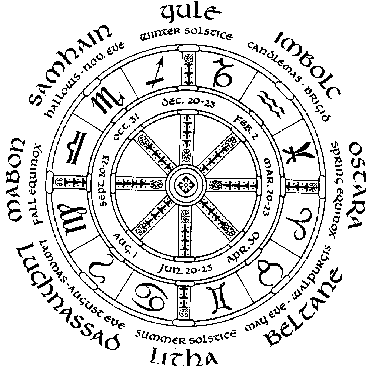
Date ::::: Modern Name ::::: Pagan Name
Feb 2 :::::::: Brigid (?) ::::::::: Imbolc
Mar 21 ::: Spring Equinox ::::: Ostara
May 1 ::::::: May Day :::::::::: Beltane
June 21::: Summer Solstice :::: Litha
Aug 2 ::::::: Lammas :::::::: Lughnasadh
Sep. 21 ::::: Fall Equinox ::::::: Mabon
Oct 31 :::::: Halloween ::::::: Samhain
::::::::::: Day of the Dead
Dec. 21 ::: Winter Solstice ::::: Yule
Imbolc marks the recovery of the Goddess after giving birth to the God. The lengthening periods of light awaken Her. The God is young, lusty boy, but His power is felt in the longer days. The warmth fertilizes the Earth (the Goddess), causes seeds to germinate and sprout. And so the earliest beginnings of spring occur.
This is a Sabbat of purification after the shut-in life of winter, through the renewing power of the Sun. It is also a festival of light and of fertility, once marked in Europe with huge blazes, torches and fire in every form. Fire here represents our own illumination and inspiration as much as light and warmth.
Imbolc is also known as Feast of Torches, Oimelc, Lupercalia, Feast of Pan, Snowdrop Festival, Feast of the Waxing Light, Brigid's day, and probably by many other names. Some female Wiccans follow the old Scandinavian custon of wearing crowns of lit candles, but many more carry tapers during their invocations.
This is one of the traditional times for initiations into covens, and so self-dedication rituals can be preformed or renewed at this time.
From the book Wicca: A Guide for the Solitary Practitioner
by Cunningham
Ostara, the Spring Equinox, also known as Spring, Rites of Spring and Eostra's Day, marks the first day of true spring. The energies of nature subtly shift from the sluggishness of winter to the exhuberant expansion of spring. The Goddess blankets the Earth with fertility, bursting forth from Her sleep, as the God stretches and grows to maturity. he walks the greening fields and delights in the abundance of nature.
On Ostara the hours of the day and night are equal. Light is overtaking darkness; the Goddess and God impel the wild creatures of the Earth to reproduce.
This is a time of beginnings, of action, of planting spells for future gains, and of tending ritual gardens.
From the book Wicca: A Guide for the Solitary Practitioner
by Cunningham
Beltane marks the emergence of the young God into manhood. Stirred by the energies at work in nature, He desires the Goddess. They fall in love, lie among the grasses and blossoms, and unite. The Goddess becomes pregnant of the God. The Wiccans celebrate the symbol of Her fertility in ritual.
Beltane (also known as May Day) has long been marked with feasts and rituals. May poles, supremely phallic symbols, were the focal point of old English village rituals. Many persons rose at dawn to gather flowers and green branches from the fields and gardens, using them to decorate the May pole, their homes and themselves.
The flowers and greenery symbolize the Goddess; the May pole the God. Beltane marks the return of vitality, of passion and hopes consummated.
May poles are sometimes used by Wiccans today during Beltane rituals, but the cauldron is a more common focal point of ceremony. It represents, of course, the Goddess - the essence of womanhood, the end of all desire, the equal but opposite of the May pole, symbolic of the God.
From the book Wicca: A Guide for the Solitary Practitioner
by Cunningham
Midsummer, the Summer Solstice, also known as Litha, arrives when the powers of nature reach their highest point. The Earth is awash in the fertility of the Goddess and God.
In the past, bonfires were leapt to encourage fertility, purification, health and love. The fire once again represents the Sun, feted on this time of the longest daylight hours.
Midsummer is a classic time for magic of all kinds.
From the book Wicca: A Guide for the Solitary Practitioner
by Cunningham
Lughnasadh is the time of the first harvest, when the planets of spring wither and drop their fruits or seeds for our use as well as to ensure future crops. Mystically, so too does the God lose His strength as the Sun rises further in the South each day and the nights grow longer. The Goddess watches in sorrow and joy as She realizes that the God is dying, and yet lives on inside Her and Her child.
Lughnasadh, also known as August Eve, Feast of Bread, Harvest Home and Lammas, wasn't neccessarily observed on this day. It oringinally coincided with the first reapings.
As summer passes, Wiccans remember its warmth and bounty in the food we eat. Every meal is an act of attunement with nature, and we are reminded that nothing in the universe is constant.
From the book Wicca: A Guide for the Solitary Practitioner
by Cunningham
Mabon, the Autumn Equinox, is the completion of the harvest begun at Lughnasadh. Once again the day and night are equal, poised as the God prepares to leave His physical body and begin the great adventure into the unseen, toward renewal and rebirth of the Goddess.
Nautre declines, draws back its bounty, readying for winter and its time of rest. The Goddess nods in the weakening Sun, though fire burns within Her womb. She feels the presence of the God even as He wanes.
From the book Wicca: A Guide for the Solitary Practitioner
by Cunningham
At Samhain, the Wicca say farewell to the God. This is a temporary farewell. He isn't wrapped in eternal darkness, but readies to be reborn of the Goddess at Yule.
Samhain, also known as November Eve, Feast of the Dead, Feast of Apples, Hallows and All Hallows, oncen marked the time of sacrifice. In some places this was the time when animals were slaughtered to ensure food throughout the depths of winter. The God - identified with the animals - fell as well to ensure our continuing existence. (Vegetarian Wiccans probably don't like this part of Samhain symbolism, but it is traditional. We don't, of course, sacrifice animals in ritual. This is symbolic of the God's passing.)
Samhain is a time of reflection, of looking back over the last year, of coming to terms with the one phenomenon of life over which we have no control - death.
The Wicca feel that on this night the separation between the physical and spiritual realities is thin. Wiccans remember their ancestors and all those who have gone before.
After Samhain, Wiccans celebrate Yule, and so the wheel of the year is complete.
From the book Wicca: A Guide for the Solitary Practitioner
by Cunningham
The Goddess gives birth to a son, the God, at yule. This is in no way an adaptation of Christanity. The Winter Solstice has long been viewed as a time of divine births. Mithras was said to have been born at the time. The Christians simply adopted it for their use in 273 C.E. (Common Era)
Yule is a time of the greatest darkness and is the shortest day of the year. Earlier peoples noticed such phenomena and supplicated the forces of nature to lengthen the days and shorten the nights. Wiccans sometimes celebrate Yule just befor dawn, then watch the Sun rise as a fitting finale to their efforts.
Since the God is also the Sun, this marks the point of the year when the Sun is reborn as well. Thus, the Wicca light fires or candles to welcome the Sun's returning light. The Goddess, slumbering through the winter of Her labor, rests after Her delivery.
Yule is the remnant of early ritual celebrated to hurry the end of winter and the bounty of spring, when food was once again readily available. To contemporary Wiccans it is a reminder that the ultimate product of death is rebirth, a comforting thought in these days of unrest.
From the book Wicca: A Guide for the Solitary Practitioner
by Cunningham
|
|
|
|
|
|
|
|
|
|
|
|
|
|
|
Posted: Mon Mar 06, 2006 3:01 pm
|
|
|
|
|
|
|
|
|
|
|
|
|
Posted: Mon Mar 06, 2006 3:02 pm
Familiars
Common referred to as Familiars/Spirit Guides/ Guardians your familiar is with you your whole life. All of us have them. Often confused with angels, they are souls who walk amongst us who are here to help, offer guidance, comfort, and even advice. They are not however, supposed to tell those they guard the future unless it is vital to preserve the present.
A Familiar, unlike an Angel, was once a human being, like you and I. They lived their life, performed their tasks, died, and crossed over to the Other Side. Some choose to come back, to reincarnate in a new life, in a new place. Others, however, make the choice to remain in Spirit so they can learn and spiritually advance while helping others still living to learn their life's lessons.
Familiars, as former human beings, are well aware of the problems we face in our everyday, mundane lives. They were once concerned with very similar matters. They tend to have their own special areas of expertise, often based on past personal experiences or careers they have had in a past life.
Your Familiar, unlike a Guardian Angel, comes & goes in your life. A Guardian Angel is with you from birth until death. A familiar, on the other hand, comes into your life when an issue arises that falls under a guide's field of expertise. So, they often come and go, changing as the situations in your life change, and as you change and grow, you attract new guides to you.
It is possible to have more than one familiar. Sometime animals can be familiars too, though that has more to do with totems.
|
|
|
|
|
|
|
|
|
|
|
|
|
|
|
Posted: Mon Mar 06, 2006 3:07 pm
Choosing your Patron God/Goddess
Many Pagans (though more commonly Wiccans) have a patron God and Goddess with whom they look to and work with. Many automatically jump to Grecko-Roman Gods and Goddesses of the Panthenon but that does not necessarily have to be so.
Patron Gods/Goddesses help one with matters in their life, no matter what they may be, and some even have multiple based on their needs. You choose your Patron God/ Goddess and in a sense they choose you as well.
My Patron Goddess is a good example of how a God or Goddess chooses you as well as you choose them.
My birth name is Cynthia, meaning moon goddess and dervied from "Woman of Kynthos", kynthos, being the birthplace of Artemis. Thus, ever since memory allows me to, my fascination with the moon has been great. And when I discovered the meaning of my name, I grew more interesting in Artemis. When I became Pagan, I chose her as my Patron Goddess.
Of course, not everyone is fortunate enough to get their god/goddess from their name.
My Patron God (Odin) was chosen due to the reading of his name in a story. The name just felt right.
So your choice can be based off either a personal connection, a right feeling, or even an interest in what the God or Goddess is known for. Choosing may seem difficult, but you'll know when you have the right one.
|
|
|
|
|
|
|
|
|
|
|
|
|
|
|
|
|
|
Posted: Mon Mar 06, 2006 3:19 pm
|
|
|
|
|
|
|
|
|
|
Posted: Mon Mar 06, 2006 3:20 pm
Reserved
The Nature of Magic
|
|
|
|
|
|
|
|
|
|
|
|
|
|
|
|
|
|
Posted: Mon Mar 06, 2006 3:23 pm
|
|
|
|
|
|
|
|
|
|
Posted: Tue Mar 07, 2006 7:10 pm
Very good idea. Keep it up, I fully support it, and I'm sure everyone else will, too. It's a nice addition to Asha's thread on Tools of Witchcraft.
<3
|
|
|
|
|
|
Childhood Dreams Vice Captain
|
|
|
|
|
|
|
|
|
|
|
|
Posted: Wed Mar 08, 2006 5:13 pm
Silvander The information from "Guide for a Solitary Practitioner" is good, but your Wheel of the Year is incorrect. Traditionally, the Goddess and God don't consummate thier love until Beltane, but your wheel says it occurs at Ostara. Sorry if I'm a little nit-picky, I have the unfortunate flaw of being just a touch O.C. sweatdrop
Ah s**t. I posted the wrong one.
-sigh-
I'll go through all my picture files. I know its in there somewhere. Thanks for letting me know.
|
|
|
|
|
|
|
|
|
|
|
|
|
|
|
Posted: Wed Mar 08, 2006 5:23 pm
So you're just posting BoS basics?
|
|
|
|
|
|
|
|
|
|
|
|
|
|
|
|
|
|
|