|
|
|
|
|
|
|
|
|
 Posted: Sat Nov 04, 2006 2:05 am Posted: Sat Nov 04, 2006 2:05 am
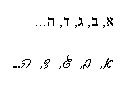
Hey, what do you know, this forum is here and I should start paying attention to the fact. I'll start moving the lessons I had in the Hebrew GD here and later start moving my lazy arse and write more of those. I'll just start with a short intro, and give some rough explanations regarding the structure and writing of the Hebrew language. Hebrew is a Semitic language, just like Arabic and Aramaic. Just like the other two, it is of the Afro Asiatic language family. It is spoken by 7 million people, 6 of the 7 speak Israeli Hebrew. 3 millions of them are native speakers. Hebrew doesn't have dialects, though one might notice differences in phonetics among different ethnicities (I will clear that out later). It was and still is influenced by many other languages. Today, the languages that influence it the most are English, Arabic and Russian. Languages like Yiddish, Ladino, German and many more have left their mark on the Modern Hebrew as well. Hebrew has only 22 letters and is written from the right to the left. It has two "writing systems", one of them, the more familiar one, is based on the square letter form. The second system is used for handwriting, and has a more circular form. Hebrew vowelization is very different from the English type. Those who are familiar with Arabic and even Quenya* (Tolkienian Elvish) might find it much easier to understand. Usually, the vowels are presented as different marks under, inside or above the letters. I will give examples for this matter later, so do not panic just yet! Hebrew verbs and some words are based on "roots" (just like in Arabic, by the way). For example, the words "lamad" (he learned), "limud" (teaching [n]), "melamed" (educator), "lelamed" (to teach), etc. all have to do with learning and share the basic root letters l, m, d. Hebrew's got 4 tenses: Past, present, future and imperative. The root is almost always kept (the other cases should not be discussed at the moment), but the structure of the verb changes according to the tense. Just like many European languages (and again, like Arabic), Hebrew distinguishes between masculine and feminine nouns. Usually, the feminine nouns are similar to the masculine nouns, added "a" or "t" at the end of the word, for example, "ish" (man) and "isha" (woman). If anyone is going to be reading this, well, I'd like to know what you have to say. I can focus on Modern Hebrew or Biblical Hebrew, teach some "slang" or avoid it completely. You are more than welcome to tell me your thoughts, comments and such on this thread or via the Personal Messages system. *I was, of course, referring to the Omatehtar. But notice, Quenya speakers! Unlike Quenya, here the vowels are on the "vowelled" letter and not on the letter that comes before it. Helpful links: My Hebrew Dictionary: http://www.dictionary.co.il/index.phpBy the way, although I am explaining about modern-Hebrew, I can still help with Biblical and hopefully Medieval Hebrew as well. If you want me to teach something that's a bit different or explain about it - just say so.
|
 |
|
|
|
|
|
|
|
|
|
|
|
|
|
Posted: Sat Nov 04, 2006 2:08 am
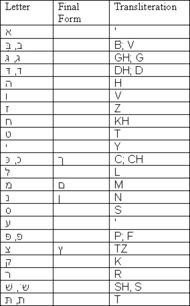
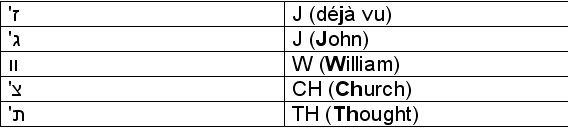
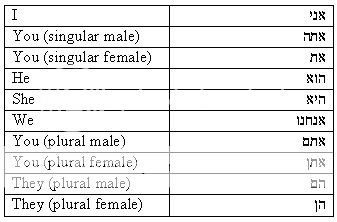
Hebrew WritingIf you can't see it, Unicode it (View, Encoding, More, Unicode). This should work out for you. So here are some instructions for Hebrew writing and pronouncing. smile The next time I update, I'll also write a bit about the Vocalization, hoping it will clear everything out. So here goes. Edit: Damn it! I forgot the final form of פ. It is ף... sweatdrop Final Form: Some letters are written differently when located at the end of a word. Those letters are כ, מ, נ, פ and צ. For example, the word "shamaim", sky, will be written like this: שָׁמַיִם and not שָׁמַיִמ. Modern Hebrew has a few marks added that are used for the writing of foreign words. When it comes to pronouncing the consonants, one might notice changes among different ethnicities. Among native speakers, there are two main different ways of pronouncing the constants: the "Oriental" and "European". As those of European background tend to pronounce כ, ח like a German CH (like Bach), those of an "Oriental" background usually pronounce them throatier (like "Don Juan"), ח generally being throatier than כ. The letters א and ע are like A or E, yet the vowel changes with the vocalization. This issue will be discussed later; however, again, it is throatier when pronounced by "Orientals" (don't be surprised when I say it again, but this, too, is very similar to Arabic sweatdrop ). There is no correct form of speaking. Both are legitimate and you can just do it the way you're more comfortable with. The dot you see on the letters ב, ג, ד, כ, פ, ת is a diacritic dot. In Modern Hebrew, it doesn't make any difference when it comes on ג, ד and ת, but when it comes to the other three, it "hardens" the pronunciation, making v into b, ch into c and f into p. In addition, the dot you can see on the left and on the right of the letter ש is what makes it "sh" or just "s". When the dot is on the right, it's sh. On the left - s. There are very, very few words that are written with שֹ, so that's nothing to worry about anyway. This might be referred to as an intro to vocalization; yet, I will write more about it next time. Notice. If you are having difficulties understanding the table, you can use this one. It's even better. smile http://foundationstone.com.au/HtmlSupport/OnlineHebrewTutorial/LessonImages/01_Lesson.gif
|
|
|
|
|
|
|
|
|
|
|
|
|
|
|
|
|
|
Posted: Sat Nov 04, 2006 2:13 am
Still on the writing issue, the last thing to cover up is Vocalisation. Those who are familiar with Arabic or Quenya know what that is. Fot those who aren'r familiar with those, well, the vocalisation is actually the vowels, yet, unlike in English, the vowels are presented as symbols on top, under or inside the letters. It isn't as difficult as it sounds; yet it takes a while to get used to. Hebrew has quite a large number of vocalisation symbols, yet many of them represent really similar vowels. Vocalisation has complicated, strict rules, and you don't have to learn them; the most important thing is learning how to read. Telling you the truth, a vast majority of Hebrew speakers does not know how to use vocalisation correctly, and honestly, that still includes me... Books for adults, newspapers and, well, most written text in Hebrew appears without it, because once you know the words you really don't need the vocalisation. You could notice vocalisation mostly on children's books, and I will, of course, use it (don't worry, I may don't know the rules but I'm using a dictionary) on here. So, the vocalisation, right? Since I'm a huge table fan with a huge keyboard issue, I stole this table from this wonderful page. 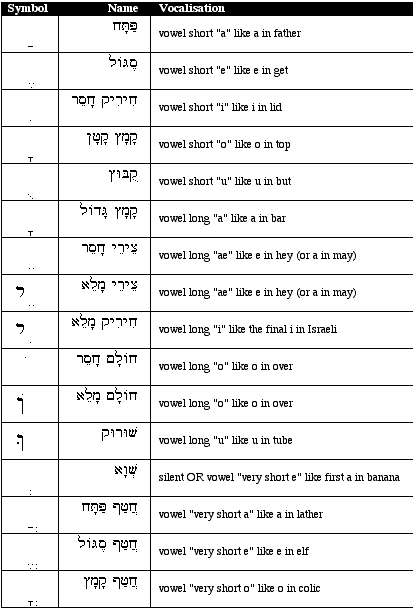 I will mention some unusual cases later, since this is already confusing enough. Here are some words, well, some vocabulary and reading practice. smile (Notice! Read from the right to the left! smile )Hello (Shalom) שָׁלוֹם See you later (Lehitraot)לְהִתְרָאוֹת Thank you (Toda) תּוֹדָה You're welcome / please (bevakasha) בְּבַקָּשָׁה Sorry / excuse me (Slicha) סְלִיחָה Yes (Ken) כֵּן No (Lo)לֹא Welcome (Baruch Haba)בָּרוּךְ הַבָּא
|
|
|
|
|
|
|
|
|
|
|
|
|
|
|
Posted: Sat Nov 04, 2006 2:15 am
The NoubI'll stick to the conventional regular verb right now, and try finding out the rules about the irregular verbs later, if there are rules, and post a little something about them later.
The singular form. The singular form is divided into the feminine singular form and the masculine singular form. Usually, feminine nouns end with the letter ה, for example - יָלְדָה (girl), שָׂרָה (minister), אַהֲבָה (love), שִׁמְשָׁה (windowpane). Very often, the feminine form is the same as the masculine form, only added an ה, for example - יֶלֶד (boy), שַׂר (minister).  The Dual Form The Dual FormHebrew has a dual form, but it isn't very often used. It is mainly used to describe body parts that come in two and other things that always have two parts, like bicycles, pants and glasses. It is marked by "aym" at the end of the noun. It has, also, a feminine and a masculine form. Now, the ה becomes ת, as you can see in the word שְׂפָתַיִם (lips); however, the suffix "aym" remains the same. This is the most complete list I could compile at the moment (singular form in brackets; sorry, couldn't make them straight. I hope it's understandable): eyes - עֵינַיִם (עַיִן) nostrils - נְחִירַיִם (נְחִיר) lips - שְׂפָתַיִם (שָׂפָה) ears - אֹזְנַיִים (אֹזֶן) breasts - שַׁדַּיִים (שַׁד) hands - יָדַיִם (יַד) legs - רַגְלַיִם (רֶגלֶ) nails (for some reason also has a dual form although you've got 20 of them...) - צִפֹּרְנָיִם (צִפֹּרֶן) pants - מִכְנָסַיִם socks - גַּרְבַּיִם (גֶּרֶב) shoes - נַעֲלַיִים (נַעַל) glasses - מִשְׁקָפַיִים bicycles - אוֹפַנַיִים (אופן*) brackets – סוֹגְרַיִם
*
אופן means "wheel", although this word isn't frequently used in daily speech - instead, the word "galgal" is used.) The Plural form The Plural formFeminine nouns are pluralized by the suffix "ot" (ות) at the end of the nounl; masculine nouns are pluralized by the suffix "im" (ים) at the end of the noun. 
|
|
|
|
|
|
|
|
|
|
|
|
|
|
|
|
|
|
Posted: Sat Nov 11, 2006 10:30 pm
Wow! So many vowels! eek
*reads on*
I got most of the alphabet down... I think one of my big challenges is the pronounciations. I can pronounce all the letters correctly, but I need to get used to the vowels.
I have a long way to go... sweatdrop
|
|
|
|
|
|
|
|
|
|
|
|
|
|
|
Posted: Sun Nov 12, 2006 12:12 am
Kimyanji Wow! So many vowels! eek *reads on* I got most of the alphabet down... I think one of my big challenges is the pronounciations. I can pronounce all the letters correctly, but I need to get used to the vowels. I have a long way to go... sweatdrop In Modern Hebrew there's no difference anymore though. אֵ sounds just like אֶ. In spoken MH there are actually only 5 vowels, but those differences have a few advantages if you study Hebrew closely. I think it'd be better if you studied the difference between the vowels, but the pronunciation is rather easy.
|
|
|
|
|
|
|
|
|
|
|
|
|
|
|
|
|
|
Posted: Mon Nov 13, 2006 12:52 am
|
|
|
|
|
|
|
|
|
|
Posted: Sun Mar 11, 2007 3:03 am
Wow, this is really weird. I learned Hebrew for six years at my old school, but not being Jewish meant that when I left I forgot it all (no one to practise with). It's strange, because I can read it and pronounce it correctly, but I can't look at a table and explain it to someone. I haven't looked at Hebrew since 2002, but I'm remembering stuff that I haven't thought of in ages.
|
|
|
|
|
|
|
|
|
|
|
|
|
|
|
|
|
|
Posted: Sat Jul 28, 2007 10:11 am
I read somewhere that Hebrew is the most pure language, I do not know what that means.
|
|
|
|
|
|
|
|
|
|
|
|
|
|
|
Posted: Sat Jul 28, 2007 12:13 pm
That it is spoken by God's people?
|
|
|
|
|
|
|
|
|
|
|
|
|
|
|
|
|
|
Posted: Wed Aug 01, 2007 6:15 pm
That might be, but I meant it is linguistically pure, but I do not know what that means.
Kind of random but I want to meet more people that have Hebrew ancestors.
|
|
|
|
|
|
|
|
|
|
|
|
|
|
|
Posted: Wed Aug 01, 2007 7:03 pm
the_haunted_boy That might be, but I meant it is linguistically pure, but I do not know what that means. Kind of random but I want to meet more people that have Hebrew ancestors. There is a theory of the origin of Language called "Edenics" that proposes that Hebrew is the original language that all others developed from. Its pure bullshit though. About the actual linguistic purity of it, I have no idea. I really doubt it though.
|
|
|
|
|
|
|
|
|
|
|
|
|
|
|
|
|
|
Posted: Thu Aug 02, 2007 5:52 am
There's also the story where some King ordered a mute/deaf couple to raise so babies, and they after a few years, they automatically spoke Hebrew.
|
|
|
|
|
|
|
|
|
|
|
|
|
|
|
Posted: Thu Aug 02, 2007 11:40 am
Well, even if your parents are mute, you still hear things spoken by other people.
|
|
|
|
|
|
|
|
|
|
|
|
|
|
|
|
|
|
Posted: Thu Aug 02, 2007 1:46 pm
You know this isn't a true story right?
|
|
|
|
|
|
|
|
|
|
|
|
|
|
|
|
|
|