


Taken from The Portrait Photographer's Guide To Posing by Bill Hurter
Head and Shoulders
The first rule of good portraiture is that the subject's shoulders should be turned at an angle to the camera. To have the shoulders facing the camera straight on makes the person look wider and stockier than normal. Although this pose is used frequently in the world of fashion (where models are thin and unusually well-proportioned), you will not often see it when "regular people" are photographed.

Whether the subject is seated or standing, another rule concerns the line of the shoulders. One shoulder should be noticeably higher than the other, which is to say that the line of the shoulders should not be parallel to the ground.
Start With The Feet
In practical terms, to accomplish this correct positioning of the shoulders in a portrait where the subject is standing, you should start with the feet. The basic rule is that no one should have both feet together. Instead, one foot should be brought forward. This causes the shoulders to turn at a slight angle to the camera. The subject should also place his or her weight on the back leg - as this causes the forward knee to bend and the rear shoulder to dip lower than the forward one.
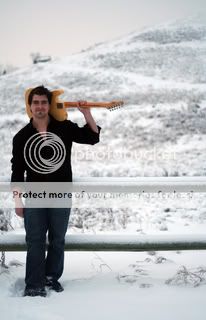
In seated portrait, simply having the subject lean forward from the waist will create a sloping line to the shoulders, provided that the person is at an angle to the camera.
Simply positioning the body in this way creates the first and basic dynamic lines within the composition, since the resulting lines in the body will now be diagonal instead of vertical and horizontal.
Head Tilt
With the shoulders turned at an angle to the camera, the head is then turning or tilted, usually at a different angle than the shoulders. By doing this, you slant the natural line of the person's eyes. When the face is not tilted, the line of the eyes is straight and parallel to the bottom edge of the photograph, leading to a symmetrical, static image. By tilting the person's face right or left, the implied line becomes diagonal, making the pose more dynamic and interesting to the viewer.
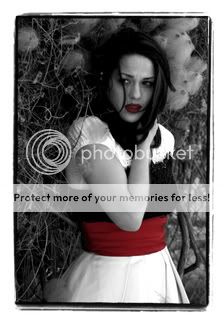
These posing guidelines are in effect, regardless of whether the photo is a close-up, head-and-shoulders, or full-length portrait. As with most posing suggestions, keep in mind that a more natural look is achieved when the tilt of the person's head is slight and not exaggerated.
With men, the head is frequently tilted toward the low shoulder (farthest from the camera lens), and the head and body are turned in the same direction - often toward the light source, with the body at a 45-degree angle to the camera. In a seated masculine portrait, men are often pictured leaning in toward the camera, considered an aggressive pose.

With women, the head is usually turned and tilted toward the high shoulder (the one nearest the camera lens). The body is leaned forward at the waist and is then leaned slightly in the opposite direction from the way the face is turned. For example, if the subject is looking to her left shoulder, the body leans to the right. In the feminine pose, the body often faces away from the light source, but the face is turned toward the light.
While this is something of a cliche technique for posing, like most cliches, it exists for a reason. The masculine tilt of the head provides the impression of strength - a traditional male characteristic; while the head tilted toward the near shoulder, the feminine pose, creates the impression of mystery and vulnerability - characteristically female traits. Whether to tilt the subject's head toward the near shoulder or the far shoulder is a somewhat controversial issue among portrait photographers. These "rules" are frequently disregarded because individual differences and lighting will determine whether the person is better portrayed as strong or vulnerable, but the strategy is mentioned here so that you can decide for yourself.
Body at an Angle to the Camera
As with the planes of the face, turning the body plane so that it is at an angle to the camera will produce a more dynamic effect and will enhance the various curves and planes of the body. The only exception is when you want to emphasize the mass of the subject, such as with an athlete, or when the person is very petite or thin - a child or a model, for example. One of the basic requirements of a good working model is that she be thin so that, if need be, she can be photographed head-on without looking larger than average.

Turn Away from the Main Light
Turning the body away from the main light will help to maximize body definition and enhance the detail in clothing, like the subtle beadwork of a bride's wedding dress. If you face the subject's body plane toward the light source, you risk washing out or flattening out important detail in both the form of the body and the texture of the clothing.

Posture
Good posture is essential to an effectively rendered body plane. You must be conscious of the subject slouching and be prepared to improve the pose by coaching or placing a hand on the small of the subject's back, which will automatically cause the spine to stretch and elongate.
Arms and the Triangle Base
The triangle is one of the most pleasing and dynamic forms in all of photography. Because the triangle is a series of three lines, two of which are diagonal, it has the result of providing direction and visual movement in a portrait. Creating triangles and exploiting natural triangles in posing is one of the basic skills of good composition. To create a triangular base for the composition, the subject's arms (regardless of how much of the subject is showing in the final portrait) should not be allowed to fall to their sides, but should project outward to provide gently sloping lines. This is commonly achieved by asking the subjects to seperate their arms from their torso, creating a bend in the elbows. In a seated portrait, what normally happens is that the subject will move his or her joined hands closer to the waist, thus producing slightly projecting elbows.

In a standing portrait, you can have men place their hands in their pants pockets to produce the triangular base; women can rest one or both hands on the hips. There should also be a space between their upper arms and torsos. This triangular base in the composition attracts the viewer's eye upward, toward the subject's face.