|
|
|
|
|
|
|
|
|
 Posted: Thu Jun 28, 2007 4:00 am Posted: Thu Jun 28, 2007 4:00 am
It would seem that just about every culture on the planet has some story of Mother Earth, and though they take many different forms, they are all essentially the same. This thread is dedicated to the many ways in which Mother Earth is depicted. To get us started: 
|
 |
|
|
|
|
|
|
|
|
|
|
|
|
|
Posted: Thu Jun 28, 2007 8:10 am
Beautiful pictures I m p y! heart Here are some more pictures. These are also posted in some other threads, however, I will also share them here. I found this one and shared it during the ball. 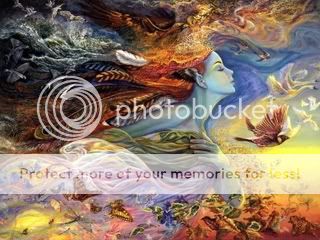 This one is very old and is of Gaia on pottery. 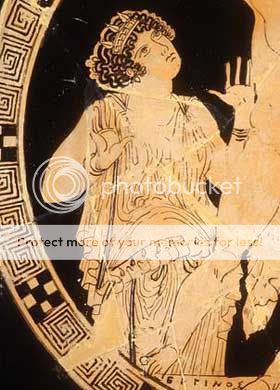
|
|
|
|
|
|
|
|
|
|
|
|
|
|
|
|
|
|
Posted: Thu Jun 28, 2007 8:11 am
See if you can find: A woman a hawk a bear's head a horse's head a wolf's head a cougar's head a bison's head
|
|
|
|
|
|
|
|
|
|
|
|
|
|
|
Posted: Thu Jun 28, 2007 8:27 am
|
|
|
|
|
|
|
|
|
|
|
|
|
Posted: Thu Jun 28, 2007 8:57 am
 Dzonokwa Dzonokwa, the Wild Woman of the Woods, was the Kwakiutl Goddess of abundance and rebirth. She bestowed wonderful blessings upon those who respected her but she was also greatly feared. After her son was killed by hunters, a young orphan, who was not pleasant to look at, led her to the body and they carried him home. To thank the young man for his kindness, she bestowed great riches upon him. When she threw some magical water on him and on the body of her son, the orphan became handsome and her son came back to life. She taught the orphan the secrets of rebirth and revived his parents with her magical water.
|
|
|
|
|
|
|
|
|
|
|
|
|
|
|
Posted: Thu Jun 28, 2007 8:59 am
The Madonna is a manifestation of the ancient Mother Goddess. Figures of Madonnas from the Neolithic era and later connect Mary to a very ancient line of Goddesses. The story of Mary and her son, who was killed and resurrected, mirrors the myths of Ishtar and Tammuz, Inanna and Dumuzi, Aphrodite and Adonis, Cybele and Attis, Isis and Osiris, and Demeter and Persephone. Mary's name comes from "mare", the Latin word for the sea. Many of the great Mother Goddesses were born from the sea and Mary's title, "Stella Maris", Star of the Sea, originally belonged to Isis.
|
|
|
|
|
|
|
|
|
|
|
|
|
|
|
|
|
|
Posted: Thu Jun 28, 2007 9:00 am
Sekhmet, whose name meant "the mighty one", was the ancient Egyptian Goddess of destruction as well as healing. Greatly disgusted with human beings for their lack of reverence, she began to eat them. The other deities became concerned and put out a mixture of beer and pomegranate juice. Thinking it was blood, Sekhmet lapped it up and fell into a stupor. When she awoke, all her rage was gone. Because of her great knowledge of magic, she possessed tremendous powers of healing. She had the power to manifest energy into form. She holds an ankh, symbol of eternal life, in her left hand; in her right, she holds a papyrus scepter. The papyrus was the emblem of Lower Egypt and symbolized the creation of the world from the primeval waters.
|
|
|
|
|
|
|
|
|
|
|
|
|
|
|
Posted: Thu Jun 28, 2007 9:02 am
Chief deity of the Scythians, Tabiti was protector of the hearth and of wealth. Since their wealth was determined by the number of flocks they had, she was also known as a protector of animals. Among the Scythians, women were seen as controllers of life and death. They were associated with the mystical realm and powerful animals, sometimes fusing with the latter. The mirror, in many ancient cultures, symbolized protection against evil spirits. The one she is holding is after one found in the Ukraine, near Kerch, from the Kul'Oba Kurgan, c. 4th century BCE. Her torque is after one from Soboleva Mohyla, Ukraine, 350-25 BCE. Her earring, depicting a seated goddess who is probably Tabiti, is after a pair found near Velyka Znam'ianka, Ukraine, c. 4th century BCE. The plaques around her headdress and on her dress could depict the ritual marriage of Tabiti to a king; they were found in the Chertomlyk kurgan, Ukraine, 350-25 BCE. She is holding a cup with horses from Bratoliubivs'ky kurgan, near Ol'hyno, Ukraine, 5th century BCE.
|
|
|
|
|
|
|
|
|
|
|
|
|
|
|
|
|
|
Posted: Thu Jun 28, 2007 9:04 am
Wadjit was the Egyptian Goddess of Creation who birthed the sun each morning from the sacred papyrus marshes. Known as Buto to the Greeks, her name meant "The Green One" or "The Papyrus-Hued One", referring to her exceptional powers of growth. Wadjit was also the protective hissing cobra of the uraeus. She was depicted in both cobra and human form. In her cobra form, she was the symbol of Lower Egypt and it was said that the papyrus emerged from her. As an inhabitant of the marshes, the otter was also associated with her. The relief on the left shows Wadjit in a gesture of protection from the pyramid temple of King Neuserra, 5th Dynasty. To the right of that is a relief of a papyrus marsh from the Mastaba of Mereruka, Saqqara, 6th Dynasty c. 2300 BCE; behind it, on the left, is a statue of an otter from the Ptolemaic Period c. 304-30 BCE and, on the right, a copy of a previously existing mural of a papyrus marsh that was originally in the north palace of Akhenaton at Tell-el-Amarna, c. 1360 BCE. The relief on the right of Wadjit in her cobra form is from the funerary bed of Queen Hetephras, 4th Dynasty. She is wearing an earring and an armband (design adapted from a pectoral) from Tutankhamen's Tomb, c. 1323 BCE.
|
|
|
|
|
|
|
|
|
|
|
|
|
|
|
Posted: Thu Jun 28, 2007 12:29 pm
wow eek all those picktures are so beautiful heart thanks for sharing the Impy!
|
|
|
|
|
|
|
|
|
|
|
|
|
|
|
|
|
|
Posted: Thu Jun 28, 2007 9:04 pm
Here is one of my favorites! 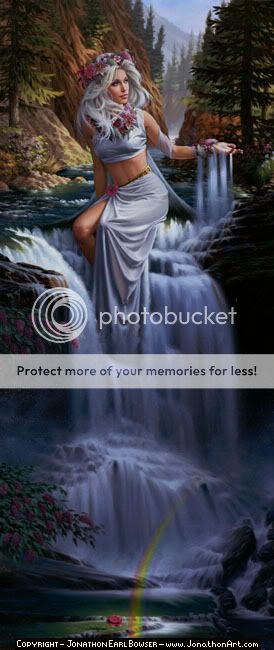
|
|
|
|
|
|
|
|
|
|
|
|
|
|
|
Posted: Fri Jun 29, 2007 12:18 am
I like your pick Teri heart
|
|
|
|
|
|
|
|
|
|
|
|
|
|
|
|
|
|
Posted: Fri Jun 29, 2007 6:02 am
|
|
|
|
|
|
|
|
|
|
Posted: Fri Jun 29, 2007 6:07 am
|
|
|
|
|
|
|
|
|
|
|
|
|
Posted: Fri Jun 29, 2007 6:09 am
Let's not forget:   ^ The "Keeper" of the Earth  ^The "Earth Mother" 
|
|
|
|
|
|
|
|
|
|
|
|
|
|
|
|
|
|





 Reply
Reply